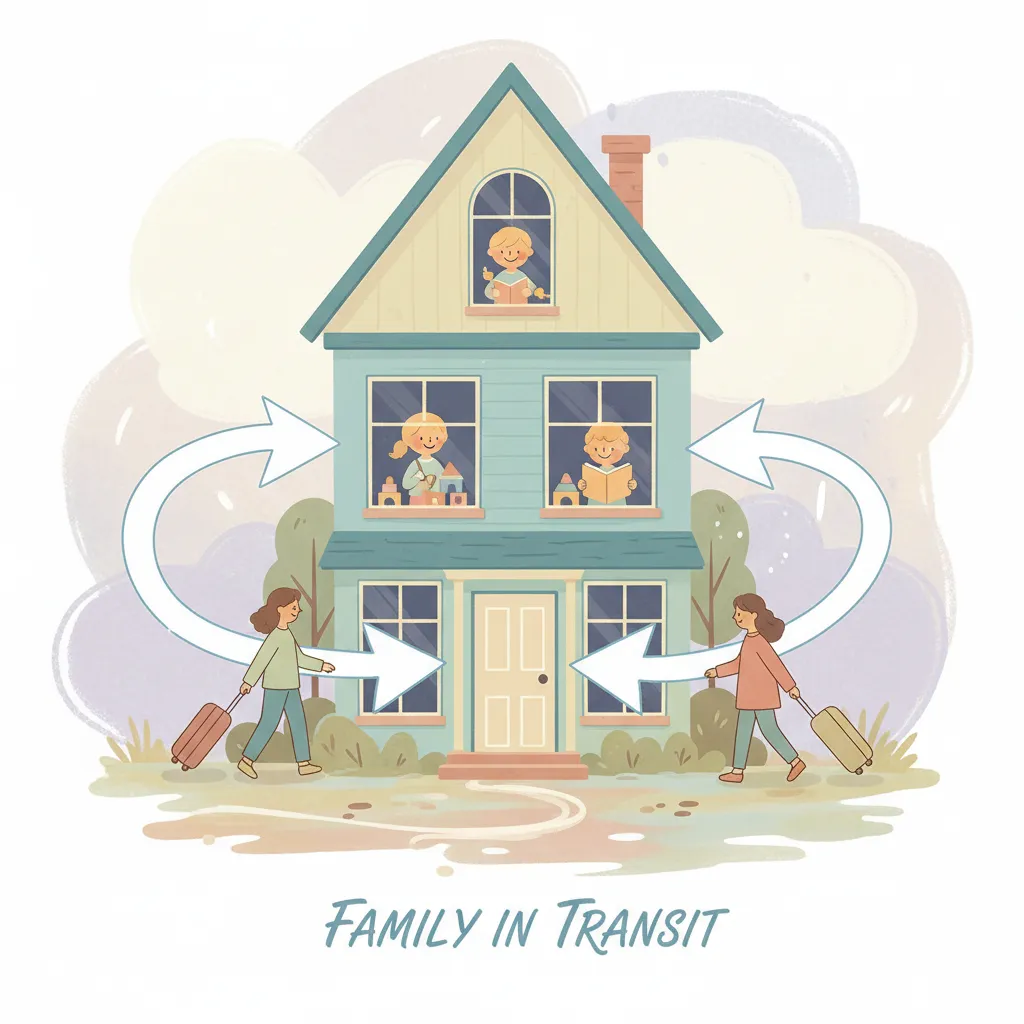
A co-parenting plan NZ is a comprehensive, written agreement between separated parents that details how they will raise their children. It specifically outlines day-to-day care arrangements, holiday schedules, communication protocols, and decision-making processes regarding guardianship issues like education and health. While a standard plan is an informal agreement, it can be formalized into a Consent Order by the Family Court to become legally binding.
Understanding the Co-Parenting Framework in New Zealand
Creating a robust parenting plan is one of the most critical steps you can take following a separation. In New Zealand, the legal landscape governing these arrangements is primarily dictated by the Care of Children Act 2004. The paramount principle of this Act is simple yet profound: the welfare and best interests of the child must always come first.
It is important to distinguish between “Guardianship” and “Day-to-Day Care” (formerly known as custody). In New Zealand, most parents remain joint guardians even after separation. This means you must consult one another on significant decisions affecting the child’s upbringing, such as:
- Where the child will live (especially if moving to a new city or country).
- Medical treatment and health decisions.
- Religious upbringing.
- Choice of school or changes in education.
A co-parenting plan focuses heavily on the logistics of “Day-to-Day Care” and “Contact.” While the emotional toll of separation is high, approaching this plan with a business-like mindset—focusing on logistics, stability, and clarity—often yields the best results for the children involved. A well-structured plan reduces conflict by removing ambiguity, allowing children to predict their routine and feel secure in both households.

Designing Effective Care Schedules
There is no “one-size-fits-all” schedule in New Zealand family law. The Family Court encourages parents to agree on an arrangement that suits the specific needs of their children and their employment commitments. When drafting your co-parenting plan NZ, consider the age of the children, the distance between homes, and the level of cooperation between parents.
The Week-On/Week-Off Schedule (50/50 Shared Care)
This is increasingly common in New Zealand for school-aged children. In this model, the child spends seven days with one parent and seven days with the other. The handover usually occurs on a specific day, such as Friday after school or Sunday evening.
Pros: Fewer transitions for the child; both parents are fully involved in the school week and weekend routine.
Cons: Seven days can be a long time for younger children to be away from a primary attachment figure.
The 2-2-3 Rotation
This schedule is often preferred for toddlers and younger children who struggle with long separations. The child spends two days with Parent A, two days with Parent B, and then a three-day weekend with Parent A. The schedule flips the following week.
Pros: Frequent contact with both parents.
Cons: High frequency of handovers, which requires parents to live close to one another and maintain cordial communication.
The Fortnightly Weekend (plus Mid-Week Visits)
Traditionally common, this involves the child living primarily with one parent and spending every second weekend with the other, often supplemented by a dinner or overnight stay during the week.
Pros: Provides a very stable “home base” for the child, which can be beneficial for high-anxiety children or when parents live in different suburbs.
Cons: The non-resident parent may feel like a “visitor” rather than a parent.
Managing Handovers and Communication
The transition between homes—the handover—is often the definitive “flashpoint” for conflict. Your co-parenting plan must explicitly detail how these transitions occur to protect the children from tension.
Choosing the Location
If the relationship is amicable, handovers can occur at the parents’ homes. However, if tension exists, neutral locations are superior. In New Zealand, common neutral handover spots include:
- School or Daycare: One parent drops off in the morning, and the other collects in the afternoon. This is the “Gold Standard” as parents do not need to interact face-to-face, and the transition feels natural to the child.
- Public Libraries or Parks: Neutral, public spaces encourage polite behavior.
- Contact Centres: For high-conflict cases or where safety is a concern, supervised handovers at approved contact centres may be necessary.
Communication Protocols
Your plan should specify how you will communicate. To maintain a record and reduce emotional reactivity, many experts recommend avoiding face-to-face or telephone conversations regarding logistics. Instead, agree to use email or specialized apps for all non-emergency communication. Establish a rule: “All messages will be responded to within 24 hours,” and stick to it.
For authoritative guidance on setting up these arrangements, the New Zealand Ministry of Justice provides templates and legal information that can assist in drafting your initial agreement.
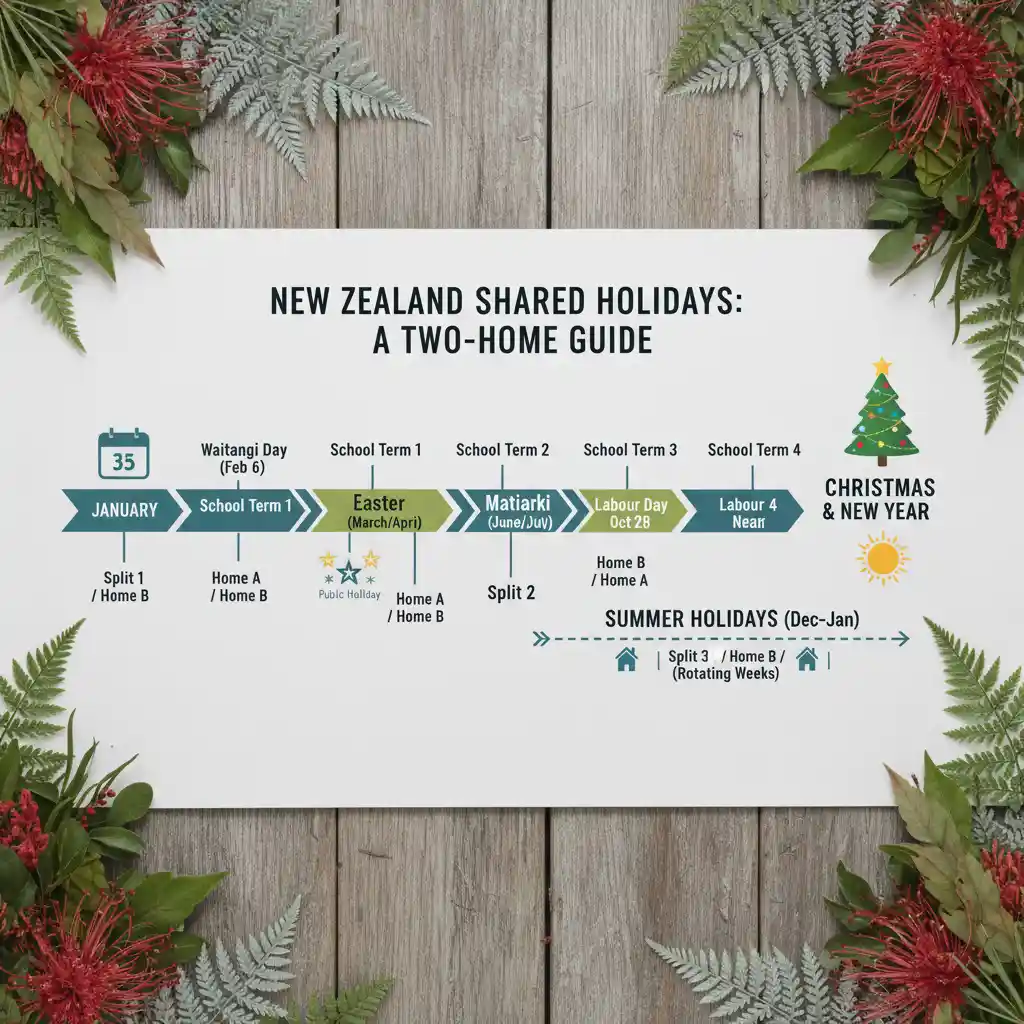
Navigating Holidays and Special Occasions
In New Zealand, the standard school term and public holiday structure dictates much of the co-parenting calendar. Failing to plan for Christmas or summer holidays is a leading cause of December applications to the Family Court.
The Summer Holidays (December/January)
The long summer break (usually 6 weeks) is often split in half. One parent might have the children from the end of the school term until shortly after Christmas, and the other parent takes over through January until school returns. It is crucial to define the “changeover date” (e.g., December 28th at 10:00 AM).
Christmas and New Year
Many families alternate years. For example, in even years (2024, 2026), Parent A has the children for Christmas Day, and Parent B has them for New Year’s. In odd years, this swaps. Alternatively, if you live close by, you might split Christmas Day (morning with one, afternoon with the other), though this can be exhausting for children.
Cultural and Specific Days
Your plan should also address:
- Waitangi Day & Matariki: Who cares for the children during these long weekends?
- Birthdays: Does the child spend their birthday with the parent whose scheduled day it is, or is there a special arrangement?
- Mother’s Day and Father’s Day: Usually, the children spend these days with the respective parent, regardless of the normal schedule.
Leveraging Technology for Co-Parenting
Modern co-parenting in New Zealand is significantly aided by technology. Relying on text messages can lead to lost information and misunderstandings. Dedicated co-parenting apps provide a centralized platform for all child-related information.
Recommended Apps:
- OurFamilyWizard: Highly regarded by legal professionals. It allows for expense tracking, calendar sharing, and “tone-checking” messages before they are sent. Courts in NZ often accept records from this app as evidence.
- 2houses: Offers an interactive calendar and financial management tools for splitting school costs or medical bills.
- Google Calendar: A free, simple option for sharing schedules, though it lacks the financial tracking and messaging security of dedicated apps.
Using these tools allows you to upload school newsletters, medical appointments, and sports schedules in real-time, ensuring neither parent is left out of the loop. This transparency builds trust over time.
From Agreement to Court Order: Legal Steps
A parenting plan you write at the kitchen table is a “Parenting Agreement.” It relies on goodwill. If one parent breaches the agreement, the police generally cannot intervene to enforce it because it is not a court order.
Making it Enforceable
If you want your co-parenting plan NZ to be legally binding, you must apply to the Family Court to have your agreement made into a Consent Order. This involves:
- Drafting the agreement (often with the help of a lawyer).
- Both parties signing the application.
- A judge reviewing the agreement to ensure it is in the best interests of the child.
Once signed by the Judge, it becomes a Parenting Order. Breaching a Parenting Order is a serious matter and can lead to legal consequences.
When You Cannot Agree
If you cannot agree on a plan, New Zealand law usually requires you to attempt Family Dispute Resolution (FDR) before you can apply to the court (unless there are safety concerns). FDR is a mediation process where an independent professional helps you reach a consensus. For more information on this process, resources like Community Law NZ offer invaluable free legal information regarding your rights and obligations.

Frequently Asked Questions
Is a parenting plan legally binding in NZ?
No, a private parenting plan or agreement is not legally binding or enforceable by the police. However, it can be made legally binding if both parents apply to the Family Court to have the agreement turned into a Consent Order.
At what age can a child decide who to live with in NZ?
There is no specific age where a child can choose. However, the Care of Children Act requires that a child’s views be taken into account. As the child gets older (typically 12+), their preferences carry significantly more weight in Court decisions, though the final decision rests on what is in their best interests.
What is the standard visitation schedule in NZ?
There is no “standard” schedule in New Zealand law. Arrangements range from 50/50 shared care (week-on/week-off) to every second weekend. The schedule depends entirely on the child’s needs, parents’ work schedules, and geographic distance.
Can I move cities with my child in NZ without the other parent’s consent?
Generally, no. Moving a child to a new city (relocation) is a guardianship decision. If the move impacts the other parent’s ability to have contact, you need their consent or a Court Order allowing the move. Doing so without agreement can result in a Court ordering the child’s return.
What happens if one parent breaks the parenting order?
If a Parenting Order is breached, the other parent can apply to the Family Court for enforcement. Consequences can range from a formal admonishment to a variation of the order, or in rare cases, a warrant to enforce care.
Do I need a lawyer to make a co-parenting plan?
You do not need a lawyer to write a private parenting plan. However, if you wish to turn that plan into a Consent Order, or if you cannot agree and need to go to mediation or court, legal advice is highly recommended to ensure your rights are protected.