
NZ family law relationship breakdown refers to the legal framework governing the dissolution of marriages, civil unions, and de facto relationships in New Zealand, encompassing aspects like property division, child care arrangements, and spousal maintenance. It provides pathways for couples to resolve disputes and establish new arrangements post-separation, prioritising the well-being of any children involved.
Understanding the Basics of NZ Family Law in Relationship Breakdown
The dissolution of a significant relationship is a profoundly challenging life event, often complicated by legal intricacies. In New Zealand, the legal framework governing relationship breakdown is designed to provide clear pathways for couples to separate fairly, with a paramount focus on the best interests of any children. The primary legislation governing these matters includes the Family Court Act 1980, the Care of Children Act 2004, and crucially, the Property (Relationships) Act 1976. These statutes work in concert to address various aspects of separation, from the legal grounds for dissolving a marriage or civil union to the division of property and the establishment of care arrangements for children.
A “relationship breakdown” in the context of NZ family law refers to the point where a couple (married, in a civil union, or in a de facto relationship) decides to live separately and apart, with no reasonable prospect of reconciliation. This foundational legal concept is vital for initiating any formal legal process for separation or dissolution. While the emotional and practical aspects of separation can begin much earlier, the legal clock for certain proceedings, such as applying for a Dissolution Order (often referred to as divorce), typically starts ticking after one year of living separately.
Initiating Separation: Legal Prerequisites
For married couples and those in civil unions, the legal termination of the relationship is achieved through a Dissolution Order from the Family Court. A key prerequisite for this is that the parties must have been living separately and apart for at least two years. It’s important to note that “living separately and apart” does not always mean living in different houses; it can also occur under the same roof if the marital or civil union relationship has ceased. Before applying for a dissolution, many couples are encouraged to engage in Family Dispute Resolution (FDR) to resolve care of children and relationship property issues outside of court. While not always mandatory for dissolution itself, it is a crucial step for disputes involving children.
Key Legal Principles Governing Relationship Property
One of the most significant aspects of any relationship breakdown is the division of property. New Zealand’s Property (Relationships) Act 1976 (PRA) establishes a clear presumption of equal sharing of relationship property upon separation. This means that, regardless of individual financial contributions, property accumulated during the relationship is generally divided equally between the partners. Relationship property can include the family home, cars, furniture, bank accounts, superannuation, and even debts incurred during the relationship.
However, the PRA also distinguishes between relationship property and separate property. Separate property typically includes assets owned by each partner before the relationship began, inheritances, or gifts received by one partner alone during the relationship. These are generally not subject to equal division, though the increase in value of separate property during the relationship or its use for relationship purposes can sometimes lead to it being considered relationship property. Understanding this distinction is crucial for navigating property settlements fairly and effectively.
Child Care Arrangements and Guardianship
When children are involved, their welfare becomes the paramount consideration in any separation under the Care of Children Act 2004. The Family Court’s primary focus is always on the child’s best interests, ensuring their safety, well-being, and development. This includes making decisions about who the children live with (day-to-day care) and how much time they spend with the other parent (contact). Parents are encouraged to reach mutual agreements through discussion or mediation, formalised through parenting plans or consent orders.
Guardianship refers to the rights, powers, and responsibilities parents have in making important decisions about their children’s upbringing, such as their education, health, and cultural upbringing. Both parents are typically guardians, even after separation. Disputes over guardianship or day-to-day care can be brought before the Family Court, where a judge will consider various factors to determine the best outcome for the child, potentially appointing a lawyer for the child to ensure their voice is heard.
For more detailed information on Family Law in New Zealand, including relevant acts and processes, consult the official Ministry of Justice New Zealand website.
Specific Considerations for Neurodivergent Families During Separation
Relationship breakdown can be particularly complex and challenging when one or more family members are neurodivergent, such as individuals with Autism Spectrum Disorder (ASD), ADHD, or other neurological differences. These conditions can impact communication styles, emotional processing, and coping mechanisms, requiring tailored approaches during separation. Standard legal processes and communication methods, which often rely on implicit understanding and emotional resilience, may not be suitable or effective for neurodivergent individuals, leading to increased stress and misunderstandings.
For neurodivergent individuals, changes in routine, sensory environments, and social interactions can be highly destabilising. A separation process that is drawn-out, unpredictable, or high-conflict can exacerbate these challenges, potentially leading to burnout, anxiety, or meltdowns. Therefore, it is essential for legal and support professionals to adopt a neurodiversity-affirming approach, focusing on clear, direct communication, predictability, and accommodations that minimise sensory overload and support emotional regulation. This may involve using written communication more frequently, providing structured meeting agendas, and allowing for breaks.
Tailoring Support for Children with Special Needs
When children with special needs are involved in a relationship breakdown, the complexity escalates. Maintaining stability, consistency, and access to essential services is paramount for their well-being. Parents need to collaborate closely to ensure continuity in their child’s educational, therapeutic, and medical support. This might include agreeing on shared responsibilities for attending appointments, managing medication, or coordinating with schools and therapists. Any changes to living arrangements or routines must be carefully planned and communicated to the child in an accessible manner, with consideration for their specific processing and communication styles.
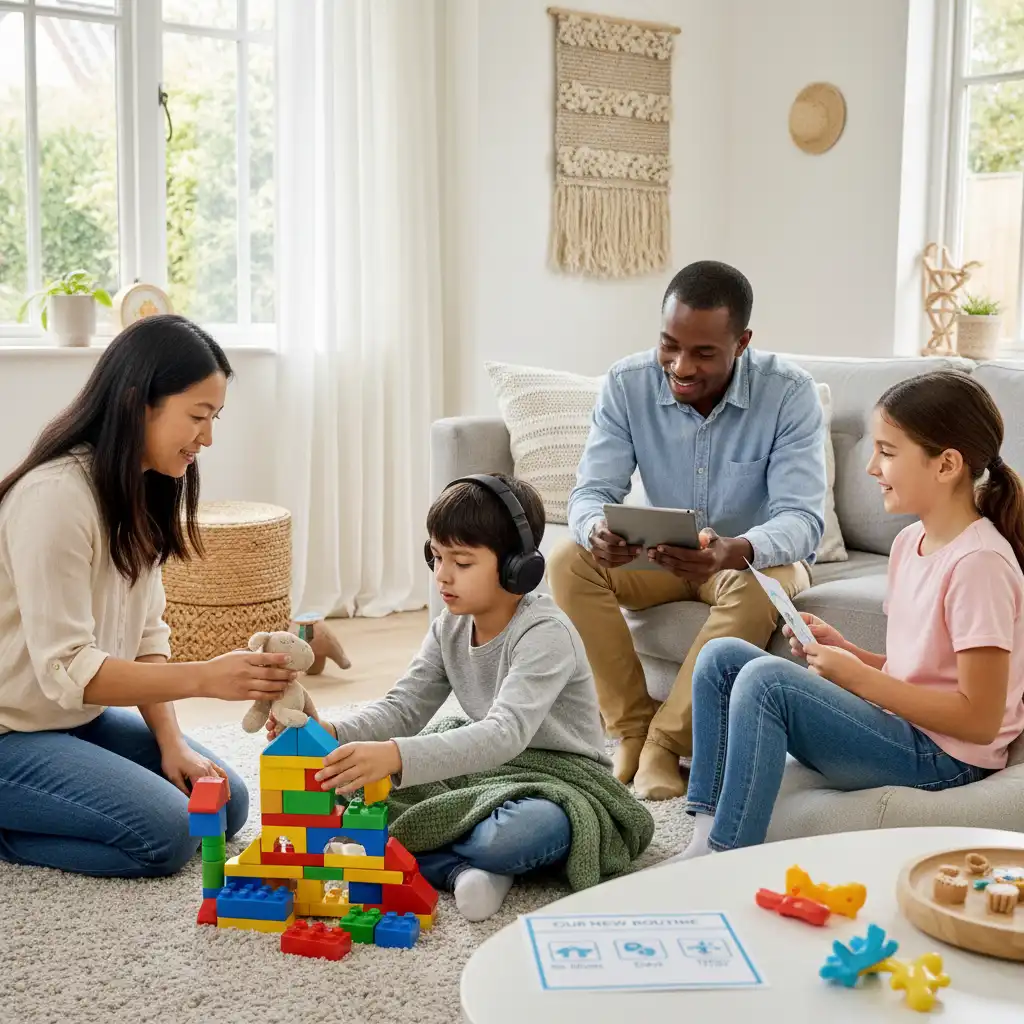
The Family Court may also take special needs into account when making parenting orders, ensuring that the care arrangements best support the child’s unique requirements. This could involve designating one parent as the primary caregiver due to their expertise in managing the child’s condition, or ensuring that both parents are equipped with the knowledge and resources to provide adequate care. Therapeutic support for the child, and potentially for the parents, can be invaluable during this transition to help everyone adjust and cope with the changes.
Strategies for Managing High-Conflict Separation Scenarios
Some relationship breakdowns unfortunately descend into high-conflict situations, characterised by ongoing disputes, emotional distress, and sometimes allegations of abuse or manipulation. These scenarios are particularly damaging for all involved, especially children. In such cases, a more structured and robust approach to legal proceedings and communication is often necessary. The primary goal is to minimise direct contact between high-conflict parents where possible and to protect vulnerable parties, especially children, from exposure to ongoing parental disputes.
Legal counsel plays a critical role in high-conflict separations. Lawyers can act as a buffer, facilitating all communication and negotiations to prevent direct confrontation between parties. They can also advise on strategies for documentation, ensuring that all interactions, agreements, and breaches are recorded, which can be crucial evidence if the matter proceeds to court. It’s essential for individuals in high-conflict situations to choose a lawyer experienced in such cases, who can provide strong advocacy while also promoting realistic and child-focused outcomes.
Protecting Children in High-Conflict Environments
Children exposed to high-conflict parental separation suffer significant emotional and psychological harm. The Family Court employs various mechanisms to protect children, including appointing lawyers for children, ordering psychological assessments, or implementing supervised contact arrangements. Parental alienation, where one parent attempts to turn a child against the other parent, is a serious concern in high-conflict cases and is viewed negatively by the court.
Parents in these situations are often encouraged to engage in therapeutic interventions, such as individual counselling or specific co-parenting therapy, to develop healthier communication patterns and to shield their children from adult disputes. Ultimately, the court’s decisions will always centre on mitigating harm to the child and fostering an environment where they can have a healthy relationship with both parents, provided it is safe and in their best interest. In cases involving family violence, the court can issue protection orders to ensure the safety of the victim and children.
The Family Court Process and Available Support in Aotearoa
Navigating the Family Court system can be daunting, but understanding its stages and the support available can empower individuals. The process typically begins with attempts at out-of-court resolution, primarily Family Dispute Resolution (FDR) for issues concerning children. If agreement cannot be reached, an application to the Family Court may be necessary. The court process can involve initial conferences, information-gathering, interim orders, and potentially a defended hearing if an agreement remains elusive.

Throughout this process, various professionals can assist. Lawyers provide legal advice and representation, advocating for their client’s interests. Judges make decisions based on the evidence presented and the legal framework. Other professionals, such as psychologists or social workers, may provide reports to the court, particularly in cases involving children’s welfare or complex family dynamics. The Family Court aims to be an accessible and supportive environment, though its procedures can be formal.
Alternative Dispute Resolution (ADR) Options
Before resorting to court, New Zealand family law strongly promotes Alternative Dispute Resolution (ADR) methods. Family Dispute Resolution (FDR) is a mandatory first step for most parenting disputes and involves a neutral mediator helping parents reach agreements. This process is generally quicker, less stressful, and more cost-effective than court proceedings, allowing parents to retain control over the decisions affecting their family. Mediation sessions are confidential and can cover a wide range of issues, from parenting arrangements to communication protocols.
Other ADR options include collaborative law, where both parties and their lawyers commit to resolving issues without going to court, and arbitration, where an independent arbitrator makes a binding decision after hearing from both sides. Utilising these services can significantly reduce the emotional and financial toll of separation. For information on free and low-cost legal assistance, including Family Legal Advice Service and Legal Aid, individuals can contact Community Law Aotearoa or Citizens Advice Bureau.
What is a de facto relationship under NZ family law?
In New Zealand, a de facto relationship is one between two people (whether of the same or different sex) who are not legally married or in a civil union but live together as a couple. For relationship property purposes, it typically needs to have lasted for at least three years, though shorter relationships can sometimes be recognised if there is a child of the relationship or significant contributions have been made.
How is relationship property generally divided in New Zealand?
The Property (Relationships) Act 1976 generally presumes an equal 50/50 division of relationship property when a marriage, civil union, or de facto relationship of at least three years breaks down. This includes assets like the family home, cars, bank accounts, and superannuation accumulated during the relationship, regardless of individual financial contributions.
What are ‘Contracting Out Agreements’ (pre-nups) in NZ?
Contracting Out Agreements, often called ‘pre-nups’, are legal agreements made under the Property (Relationships) Act 1976 that allow couples to specify how their property will be divided if their relationship ends. These agreements override the standard 50/50 equal sharing presumption and must be in writing, signed by both parties, and each party must have independent legal advice before signing.
What is Family Dispute Resolution (FDR) and is it mandatory?
Family Dispute Resolution (FDR) is a mediation service designed to help separating parents agree on parenting arrangements without going to court. For most parenting disputes, it is a mandatory step that parents must attempt before they can apply to the Family Court for a parenting order, unless specific exemptions (such as family violence) apply.
How does the Family Court determine child care arrangements?
The Family Court determines child care arrangements (day-to-day care and contact) by putting the child’s safety and well-being as the paramount consideration. Judges assess various factors including the child’s needs, their relationship with each parent, the parents’ ability to provide care, and sometimes the child’s own views (depending on age and maturity).
Can a relationship breakdown affect my Will in New Zealand?
Yes, a relationship breakdown can significantly affect your Will. If you are married or in a civil union and get a Dissolution Order, any gifts in your Will to your former spouse/partner or their relatives are usually automatically revoked, and any appointment of them as executor is also revoked. It is highly advisable to review and update your Will promptly after separation or dissolution to reflect your current wishes.