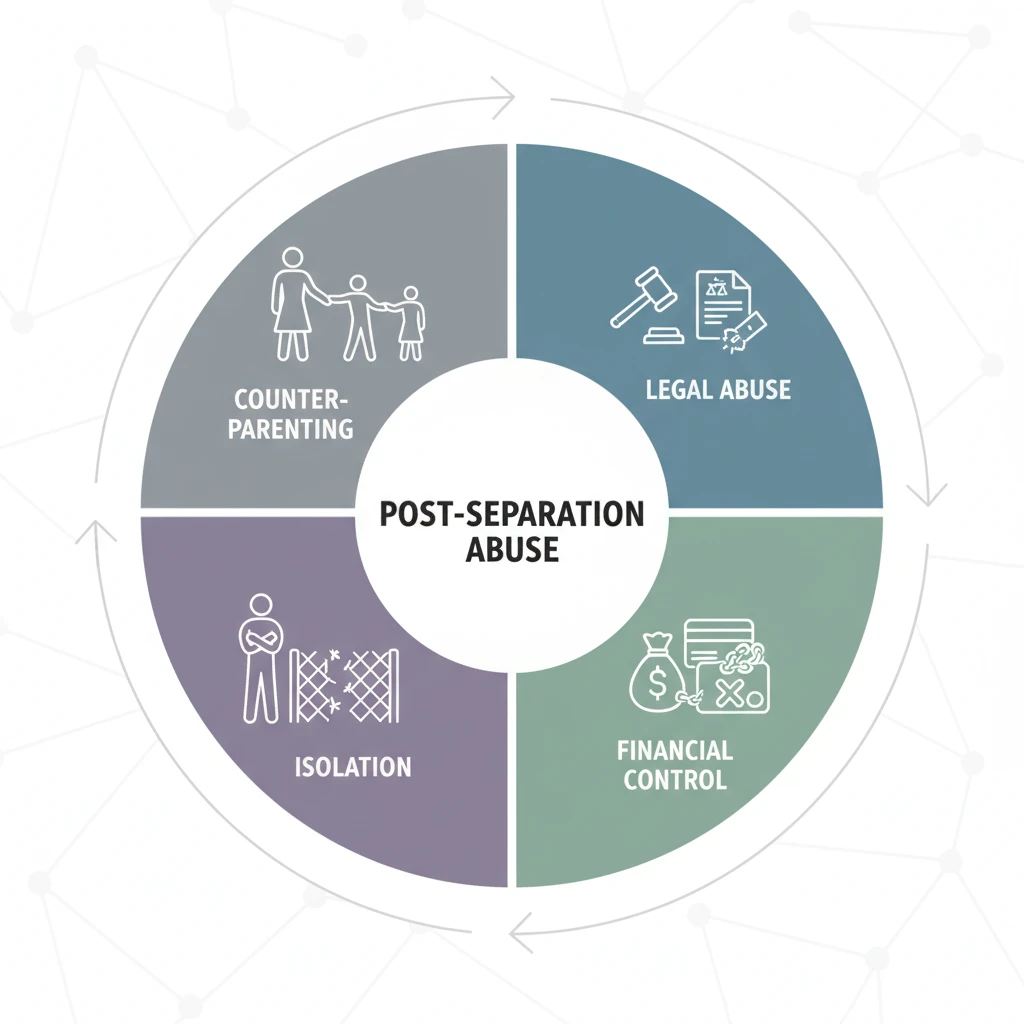
Parallel parenting NZ is a structured post-separation arrangement designed for high-conflict families where parents disengage from each other to protect their children from ongoing hostility. Unlike traditional co-parenting, which requires collaboration, parallel parenting allows each parent to make day-to-day decisions independently during their custody time, utilising strict communication boundaries and detailed parenting orders to minimise direct contact and conflict.
The Dangers of Traditional Co-Parenting with High-Conflict Personalities
In the landscape of New Zealand family law, the ideal standard has long been “co-parenting.” This model assumes two rational adults can put aside their differences to collaborate on raising their children. However, when one parent exhibits traits of narcissism, borderline personality disorder, or other high-conflict behaviours, traditional co-parenting is not just ineffective—it is dangerous.
Attempting to co-parent with a narcissist often exposes the reasonable parent and the children to a cycle of manipulation, gaslighting, and emotional volatility. The high-conflict parent views the necessity of collaboration not as a way to help the child, but as an opportunity to exert control, create chaos, and inflict punishment on their ex-partner.
The dangers of forcing a cooperative model on a high-conflict dynamic include:
- The Continuation of Abuse: Co-parenting requires communication. For a narcissist, communication channels are vectors for abuse. Constant texts, last-minute schedule changes, and belittling emails keep the victim trapped in a state of hyper-vigilance.
- Triangulation of Children: In a forced co-parenting scenario, the toxic parent often uses the children as messengers or spies, placing them in the centre of the conflict—a phenomenon known as triangulation.
- Inconsistency and Instability: While the goal of co-parenting is consistency, a high-conflict ex will intentionally disrupt rules and routines agreed upon in one household just to undermine the other parent’s authority.

For parents in New Zealand facing this reality, realising that “getting along” is impossible is the first step toward freedom. The solution is not to try harder to co-parent, but to radically shift the strategy to parallel parenting.
What is Parallel Parenting? Definition and Core Principles
Parallel parenting is often described as “disengaged parenting.” It is a strategy of disengagement that allows both parents to remain in their children’s lives without interacting with each other. If co-parenting is a partnership, parallel parenting is a business arrangement between two distinct, non-communicating entities.
In this model, the parents operate in separate silos. What happens in Mum’s house stays in Mum’s house; what happens in Dad’s house stays in Dad’s house. Unless there is a genuine emergency or a major decision regarding health, education, or religion (guardianship matters under the Care of Children Act 2004), the parents do not consult one another on daily logistics.
The Three Pillars of Parallel Parenting
- Limited Communication: Communication is restricted to written formats only (email or app), purely factual, and non-emotional.
- Separate Spheres of Control: Each parent has total authority during their parenting time. You do not critique their bedtime routine, and they do not critique yours.
- Minimal Contact: Hand-overs are structured to ensure parents do not have to interact, or even see each other, if possible.
This approach drastically reduces the oxygen that fuels high-conflict fires. By removing the opportunity for engagement, you remove the opportunity for conflict.
Structuring a Parallel Parenting Plan in New Zealand
A parallel parenting plan must be far more detailed than a standard parenting agreement. In high-conflict scenarios, ambiguity is the enemy. Every grey area in a parenting order is a potential battlefield. To succeed, your plan must be ironclad, leaving no room for interpretation.
Detailed Schedules and Logistics
The schedule must be explicit. “Reasonable access” or “flexible weekends” does not work with a narcissist. Your plan should specify:
- Exact start and finish times for every visit.
- Specific locations for pick-up and drop-off (ideally neutral ground like a school or a public library).
- Procedures for holidays, specifically defining the hours (e.g., “Christmas Day starts at 9:00 AM and ends at 9:00 AM on Boxing Day”).
- What happens if a parent is late (e.g., “If the parent is more than 30 minutes late without written notice, the visit is forfeited”).
Decision Making Authority
Under NZ law, guardianship decisions (health, education, residence) usually require joint input. However, day-to-day care decisions should be explicitly separated. The plan should state that the parent with the child at that time is responsible for all routine decisions, including homework, minor medical treatment (like administering Panadol), and extracurricular logistics, without needing to consult the other parent.

Minimising Contact While Maximising Stability
The psychological goal of parallel parenting is to lower the emotional temperature for the children. To achieve this, you must erect a firewall between the two households.
The BIFF Response Method
When communication is necessary, it must follow the BIFF method, developed by the High Conflict Institute. All correspondence should be:
- Brief: Keep it short.
- Informative: Stick to the facts.
- Friendly: Maintain a neutral, polite tone (no sarcasm).
- Firm: End the conversation; do not invite a response unless necessary.
Neutral Drop-Offs
Transitions are often the most stressful times for children in high-conflict families. To minimise contact:
- Curbside Pickups: The parent stays in the car; the child walks to the door.
- School/Daycare Transitions: One parent drops the child at school on Friday morning, and the other parent picks them up from school on Friday afternoon. This completely eliminates face-to-face contact between the adults.
- Third-Party Facilitation: In extreme cases, utilising a supervised contact centre or a trusted family member to facilitate the handover can prevent verbal abuse.
For more information on legal parenting orders and how to structure these arrangements, you can refer to the New Zealand Ministry of Justice guidelines on the Care of Children.
Convincing the NZ Family Court to Adopt This Model
One of the biggest hurdles for parents is convincing the NZ Family Court that parallel parenting is in the “best interests of the child.” The default presumption in New Zealand is often that parents should communicate and cooperate. Judges may initially view a request for parallel parenting as an unwillingness to co-parent.
To successfully argue for parallel parenting, you must shift the narrative from “I don’t like my ex” to “The current conflict is harming the child, and this structure is the only way to stop it.”
Documenting Intractable Conflict
You need to prove that the conflict is “intractable”—meaning it cannot be solved by mediation or counselling. Keep a meticulous log of:
- Abusive messages or emails.
- Instances where the other parent undermined agreed rules.
- Evidence of the child’s distress following transitions or arguments.
When presenting your case, focus on the child’s right to a peaceful life. Use language such as: “The high level of conflict generated by direct communication is negatively impacting the child’s emotional wellbeing. To ensure the child has a positive relationship with both parents, we need a structure that minimises parental interaction.”
It is also beneficial to reference authoritative psychological resources. The Psychology Today directory can help you find NZ-based psychologists who specialise in high-conflict divorce and can provide expert testimony regarding the necessity of parallel parenting.
Communication Protocols and Technology
In the digital age, technology is the parallel parent’s best friend. It provides an objective record of all interactions, which is crucial if you end up back in court.
Using Co-Parenting Apps
Move all communication off text messages and WhatsApp. These platforms are too immediate and invasive. Instead, insist on using purpose-built apps like OurFamilyWizard or TalkingParents. These tools are widely recognised by NZ Family Courts and offer features such as:
- Tone Meters: Flags emotionally charged language before you hit send.
- Unalterable Records: Messages cannot be deleted or edited, providing an accurate evidentiary trail.
- Shared Calendars: Keeps track of appointments and swaps without the need for conversation.
The “No-Engagement” Rule
Establish a rule that you will not respond to non-emergency communication immediately. Implementing a 24-hour delay on responding to non-urgent emails allows you to process your emotions and draft a BIFF response, ensuring you do not fall into the trap of reactive abuse.
Parallel parenting is not about punishing the other parent; it is about liberating yourself and your children from the war zone. By building a fortress of boundaries, strictly adhering to a plan, and minimising engagement, you create a space where your children can breathe, even if the other household remains chaotic.
People Also Ask (FAQ)
Is parallel parenting legally recognised in New Zealand?
While the term “parallel parenting” is not explicitly defined in the Care of Children Act 2004, the NZ Family Court frequently makes orders that reflect this model. Courts can order specific conditions that limit communication and structure contact to reduce conflict, effectively creating a parallel parenting arrangement to serve the child’s best interests.
How do I stop my ex from contacting me constantly?
You can request a Parenting Order that specifies communication protocols. This might limit communication to a single method (like email or a parenting app) and restrict the frequency of messages to emergencies or logistical necessities only. If harassment continues, you may need to seek legal advice regarding a Protection Order.
Does parallel parenting harm the child?
No, quite the opposite. Research indicates that it is parental conflict, not the specific custody schedule, that harms children most. Parallel parenting reduces the child’s exposure to conflict, providing them with a calmer, more stable environment, which is significantly better for their psychological development than a high-conflict co-parenting situation.
Can I use parallel parenting with a baby or toddler?
Yes, but it requires very specific planning regarding feeding, sleep routines, and frequent transitions. Because young children cannot communicate their needs, a highly detailed communication log (regarding naps, meals, and health) kept within a parenting app is essential to ensure the child’s needs are met across both households without direct parental interaction.
What if the other parent refuses to follow the parallel parenting plan?
If a parent breaches a court-ordered parenting plan, you can apply to the Family Court for enforcement. It is crucial to document every breach using your parenting app or written records. Persistent breaches can lead to the court admonishing the other parent, varying the order, or in extreme cases, changing custody arrangements.
How much does it cost to set up a parallel parenting plan in NZ?
If both parties agree, you can draft a plan yourselves for free or use the Family Legal Advice Service. If you require a lawyer or court intervention to enforce the plan due to conflict, costs can vary significantly. However, many parents find the initial legal investment pays off by reducing future litigation costs caused by ongoing conflict.