
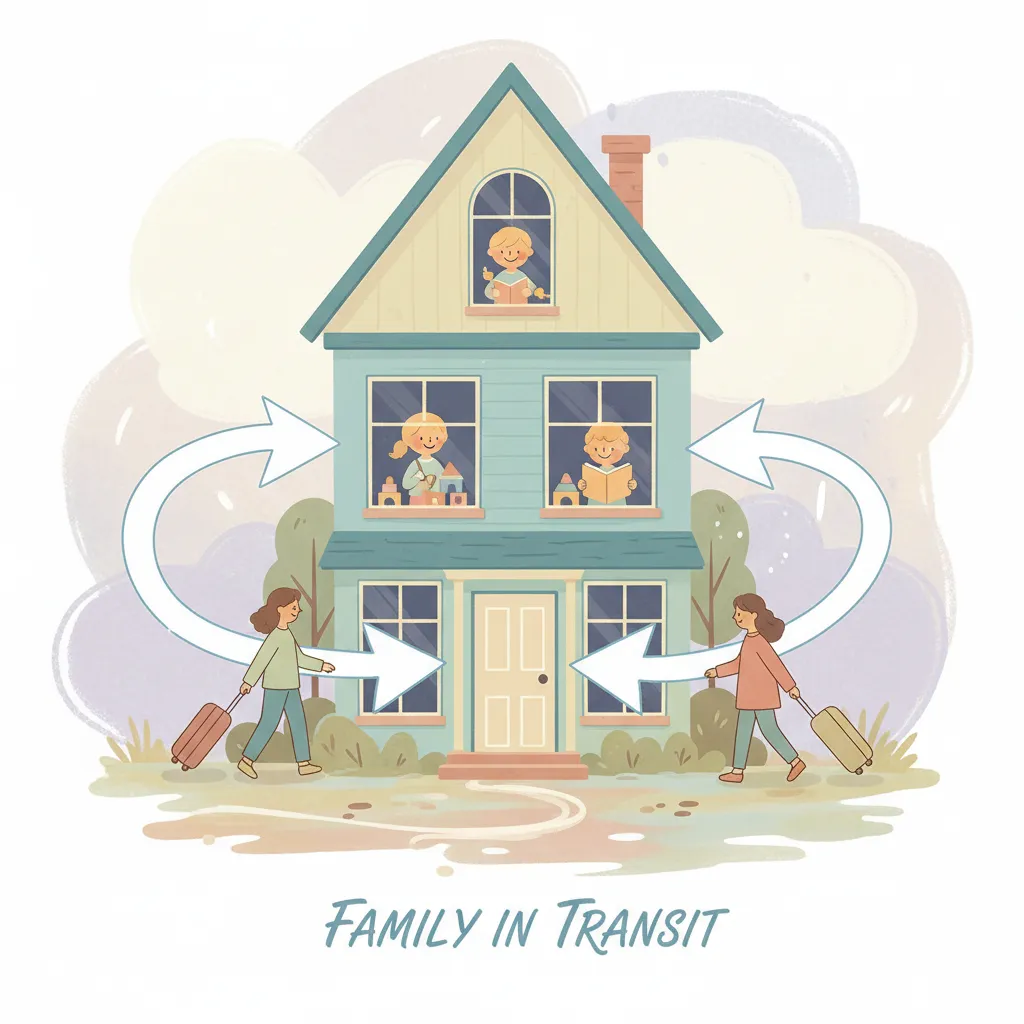
Birdnesting divorce is a co-parenting arrangement where children remain in the family home full-time while separated parents rotate in and out according to a custody schedule. This approach prioritizes the children’s stability, allowing them to maintain their routines and environment, while the parents bear the burden of moving between residences.
Separation and divorce are among the most stressful life events a family can endure. In New Zealand, where the Care of Children Act 2004 prioritizes the welfare and best interests of the child above all else, parents are increasingly looking for ways to minimize disruption during this turbulent transition. One such method gaining traction, though still considered unconventional, is “birdnesting” (or simply “nesting”).
Instead of the traditional model where children shuttle back and forth between a mother’s house and a father’s house with packed bags, birdnesting flips the script. The children stay put in the “nest”—the family home—and the parents take turns living there. This comprehensive guide explores the logistics, benefits, and significant challenges of birdnesting, tailored for New Zealand families navigating separation.
What is Birdnesting in Divorce?
The term “birdnesting” is derived from nature, where parent birds fly in and out of the nest to feed and care for their chicks, who remain safe and stationary. In a human context, it is a transitional living arrangement designed to cushion the blow of divorce for children.
In a standard separation, the family home is often sold, or one parent buys the other out, and two new households are established immediately. This often requires children to adapt to a new school, new neighborhood, and the logistical headache of moving belongings between two homes on a weekly or fortnightly basis. Birdnesting delays these changes, keeping the children in their familiar bedrooms, close to their friends, and in their existing school zones.
How the Arrangement Works in Practice
There is no single way to structure a birdnesting arrangement, but it typically follows a pre-agreed roster. The structure depends entirely on the parents’ work schedules, the children’s needs, and the level of cooperation between the ex-partners.
The Rotation Schedule
Common rotation schedules include:
- 2-2-3 Schedule: Parent A stays Mon-Tue, Parent B stays Wed-Thu, and they alternate weekends. This works well for younger children who need frequent contact with both parents.
- Week-On/Week-Off: Parent A resides in the home for seven days, then swaps with Parent B. This reduces the frequency of transitions and cleaning handovers.
Where Do the Parents Go?
When “off-duty,” the parent leaves the family home. Where they go varies significantly based on finances:
- Separate Residences: Each parent rents or buys their own small apartment or studio. This is the most expensive option as it requires maintaining three residences in total.
- Shared Off-Duty Apartment: The parents rent one separate apartment that they rotate into when not at the family home. While cost-effective, this requires high trust and hygiene standards.
- Staying with Family/Friends: For short-term nesting, parents might stay with their own parents or friends during their off weeks.
Weighing the Pros and Cons
While the concept sounds ideal for children, it places a heavy burden on the adults. It is vital to weigh the benefits against the potential friction points.
The Advantages
- Child Stability: The primary benefit is emotional stability. Children do not have to worry about leaving their favorite toy at “Dad’s house” or forgetting homework at “Mum’s house.” Their physical environment remains constant.
- Reduced Logistic Stress: There is no need for drop-offs and pick-ups of children, only the parents move.
- Time to Decide: It buys the couple time to decide what to do with the family asset (the house) without the pressure of an immediate forced sale, which is particularly relevant in the fluctuating New Zealand property market.
The Disadvantages
- Privacy Issues: Even if you are divorced, sharing a space (even sequentially) means you are still intimately involved in each other’s lives. You will see their groceries, their laundry, and potentially evidence of new relationships.
- High Conflict Risk: If the separation was acrimonious, birdnesting can exacerbate tensions. Arguments over who didn’t empty the dishwasher or who left the heating on can derail the arrangement.
- Confusion for Children: If not explained clearly, younger children might harbor false hope that their parents are getting back together because they still see both parents in the same house, albeit at different times.
Financial Implications in the New Zealand Context
New Zealand’s housing market presents unique challenges for birdnesting. In cities like Auckland, Wellington, and Queenstown, the cost of housing is high. Maintaining the family home (mortgage, rates, insurance, utilities) while simultaneously paying for alternative accommodation for the off-duty parent can be financially crippling.
However, for some Kiwi families, birdnesting is a financial necessity rather than a luxury. If the property market is in a downturn, selling the family home immediately might result in a loss or negative equity. Nesting allows the parents to hold the asset until the market improves. Furthermore, renting two family-sized homes in the same school zone is often more expensive than keeping the one mortgage and renting smaller, cheaper studios for the parents.
Under the Care of Children Act, the focus is on the child’s best interests. If a Family Court views the stability of the home as paramount, they may look favorably on parents who attempt this, provided it doesn’t lead to high conflict.

Essential Rules for a Successful Nest
To prevent birdnesting from becoming a battlefield, parents must treat the arrangement like a business agreement. A written “Nesting Agreement” is crucial.
1. The Household Chores Protocol
Nothing breeds resentment faster than coming home to a sink full of dirty dishes. Agree on a standard of cleanliness. The rule should be: “Leave the home as you expect to find it.” Consider hiring a professional cleaner to come in on transition days to neutralize the space.
2. Financial Transparency
Determine exactly how household bills will be paid. Will you maintain a joint account for the mortgage and utilities? Who pays for groceries? Typically, staples (milk, bread, cleaning products) are shared, while specific personal food items are bought individually.
3. Privacy and Boundaries
Establish strict boundaries regarding personal space. The master bedroom might need to become a neutral zone, or parents might choose to sleep in a guest room to avoid the intimacy of sharing a bed (even on different days). Agree on rules regarding new partners: are they allowed in the house? Usually, in the early stages of nesting, the answer should be a firm “no” to maintain the sanctuary of the children’s home.
4. Communication Strategy
Use a shared calendar app to track rotations and children’s activities. Limit communication to logistics and child-related matters. Avoid leaving passive-aggressive notes around the house.

Why Birdnesting is Usually Temporary
While some families manage to birdnest for years, for the vast majority, it is a transitional phase. Experts generally recommend nesting for a period of 3 to 12 months. This duration allows the children to process the separation without the immediate shock of losing their home, but it has a natural expiration date.
Eventually, one or both parents will want to move on with their lives. They may meet new partners, want to purchase their own permanent home, or simply tire of the nomadic lifestyle involved in rotating residences. As noted by Psychology Today, the psychological toll of never truly having a “home base” for the parents can lead to burnout. Parents need stability too.
Birdnesting should be viewed as a bridge, not a destination. It is a way to cross the turbulent waters of early separation gently. Once the family has adjusted to the new reality, and financial settlements are finalized, the transition to two separate, happy households can begin.
Frequently Asked Questions
Is birdnesting good for the child?
Yes, generally, birdnesting is considered beneficial for children in the short to medium term. It minimizes disruption to their daily lives, schooling, and social circles, allowing them to process their parents’ separation in a familiar, secure environment.
How long should you birdnest for?
Most experts recommend birdnesting for a period of 3 to 6 months, extending up to a year in some cases. It is rarely a permanent solution due to the financial and emotional strain it places on the parents.
Is birdnesting expensive?
It can be. Birdnesting effectively requires maintaining three living spaces (the family home plus a residence for each parent when off-duty). However, it can be cost-effective if parents share a modest off-duty rental or stay with family, avoiding the immediate need to rent two large family homes.
What are the rules for birdnesting?
Key rules include maintaining a strict rotation schedule, agreeing on hygiene and cleaning standards for handovers, respecting privacy (no snooping), and setting clear boundaries regarding new romantic partners entering the family home.
Does birdnesting work with high conflict parents?
Generally, no. Birdnesting requires a high level of cooperation, communication, and trust. If parents cannot communicate without conflict, sharing a space—even on a rotating basis—will likely lead to further disputes that harm the children.
Do I need a lawyer for a birdnesting agreement?
While not strictly mandatory, it is highly advisable to have a lawyer review any parenting agreement. In New Zealand, you can draft a parenting plan yourselves, but making it legally binding or ensuring it covers financial liabilities usually requires legal advice.