
Neurodiverse divorce NZ refers to the separation process under New Zealand law where one or both partners possess neurological differences such as Autism Spectrum Disorder (ASD) or ADHD. Successfully navigating this requires specialized legal approaches that account for executive function deficits, sensory processing issues, and communication barriers, ensuring that division of relationship property and care arrangements under the Care of Children Act 2004 accurately reflect the unique needs of the family.
Separation is universally stressful, but when neurodivergence is a factor, the complexity of untangling a life together is magnified significantly. In New Zealand, where the “no-fault” dissolution of marriage is the standard, the focus shifts heavily to the practicalities of care arrangements and relationship property. However, for couples where one partner is neurotypical and the other neurodivergent (or both are neurodivergent), standard mediation and legal strategies often fail.
The intersection of high-conflict relationship psychology and the legal system requires a nuanced understanding. Whether the diagnosis is Autism (ASD), ADHD, or other executive function disorders, these neurological differences impact how parties negotiate, how they appear before a judge, and how they parent. This guide provides a definitive roadmap for navigating a neurodiverse divorce in New Zealand.
The Unique Dynamics of Neurodiverse Relationship Breakdowns
To manage a separation effectively, one must first understand the mechanics of the breakdown. In many neurodiverse relationships, particularly those that are undiagnosed or unsupported, patterns of conflict become entrenched over decades. These patterns do not disappear when the separation papers are filed; in fact, the stress of the legal process often exacerbates them.

The “Cassandra Syndrome” and Emotional Deprivation
A common dynamic in neurodiverse relationships—often referred to as the “Cassandra Syndrome”—occurs when the neurotypical partner feels emotionally deprived and unheard, while the neurodivergent partner feels constantly criticized and overwhelmed. In the context of a divorce, this creates a volatile environment. The neurotypical partner may approach the separation with a high degree of resentment, feeling they have carried the emotional and administrative load of the family for years. Conversely, the neurodivergent partner may feel blindsided, struggling to process the sudden change in routine and structure.
Executive Dysfunction and the Division of Assets
Under the Property (Relationships) Act 1976, parties are required to provide full and frank disclosure of assets. For a partner with ADHD or executive dysfunction, the task of gathering bank statements, valuing assets, and organizing paperwork can be neurologically paralyzing.
This is often misinterpreted by lawyers and the Family Court as:
- Deliberate stalling or obstruction.
- Hiding assets.
- Lack of cooperation.
It is crucial to differentiate between malicious non-disclosure and an inability to organize due to executive dysfunction. Recognizing this early can save thousands of dollars in legal fees spent on chasing documents that the other party simply cannot summon the focus to compile.
Navigating the NZ Family Court: Misunderstandings and Bias
The New Zealand Family Court system is designed to be robust, but it is not always equipped to recognize the subtleties of neurodivergence without expert assistance. Judges and lawyers are trained in law, not necessarily in clinical psychology or neurology.
Misinterpretation of Demeanour
In a courtroom or mediation setting, demeanour matters. Unfortunately, common neurodivergent traits can be weaponized or misunderstood:
- Flat Affect (ASD): A lack of visible emotion may be interpreted by a judge as a lack of empathy or care for the children.
- Meltdowns or Shutdowns: Overwhelmed by the sensory environment of the court or aggressive cross-examination, a neurodivergent individual may shut down or become agitated. This can be misread as aggression or instability.
- Hyper-focus on Rules: An autistic individual’s insistence on strict adherence to rules or minor details in an affidavit can be perceived as being litigious, controlling, or “high conflict.”
It is vital to instruct a lawyer who understands these nuances. Your legal representative must be able to frame these behaviours correctly to the court—not as character flaws, but as neurological differences that require accommodation, not punishment.
According to the New Zealand Ministry of Justice, the primary consideration in all proceedings is the welfare and best interests of the child. When neurodivergence is framed correctly, it becomes a factor in determining how care is delivered, rather than a reason to deny care.
Tailoring Parenting Plans for Neurodiverse Needs
Standard parenting orders (such as week-on/week-off arrangements) often fail in neurodiverse families. If the children or one of the parents are neurodivergent, the parenting plan must be highly specific and structured. Ambiguity is the enemy of a neurodiverse divorce.
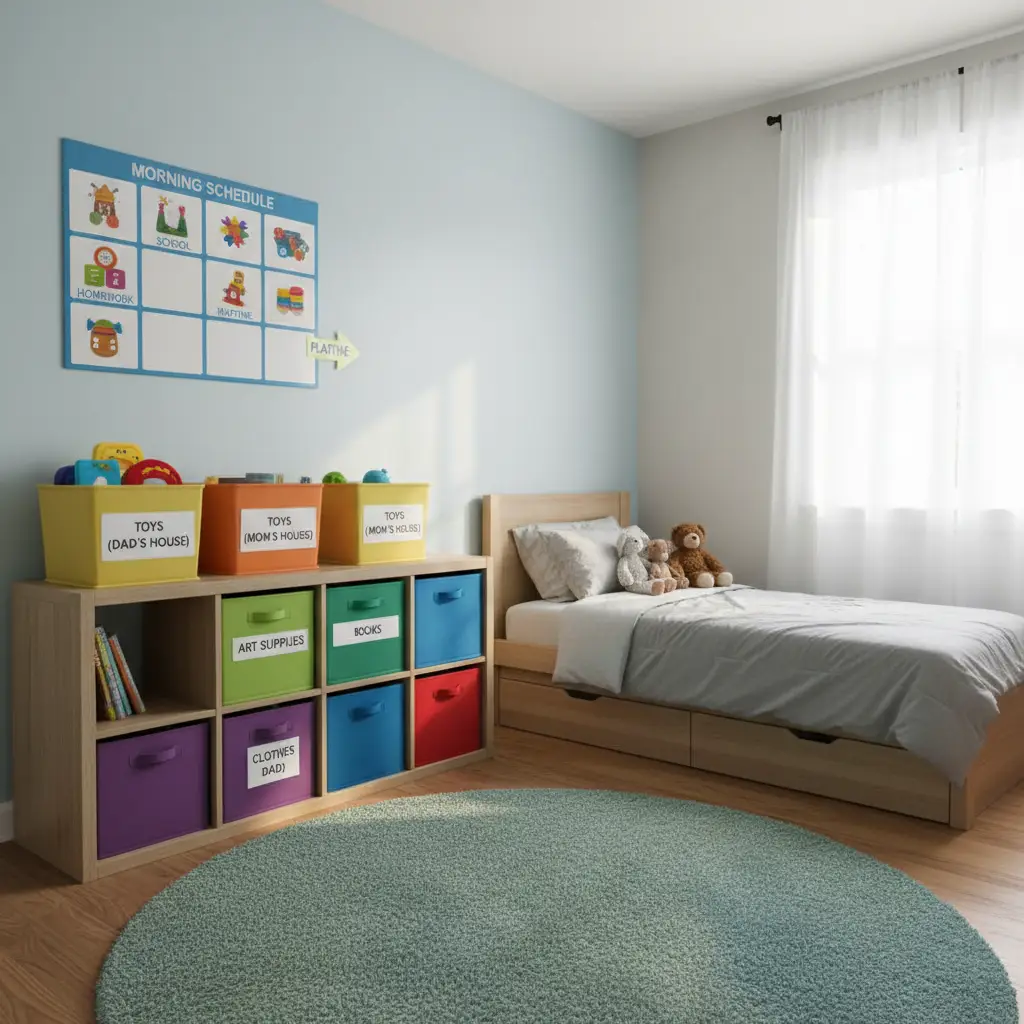
The Need for Explicit Structure
While neurotypical parents might agree to “reasonable contact” or “flexible drop-offs,” these vague terms are a recipe for disaster in this niche. A robust parenting plan for neurodiverse families should include:
- Precise Transition Times: Specify the exact time and location. Avoid “after school”—use “3:00 PM at the school gate.”
- Transition Protocols: If a child has ASD, transitions are difficult. The plan might specify that the child needs 15 minutes of downtime before switching cars, or that a specific comfort object must travel with them.
- Consistency of Rules: While parents cannot dictate what happens in the other house, for neurodiverse children, radical differences in routine (sleep times, screen time) can cause regression. A parenting plan can include agreements on core routines to maintain stability.
Parallel Parenting vs. Co-Parenting
In high-conflict neurodiverse separations, “co-parenting” (which requires high levels of communication and collaboration) is often unrealistic and damaging. Parallel parenting is frequently a better solution.
In parallel parenting, parents disengage from each other while remaining fully engaged with the children. Communication is limited to emergencies and logistics. Each household operates independently. This reduces the emotional friction that often triggers neurodivergent burnout or conflict, allowing the parent to focus entirely on the child during their time.
Communication Strategies for Neurodiverse Co-Parenting
Communication breakdown is the leading cause of return trips to the Family Court. When one party has a literal processing style (common in ASD) and the other relies on emotional subtext, misinterpretation is inevitable.
The BIFF Method
We strongly recommend the BIFF method for all written communication (text, email, or parenting apps). Responses should be:
- Brief: Keep it short. 2-3 sentences max.
- Informative: Stick to the facts (logistics, health, school). No opinions or feelings.
- Friendly: Maintain a polite tone (e.g., “Thanks,” “Have a good weekend”) to prevent escalation.
- Firm: Close the conversation. Do not leave it open for debate.
Using Technology as a Buffer
In New Zealand, many judges and lawyers now recommend third-party parenting apps like OurFamilyWizard. These platforms are essential for neurodiverse divorce because:
- They provide a tamper-proof record of communication.
- They include “Toneometer” features that flag emotionally charged language before you hit send.
- They offer shared calendars that help manage executive dysfunction regarding appointments and school events.
Section 133 Reports and Specialist Legal Support
In cases where the impact of neurodivergence on parenting capacity is disputed, the Court may order a specialist report. Under Section 133 of the Care of Children Act 2004, a psychologist is appointed to interview all parties and the children.
Navigating the Section 133 Process
This is a critical juncture in the legal process. If you are neurodivergent, it is imperative that the psychologist appointed has specific expertise in adult neurodiversity. A generalist psychologist may misinterpret autistic traits as personality disorders (such as narcissism or borderline personality disorder), which can have devastating consequences for custody arrangements.
You have the right, through your lawyer, to request that the expert has the relevant qualifications to assess neurodivergence. Be prepared to provide:
- Previous diagnostic reports.
- Letters from therapists or psychiatrists.
- Examples of how you manage your condition (medication, therapy, strategies).
The Role of Counsel for Child
The Court will likely appoint a “Counsel for Child”—a lawyer representing the children’s interests. They will interview the children and the parents. Neurodivergent parents should prepare for these meetings by writing down key points beforehand to avoid “going blank” or over-explaining due to anxiety.
Moving Forward: Strategy Over Emotion
A neurodiverse divorce in NZ is a marathon, not a sprint. The legal system moves slowly, and the emotional toll is heavy. However, by understanding the intersection of neurology and law, you can protect your rights and your children’s well-being.
Focus on evidence, not narrative. Focus on structure, not sentiment. Whether you are the neurodivergent partner or the neurotypical partner, the goal remains the same: a stable, conflict-free future for the children involved. By utilizing the Care of Children Act correctly and implementing strict communication protocols, you can navigate through the high-conflict phase and reach a sustainable resolution.
People Also Ask
Does neurodiversity affect child custody in NZ?
Neurodiversity itself is not a ground to deny custody. However, the Family Court looks at parenting capacity. If a condition like unmanaged ADHD or ASD affects the safety or wellbeing of the child, the court may impose conditions. The focus is always on the “welfare and best interests” of the child under the Care of Children Act 2004.
How can I prove my ex’s neurodivergence is causing conflict?
You cannot “diagnose” your ex in court. Instead, focus on specific behaviours and their impact on the children. Document incidents of missed supervision, emotional outbursts, or rigid behaviours. You may request a Section 133 psychological report where a professional can assess personality and cognitive functioning.
Is ADHD considered a disability in NZ divorce law?
NZ law operates on a no-fault basis for dissolution, so ADHD is not “grounds” for divorce. In terms of property and children, ADHD may be considered a disability if it impacts the ability to earn income (relevant for spousal maintenance) or parenting capacity, but it is generally viewed as a health factor to be managed rather than a legal disability preventing divorce.
What is a Section 133 Report in NZ?
A Section 133 report is a psychological assessment ordered by the Family Court under the Care of Children Act. An independent psychologist interviews the parents and children to provide recommendations on care arrangements. It is often used in complex cases involving allegations of alienation, abuse, or significant psychological issues.
How do I co-parent with a narcissist or high-conflict ex in NZ?
Experts recommend “Parallel Parenting” rather than co-parenting. This minimizes direct contact. Use detailed parenting orders that leave no room for interpretation, communicate only via apps like OurFamilyWizard, and use the BIFF method (Brief, Informative, Friendly, Firm) for all correspondence.
Can I get Legal Aid for a neurodiverse divorce in NZ?
Yes, Legal Aid is available for family disputes in New Zealand if you meet the income and asset thresholds. Given the complexity of neurodiverse cases, it is advisable to find a Legal Aid lawyer who has experience with high-conflict or psychological cases.