
A Partnership Resident Visa NZ allows the partner of a New Zealand citizen or resident to live, work, and study in New Zealand indefinitely. To qualify for this visa category, the couple must demonstrate to Immigration New Zealand (INZ) that they have been living together in a genuine and stable relationship for at least 12 months.
Navigating the complexities of New Zealand immigration law is often one of the most stressful hurdles a couple can face. Unlike other visa categories that rely on points for skills or employment offers, the Partnership Resident Visa relies entirely on the subjective assessment of your relationship’s authenticity. It is not merely about being in love; it is about proving a shared life through meticulous documentation.
Whether you are married, in a civil union, or in a de facto relationship, the burden of proof lies with the applicant. This guide serves as a comprehensive resource to help you understand the rigorous standards set by Immigration New Zealand (INZ) and how to successfully secure your future together in Aotearoa.

Understanding the Partnership Resident Visa NZ
The Partnership Resident Visa NZ is the gold standard for couples wishing to settle permanently. It grants the successful applicant the right to stay in New Zealand indefinitely and eventually apply for permanent residence or citizenship. However, it is distinct from the Partnership Work Visa, which is a temporary visa often used as a stepping stone.
To be eligible, your partner (the sponsor) must be a New Zealand citizen or a holder of a New Zealand Residence class visa. The sponsor must also be “eligible” to support you, meaning they cannot have domestic violence convictions or have sponsored multiple partners previously within a specific timeframe.
The Difference Between Resident and Work Visas
Many couples make the mistake of applying for residence too early. The critical distinction lies in the duration of cohabitation:
- Partnership Work Visa: Generally requires proof that you are living together in a genuine relationship, but there is no strict minimum timeframe defined in policy (though 2-3 months is often the practical minimum for evidence).
- Partnership Resident Visa: Strictly requires that you have lived together for at least 12 months at the time of filing the application.
Core Eligibility Criteria for Couples
INZ assesses four main pillars when adjudicating a partnership application. Failing to meet even one of these can lead to an instant decline. The relationship must be:
- Genuine: The relationship is real and entered into for love and companionship, not for immigration status.
- Stable: The relationship is likely to endure.
- Exclusive: You are not in a partnership with anyone else.
- Living Together: You share the same home as your primary place of residence.
Additionally, both the applicant and the supporting partner must meet character requirements. The applicant must also meet health standards, which involves undergoing a comprehensive medical examination.
The “Living Together” Requirement Explained
The concept of “living together” is the single most common reason for visa rejection. In the context of the Partnership Resident Visa NZ, living together does not mean staying at each other’s houses on weekends, going on holidays together, or being roommates.
Immigration New Zealand defines living together as sharing the same home as your primary residence. This means you effectively run a combined household. INZ officers will look for signs of a merged life, such as sharing household chores, financial interdependence, and the public recognition of your relationship.
What Does Not Count?
- Time spent dating before moving in: Even if you dated for five years, that time does not count toward the 12-month requirement.
- Periods of separation: While INZ accepts that couples may be apart temporarily for work or family emergencies, long periods of living apart can reset the clock or cast doubt on the stability of the relationship.
- Flatting situations: If you live in a flat with others and maintain separate finances and separate bedrooms, it may be difficult to prove you are in a partnership rather than just flatmates.
For authoritative definitions on partnership criteria, you can refer to the official Immigration New Zealand operational manual.
Essential Evidence: Proving Your Relationship
In immigration law, if it isn’t documented, it didn’t happen. You must provide a “critical mass” of evidence that covers the entire duration of your relationship, specifically focusing on the 12 months leading up to the application.
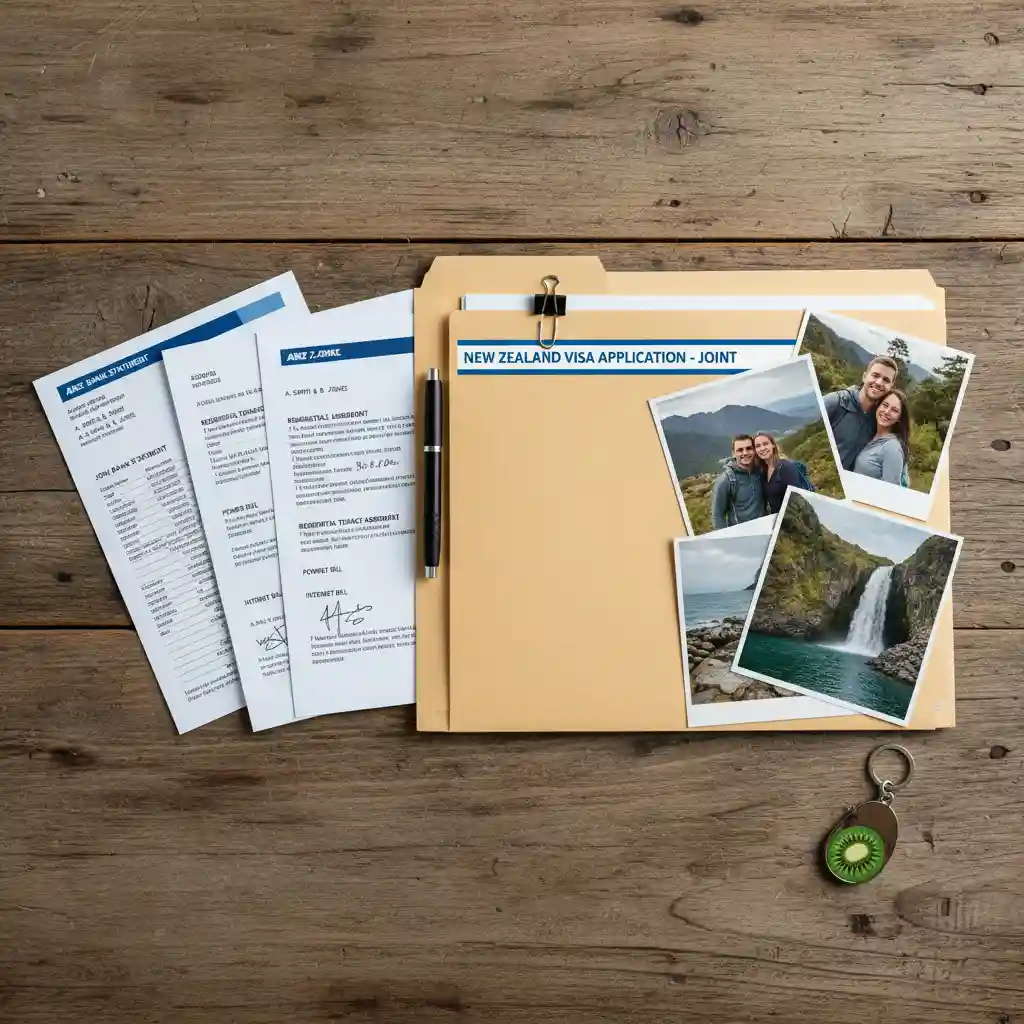
1. Joint Financial Documents
This is arguably the strongest form of evidence. It shows you trust each other with money and share financial responsibilities.
- Joint Bank Accounts: Provide statements showing regular use by both parties for common expenses (groceries, rent, utilities). An inactive joint account is useless.
- Joint Assets: Vehicle ownership, property titles, or joint term deposits.
- Joint Liabilities: Shared loans, credit cards, or hire purchase agreements.
2. Accommodation Evidence
You must prove you reside at the same address.
- Lease Agreements: Both names should be on the tenancy agreement.
- Utility Bills: Power, internet, or water bills addressed to both of you, or separate bills sent to the same address.
- Official Correspondence: Letters from government agencies (IRD, ACC, Electoral Commission) sent to the same address.
3. Social Recognition and Commitment
Does the world know you are a couple?
- Letters of Support: Statutory declarations from friends and family (Form INZ 1178) attesting to the genuineness of the relationship.
- Photos: A chronological selection of photos showing you together in various settings, with family, and at events. Avoid submitting 500 selfies; context matters.
- Communication: If you have had periods of separation, provide chat logs (WhatsApp, Messenger) and call logs to prove the relationship remained active.
The Application Process and Timelines
Applying for a Partnership Resident Visa NZ is a multi-stage process. Understanding the timeline helps manage expectations and reduces anxiety.
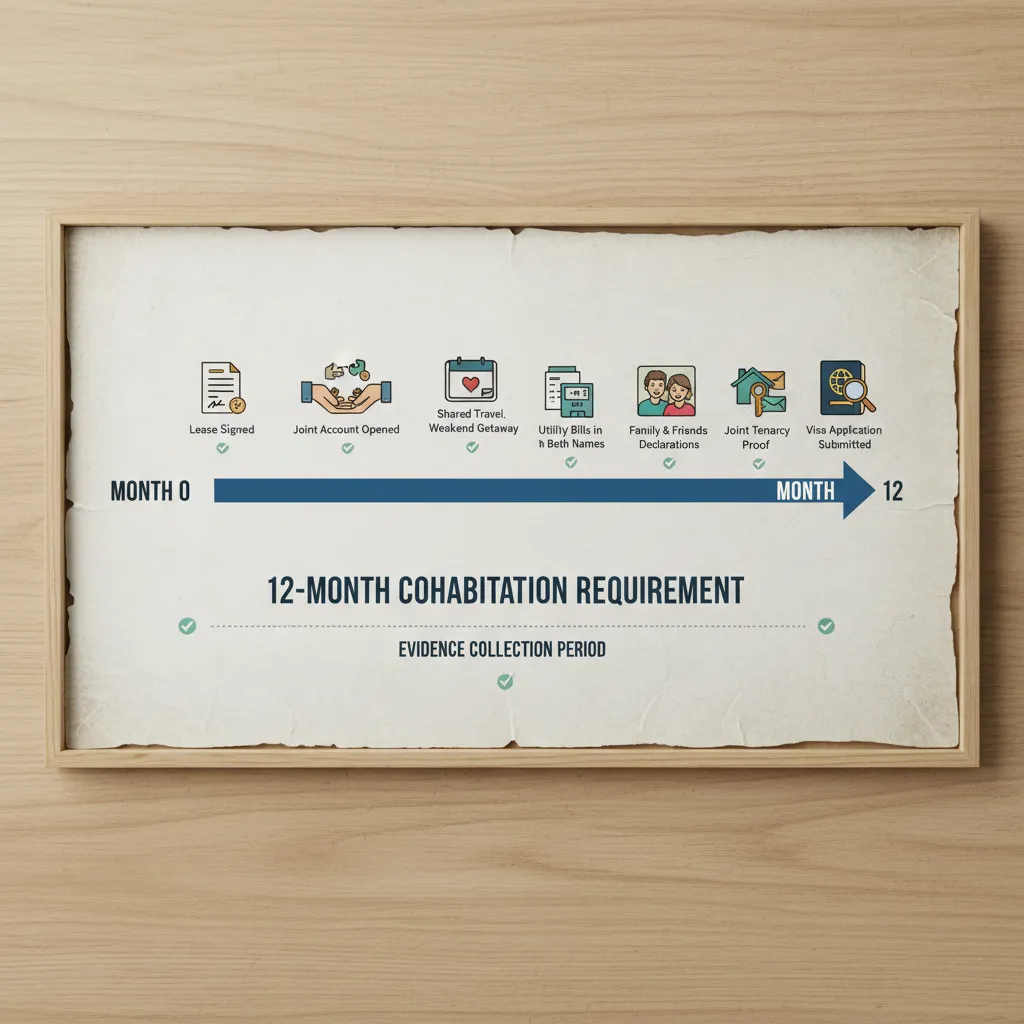
Step 1: Preparation (Months 1-12 of living together)
Do not wait until the 12-month mark to start gathering evidence. Collect mail, save bank statements, and take photos throughout the year. Ensure your partner (the sponsor) checks their eligibility status.
Step 2: Submission
Most applications are now submitted online via the Immigration Online system. You will need to upload high-quality scans of all evidence. The sponsor must complete a separate form supporting the partnership.
Step 3: Assessment and Processing
Once submitted, the application enters a queue. Processing times fluctuate heavily based on INZ workload.
- Current Timelines: As of recent trends, processing can take anywhere from 6 to 12 months. Some complex cases may take longer.
- Allocation: Eventually, an immigration officer is assigned to your case. They will review the documents and may request further information (PPI letter) if they identify gaps.
Step 4: The Interview (Optional)
In some cases, if the evidence is deemed insufficient or inconsistent, INZ may conduct an interview. This can be done via phone or in person. They will ask detailed questions about your daily routines, your partner’s family, and your history to test credibility.
Common Pitfalls and Reasons for Rejection
Even genuine couples get rejected. Usually, this is due to poor presentation of the case or a misunderstanding of the rules.
1. The “Timeline Gap”
A common error is providing evidence for the start of the relationship and the current date, but nothing in between. You must show a continuous timeline. If you have a three-month gap in bank statements or evidence, INZ may suspect you broke up during that time.
2. Insufficient Financial Interdependence
Living like flatmates is a major red flag. If you split everything 50/50 exactly and keep finances totally separate, INZ may question the commitment level. While you don’t need to merge every penny, showing some level of pooled resources is vital.
3. Inconsistencies in Interviews
If interviewed, small discrepancies can be fatal. If you say you watched a movie Tuesday night, and your partner says you went out for dinner, it creates doubt. Honesty is key, but so is having a clear recollection of your shared life.
4. Previous Sponsorships
A New Zealand citizen or resident can only sponsor a partner twice in their lifetime, and those sponsorships must be at least five years apart. If your partner has sponsored others previously, verify they are actually eligible to support you before applying.
Frequently Asked Questions
Below are answers to common questions regarding the Partnership Resident Visa NZ, structured to assist with your application planning.
How long does it take to get a Partnership Resident Visa in NZ?
Processing times vary, but typically range between 6 to 12 months. Simple cases with well-organized evidence may be faster, while complex cases requiring medical referrals or character waivers can take longer. Always check the official INZ website for the most current timeframes.
Can I apply for a resident visa if we haven’t lived together for 12 months?
No. You must have lived together for at least 12 months at the time of application. If you have lived together for less than 12 months, you should apply for a Partnership Work Visa first to accrue the necessary time.
Can I work while my Partnership Resident Visa is processing?
Not automatically. The Resident Visa application itself does not grant interim work rights. You must hold a valid temporary visa (like a Partnership Work Visa) while your residence application is being processed.
What happens if my partner has sponsored someone before?
A sponsor can support a maximum of two partners for residence in their lifetime. Furthermore, at least five years must have passed since the previous partnership application was decided. If they do not meet this, they cannot support your application.
Do we need to be married to get a partnership visa?
No, marriage is not a requirement. New Zealand immigration law treats de facto relationships (including same-sex couples) the same as married couples. The core requirement is proving you have lived together in a genuine relationship for 12 months.
What evidence is best for proving we live together?
The best evidence includes legal and official documents: joint tenancy agreements, property titles, joint bank statements showing active use, and utility bills addressed to both names. Secondary evidence includes mail to the same address and letters of support.
For further reading on specific visa conditions and operational manuals, consult the New Zealand Government’s official immigration guide.


