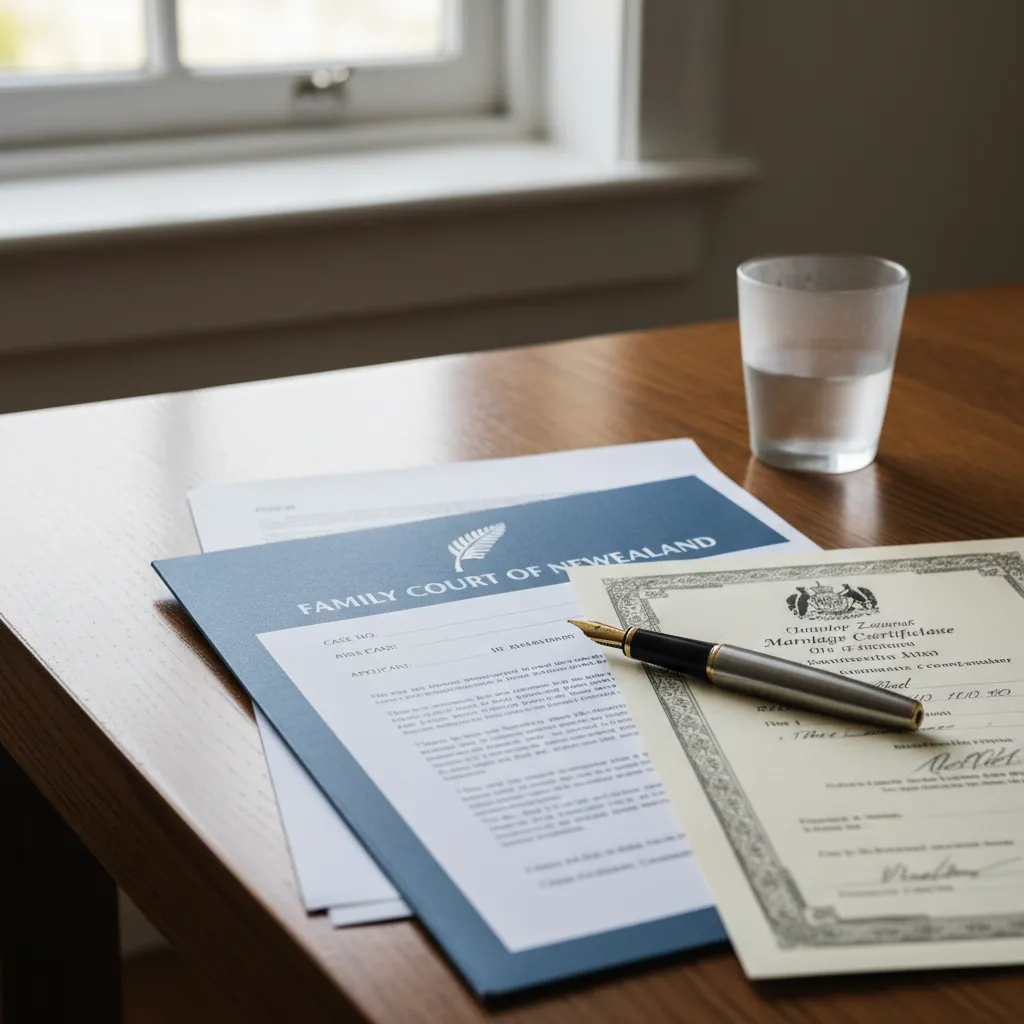
A separation agreement template NZ is a foundational document used by separating couples to record how they will divide relationship property, debts, and childcare responsibilities. While templates provide a structural starting point, for an agreement to be legally binding in New Zealand under the Property (Relationships) Act 1976, both parties must receive independent legal advice and have the document certified by their respective lawyers.
Separation is rarely an easy process. Aside from the emotional toll, the logistical and financial disentanglement of two lives can be overwhelming. In New Zealand, the law provides a clear framework for how assets should be divided, but relying solely on the courts to decide your future is often costly and time-consuming. This is where a written separation agreement becomes your most valuable asset.
Whether you are married, in a civil union, or in a de facto relationship of three years or more, documenting your separation terms is essential for moving forward with certainty. This guide explores the nuances of New Zealand separation agreements, the specific legal requirements to make them stick, and how to use templates effectively without exposing yourself to future litigation.
What is a Separation Agreement in New Zealand?
In New Zealand legal terms, a separation agreement is often referred to as a —Section 21 Agreement—referencing Section 21 of the Property (Relationships) Act 1976 (PRA). This is a contract between two partners that opts out of the standard equal sharing rules of the Act or, more commonly, formalizes the division of assets according to the Act’s principles without needing to go to court.
A separation agreement serves as a definitive record. It stops the clock on financial mingling and provides a clear roadmap for uncoupling. Unlike a dissolution of marriage (divorce), which formally ends the legal marriage, a separation agreement deals with the practicalities of living apart and dividing the ‘relationship property pool.’

Many couples mistakenly believe that simply moving out constitutes a legal separation of finances. However, without a written agreement, debts incurred by one partner could still be considered relationship debts, and assets acquired after physical separation might still be subject to a claim. A written agreement draws a line in the sand.
The Critical Importance of the Date of Separation
One of the first and most vital elements your separation agreement template must address is the Date of Separation. In New Zealand law, this date is pivotal because it determines the value of the relationship property pool.
Generally, assets and debts are valued at the date of the hearing if the matter goes to court, but in a negotiated agreement, parties often agree to value assets as at the date of separation or the date of the agreement. Establishing a firm date prevents —post-separation contributions— from complicating the division.
Defining the Date
The date of separation is defined as the point when the relationship ended, and the couple ceased to live together as partners. This doesn’t necessarily mean living in different houses; you can be —separated under one roof.— However, you must prove that the domestic partnership has ended (e.g., separate bedrooms, separate finances, no longer socializing as a couple).
If you cannot agree on this date, it becomes a contentious legal issue. A written agreement locks this date in, preventing arguments later about whether a lottery win or a new debt incurred two months after one person moved out belongs to the relationship or the individual.
What a Comprehensive Separation Agreement Covers
A robust separation agreement template NZ should be comprehensive. Leaving items out can result in future claims, as the full and final settlement only applies to assets disclosed and dealt with in the agreement.
1. Relationship Property vs. Separate Property
The agreement must list all assets and classify them. Relationship property typically includes the family home (regardless of when it was bought), family chattels (furniture, cars), superannuation (KiwiSaver) accumulated during the relationship, and income earned during the relationship. Separate property generally includes inheritances or taonga (treasures) kept separate from relationship funds.
2. Division of Liabilities (Debts)
Who pays the mortgage until the house is sold? Who takes on the credit card debt? The agreement must explicitly state which debts are joint and how they will be discharged. Ignoring debt allocation is a common mistake in DIY drafts.
3. Care of Children (Parenting Plan)
While property agreements are binding if certified, agreements regarding the care of children (custody) are generally not enforceable in the same rigid way. The Family Court always retains the jurisdiction to decide what is in the best interests of the child. However, including a parenting plan in your agreement sets clear expectations regarding day-to-day care, holiday schedules, and decision-making rights.
4. Spousal Maintenance
If one partner cannot support themselves reasonably after the separation, they may claim spousal maintenance. The agreement should detail any interim or lump-sum maintenance payments, or explicitly state that neither party seeks maintenance.
Legal Enforceability: The Section 21 Requirements
This is the most important section of this guide. You cannot simply download a free separation agreement template NZ, sign it at the kitchen table, and expect it to hold up in court. New Zealand legislation is very protective of partners to ensure neither was coerced or unaware of their entitlements.
According to the Property (Relationships) Act 1976, specifically Section 21F, a relationship property agreement is void unless it meets the following criteria:
- The agreement must be in writing and signed by both parties.
- Each party must have independent legal advice before signing.
- The signature of each party must be witnessed by a lawyer.
- The lawyer who witnesses the signature must certify that they have explained the effect and implications of the agreement to that party.
If you skip the independent lawyers, the agreement is merely a —gentleman’s agreement.— If one partner later realizes they got a bad deal, they can apply to the Family Court to set the agreement aside. The Court will almost certainly overturn an uncertified agreement, meaning you are back to square one.
Separation Agreement Template NZ: DIY vs. Lawyer Drafted
Given the strict legal requirements, you might wonder if there is any point in using a template at all. The answer is yes, but it serves a specific purpose: preparation.
The Role of a Template
Using a high-quality separation agreement template allows you to compile your thoughts, assets, and proposed division before the clock starts ticking on lawyer fees. It acts as a —Heads of Agreement— or a briefing document.
Pros of using a template for preparation:
- Cost Efficiency: You spend less time explaining the basics to your lawyer.
- Clarity: It forces you and your ex-partner to discuss difficult topics objectively.
- Completeness: Good templates remind you of assets you might forget, like KiwiSaver or insurance policies.
The Lawyer’s Role
Once you have filled out a template, you take it to your lawyer. They will not just stamp it; they will review it to ensure it is fair and legally sound. They will then draft the final Section 21 Agreement based on your template. This hybrid approach—DIY preparation followed by professional execution—is often the most cost-effective way to secure a binding separation.
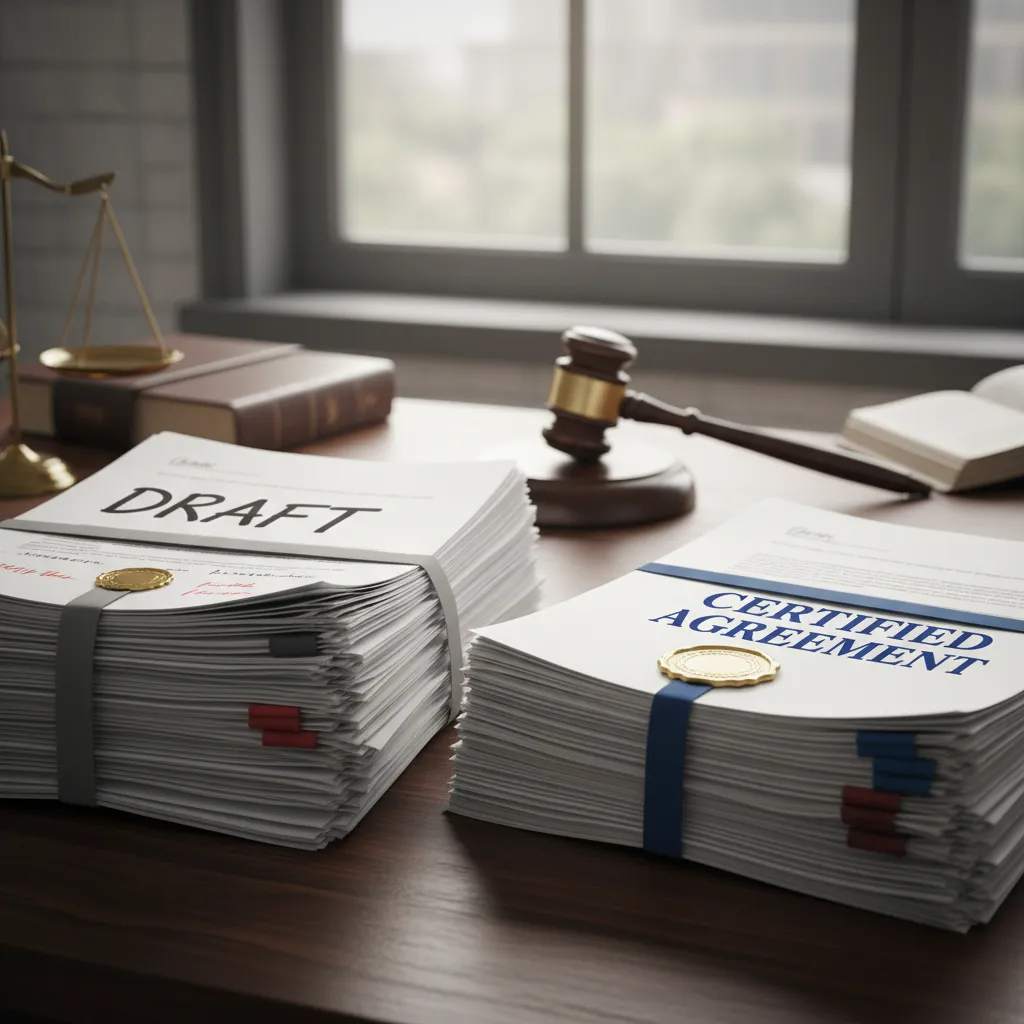
The Risks of Informal or ‘Kitchen Table’ Agreements
New Zealand case law is littered with examples of agreements being set aside because they were —serious injustices.— Even if you follow the certification rules, the Court can still set aside an agreement if it creates a serious injustice. However, the threshold for overturning a properly certified agreement is very high.
The risks of an informal (uncertified) agreement include:
- Zero Enforceability: Your ex can change their mind tomorrow.
- Future Claims: An ex-partner can come back years later (for example, when property values have skyrocketed) and claim a share of your current assets, arguing the relationship property was never formally divided.
- Debt Liability: Creditors do not care about informal agreements. If your name is on a joint debt your ex agreed to pay (but didn’t), the bank will come after you.
Steps to Finalizing Your Property Division
To ensure you navigate this process correctly, follow this step-by-step workflow:
- Full Disclosure: Gather all financial documents. Bank statements, mortgage balances, KiwiSaver valuations, and vehicle valuations. Hiding assets is grounds for an agreement to be overturned later.
- Drafting the Proposal: Use a separation agreement template to outline who gets what. Discuss this with your ex-partner if relations are amicable.
- Independent Legal Advice: You must hire one lawyer, and your partner must hire a different lawyer from a different firm. You cannot use the same lawyer.
- Negotiation and Advice: Your lawyer will advise you on whether the deal is fair under the PRA. If it isn’t, they are obligated to tell you.
- Signing and Certification: Once the terms are finalized, you will sign in front of your lawyer, who will sign the certificate. Your partner does the same.
- Implementation: With the signed agreement, you can now refinance mortgages, transfer titles, and split bank accounts. Banks will require the certified agreement to process these changes.
While the requirement for two lawyers adds an upfront cost, it is an insurance policy against future litigation. A separation agreement provides the clean break necessary to rebuild your life with financial security.
Frequently Asked Questions
Can I write my own separation agreement in NZ?
You can draft the initial terms of a separation agreement yourself to save time and negotiate with your partner. However, for the agreement to be legally binding and enforceable under the Property (Relationships) Act 1976, it must be certified by two independent lawyers who have advised each party separately.
How much does a separation agreement cost in NZ?
The cost varies significantly depending on complexity. If you have agreed on all terms and simply need certification, it may cost between $1,500 and $3,000 per party. If extensive negotiation is required, costs can escalate to $5,000 or more. Using a template to prepare can reduce these costs.
Is a text message considered a legally binding separation agreement?
No. A text message, email, or verbal agreement is not legally binding for the division of relationship property in New Zealand. While it might serve as evidence of the date of separation, it does not satisfy the Section 21F requirements of the Property (Relationships) Act.
What happens if we don’t have a separation agreement?
Without a separation agreement, your assets remain legally intertwined. The default rule under the PRA is an equal 50/50 split of relationship property. If you cannot agree later, you may have to apply to the Family Court for a decision, which is expensive and stressful.
Does adultery affect asset division in NZ?
Generally, no. New Zealand operates under a ‘no-fault’ system for separation and divorce. Misconduct or adultery does not usually impact the 50/50 division of relationship property unless the misconduct has significantly reduced the value of the relationship property pool.
How long after separation can I claim property in NZ?
Under the PRA, you generally have 12 months from the date of the dissolution of marriage (divorce) to make a claim. For de facto relationships, you have 3 years from the date of separation. It is crucial to finalize an agreement before these time limits expire.