
Family dynamics psychology is the scientific study of the behavioral patterns, emotional exchanges, and structural hierarchies that define interactions within a kinship network. It examines how individual family members influence and are influenced by the family system as a whole, focusing on roles, boundaries, communication styles, and the transmission of values across generations.
The family unit is arguably the most influential system in human development. It is the primary context where individuals learn to relate to others, regulate their emotions, and understand their place in the world. However, families are rarely static; they are complex, living organisms that shift and evolve based on internal pressures and external stressors. Understanding the psychology behind these dynamics is essential for navigating bloodlines and maintaining healthy kinship bonds.
Understanding Family Systems Theory
At the heart of family dynamics psychology lies Family Systems Theory, a conceptual framework that views the family as an emotional unit rather than a collection of autonomous individuals. Developed largely by Dr. Murray Bowen, this theory suggests that the behavior of one family member cannot be fully understood in isolation from the rest of the family.
In a family system, members are intensely emotionally connected. A change in one person’s functioning is predictably followed by reciprocal changes in the functioning of others. For example, if one parent becomes anxious, that anxiety can propagate through the system, causing a child to become rebellious or a partner to withdraw.
Differentiation of Self
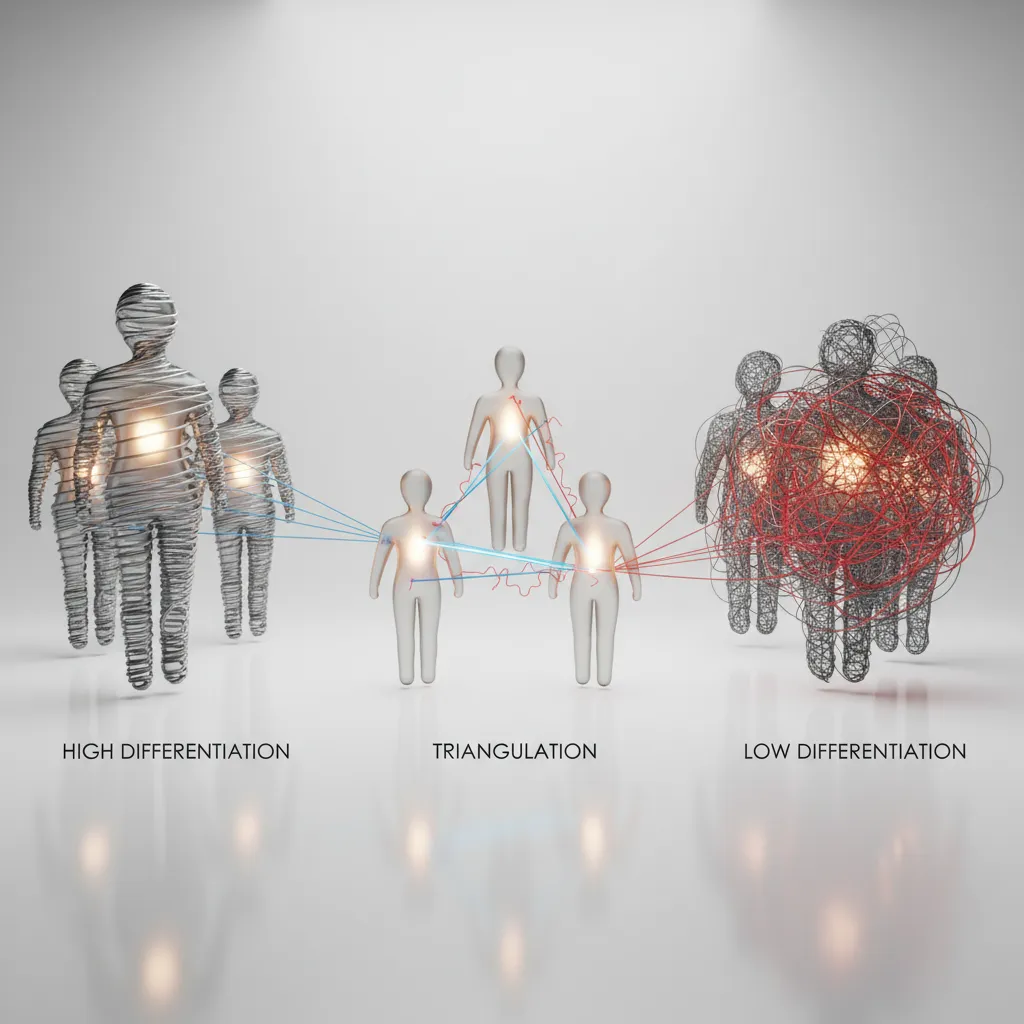
One of the core components of systems theory is the concept of “differentiation of self.” This refers to an individual’s ability to separate their own intellectual and emotional functioning from that of the family group. Highly differentiated individuals can maintain their sense of self while remaining emotionally connected to the group. Conversely, those with low differentiation often experience “fusion” or enmeshment, where their feelings and reactions are dictated by the family’s emotional climate.
Triangulation
Another critical concept is triangulation. When a two-person relationship becomes unstable or anxious, one or both members may “triangle in” a third person to reduce the tension. For instance, a couple experiencing marital conflict might focus their energy on a problematic child to avoid dealing with their relationship issues. While this stabilizes the system temporarily, it often freezes conflict in place and prevents resolution.
The Psychology of Birth Order and Personality
While genetics and environment play massive roles in development, family dynamics psychology also places significant weight on birth order. First theorized by Alfred Adler, the position a child holds in the birth order can influence their personality traits, coping mechanisms, and relationship styles.
The Firstborn: Often viewed as the “responsible” one, firstborns tend to be reliable, structured, and cautious. Having had their parents’ undivided attention initially, they may strive for perfection to maintain that status once siblings arrive. They often take on leadership roles within the family hierarchy.
The Middle Child: Squeezed between the eldest and the youngest, middle children often become expert negotiators and peacemakers. They may struggle with feeling overlooked, leading them to seek validation outside the family unit. Psychologically, they tend to be more flexible and diplomatic.
The Youngest: The “baby” of the family often enjoys more freedom and fewer responsibilities. They may develop outgoing, risk-taking personalities or, conversely, become dependent if others in the family consistently enable them. In family arguments, they often rely on their charm to diffuse tension.
The Only Child: Without siblings to compete with, only children often mature quickly, mimicking adult behaviors. They are typically comfortable with solitude and possess high self-esteem, though they may struggle with conflict resolution involving peers since they did not practice this with siblings.
Healthy vs. Dysfunctional Family Structures
Every family has issues, but the distinction between a healthy family and a dysfunctional one lies in how those issues are handled. Healthy families operate as open systems where information flows freely, and boundaries are respected. Dysfunctional families often operate as closed systems where reality is denied, and roles are rigid.
Characteristics of Healthy Dynamics
In a functional family unit, there is a balance between connection and autonomy. Members are encouraged to express their emotions without fear of retaliation. Key traits include:
- Clear Boundaries: Parents are parents, and children are children. There is no “parentification” where a child is forced to take on adult emotional responsibilities.
- Open Communication: Problems are acknowledged and discussed. There are no “elephants in the room.”
- Flexibility: The family can adapt to stress, such as a move, a death, or a financial crisis, without shattering.
Signs of Deep-Rooted Dysfunction
Dysfunctional families often exhibit patterns that inhibit individual growth. According to the American Psychological Association, chronic conflict and instability can lead to long-term mental health challenges.
- Enmeshment: Boundaries are non-existent. A parent may be overly involved in a child’s life to the point where the child cannot make decisions independently.
- Disengagement: Boundaries are too rigid. Family members are emotionally isolated from one another and live parallel lives without connection.
- Gaslighting: Reality is frequently denied to protect the status quo or a specific family member’s ego.
Common Psychological Roles in the Home
In families dealing with addiction, narcissism, or high dysfunction, members often unconsciously adopt specific roles to survive the chaos. These roles help the system maintain a precarious balance (homeostasis).
- The Hero: Usually the oldest, this child is high-achieving and “perfect” to provide the family with self-worth and distract from internal rot.
- The Scapegoat: The “problem child” who acts out. The family projects all their issues onto this person, blaming them for the family’s dysfunction so they don’t have to look at the root cause.
- The Lost Child: This member withdraws and becomes invisible to avoid the conflict. They require little attention but often struggle with loneliness.
- The Mascot: Uses humor and clowning to diffuse stress and distract the family from pain.

Cultural Variations in Kinship Expectations
Family dynamics psychology is not a one-size-fits-all discipline; it is deeply influenced by cultural context. What is considered “enmeshment” in a Western, individualistic culture might be viewed as “filial piety” or healthy closeness in collectivist cultures.
Individualistic Cultures (e.g., USA, Northern Europe): The goal of the family is often to launch the child into independence. The nuclear family (parents and children) is the primary unit. Boundaries are emphasized, and adult children are expected to live apart from parents.
Collectivist Cultures (e.g., Asia, Latin America, Africa): The goal is interdependence. The extended family (grandparents, aunts, cousins) is the primary unit. Decisions are often made with the group’s welfare in mind rather than the individual’s preference. In these dynamics, loyalty to the bloodline is paramount, and cutting ties is often seen as a betrayal of the self.
Understanding these variations is crucial when analyzing family conflicts. A conflict that appears to be about “control” might actually be a clash between acculturation and tradition, especially in immigrant families.
Navigating and Healing Complex Dynamics
Recognizing negative patterns is the first step toward healing. Whether one is dealing with a narcissistic parent, sibling rivalry, or generational trauma, changing the dynamic requires intentional effort.
Breaking the Cycle
The “multigenerational transmission process” suggests that patterns repeat until someone disrupts them. This person is often called the “cycle breaker.” Breaking the cycle involves:
- Establishing Boundaries: Learning to say “no” and limiting exposure to toxic interactions.
- De-triangulation: Refusing to be the go-between for two other family members.
- Seeking Professional Help: Therapies like Structural Family Therapy or Family Systems Therapy can provide a neutral space to deconstruct harmful habits.
Ultimately, navigating family dynamics psychology is about moving from reactive behavior—where you are controlled by the system—to proactive behavior, where you choose how to engage based on your own values and well-being.
People Also Ask
What are the 4 types of family dynamics?
While there are many models, four common classifications of family dynamics based on parenting styles are Authoritative (high warmth, high standards), Authoritarian (low warmth, high control), Permissive (high warmth, low control), and Neglectful (low warmth, low control). In terms of interaction, dynamics are often categorized as functional, enmeshed, disengaged, or chaotic.
What causes toxic family dynamics?
Toxic dynamics are often caused by untreated mental health issues, substance abuse, intergenerational trauma, or personality disorders (such as narcissism) within the family leadership. Poor communication skills and a lack of emotional regulation also contribute to toxicity.
How does family dynamics affect mental health?
Family dynamics are a primary predictor of mental health. Positive dynamics foster resilience, self-esteem, and emotional intelligence. Negative dynamics, such as chronic conflict or neglect, are linked to anxiety, depression, attachment disorders, and difficulty forming healthy relationships in adulthood.
What is the most common dysfunctional family role?
The “Scapegoat” is one of the most common and damaging roles. This individual is unfairly blamed for the family’s problems, allowing other members to avoid taking responsibility for their own behavior. The Scapegoat often seeks therapy first as they bear the brunt of the systemic stress.
Can you change your family dynamics?
Yes, but one person cannot change the whole system alone. However, by changing your own behavior—setting boundaries, refusing to triangulate, and reacting differently—you force the rest of the system to adjust. This often causes temporary friction but can lead to long-term health.
What is the difference between family structure and family dynamics?
Family structure refers to the composition of the family (e.g., single-parent, nuclear, extended, blended). Family dynamics refers to the quality of interactions, emotional bonds, and behavioral patterns that occur between the members of that structure.