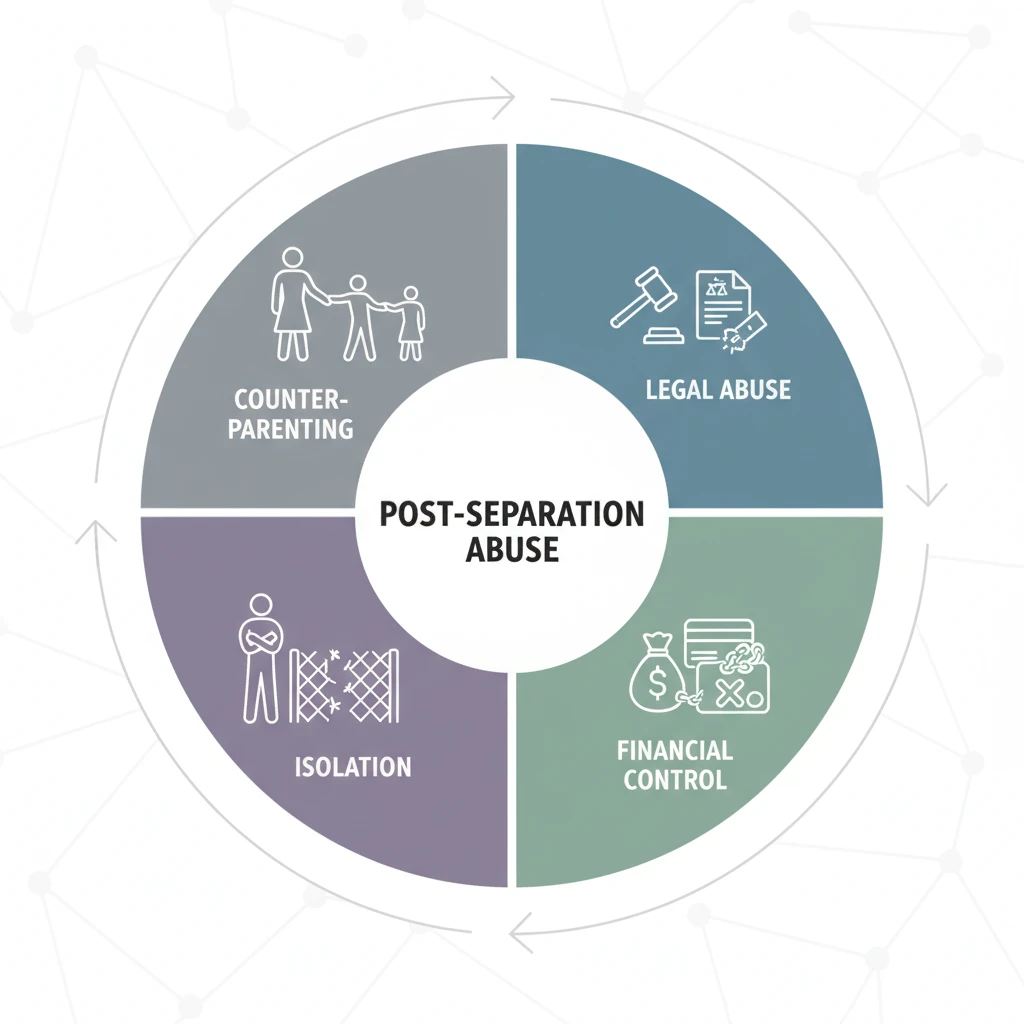
The grey rock method co-parenting strategy involves communicating with a high-conflict or narcissistic ex-partner in a deliberately uninteresting, factual, and non-emotional manner. By becoming as unresponsive as a grey rock, you starve the toxic individual of the emotional supply they crave, thereby de-escalating conflict and creating a clean, neutral paper trail for legal proceedings.
Understanding the Grey Rock Method in Co-Parenting
Navigating a separation is rarely easy, but when co-parenting with a high-conflict personality (HCP) or someone exhibiting narcissistic traits, the communication landscape becomes a minefield. The Grey Rock Method is a behavioral psychology strategy designed to protect your mental health and neutralize toxic interactions. In the context of co-parenting, it is not just a coping mechanism; it is a strategic approach to documentation and legal safety.
The core premise is simple: toxic individuals, particularly those with narcissistic tendencies, feed on emotional reactions. Whether the reaction is positive (praise, submission) or negative (anger, defense, tears), it serves as “supply.” When you engage in a battle of words, defend yourself against false accusations, or plead for reason, you are inadvertently rewarding their behavior.
To implement the grey rock method co-parenting strategy, you must fundamentally shift your objective. Your goal is no longer to be understood, validated, or right. Your goal is to be boring. You become a grey rock: unnoticeable, unengaging, and utterly impenetrable.

The Psychology of High-Conflict Communication
To master this method, one must understand the opponent. In high-conflict divorces, the antagonistic parent often uses communication platforms—email, text, or parenting apps—as a courtroom to litigate their grievances and a stage to provoke you. They are often looking for a hook to drag you back into the emotional cycle of abuse.
When you reply with emotion, you provide them with two things:
- Validation of Control: Knowing they can still upset you proves they still have power over you.
- Ammunition: Emotional responses often contain defensive statements that can be twisted and used against you in court affidavits.
By removing the emotional content from your messages, you disrupt this cycle. According to psychological experts dealing with toxic relationships, when a narcissist no longer receives the validation of an emotional reaction, they eventually seek supply elsewhere. In a legal context, this means the harassment may decrease, or at the very least, their one-sided aggression becomes glaringly obvious to a judge or mediator.
Drafting Legal Correspondence for Court Records
Every email and text message you send to a co-parent should be drafted as if a Family Court Judge is reading over your shoulder. In New Zealand and many other jurisdictions, electronic correspondence is admissible evidence. Your correspondence is your testimony.
When drafting responses using the grey rock method co-parenting approach, you must adhere to strict guidelines to ensure your communications serve your legal case rather than harming it.
The Rules of Engagement
- Stick to Logistics: Discuss only dates, times, medical appointments, and school issues. Do not discuss the relationship, past grievances, or personal opinions.
- Remove Adjectives and Adverbs: These are often carriers of emotion. Instead of saying “I am incredibly disappointed that you were late again,” say “Drop-off occurred at 5:15 PM, 45 minutes past the agreed time.”
- Do Not Defend Yourself (JADE): Do not Justify, Argue, Defend, or Explain. If the co-parent accuses you of being a “bad mother” or “deadbeat dad,” do not reply to the insult. Ignore it completely. Address only the actionable co-parenting matter buried in the message.
- Delay Your Response: Unless it is a medical emergency, never reply immediately. Immediate replies signal that the co-parent has immediate access to your attention. waiting 24 hours allows you to cool down and edit your draft.
The BIFF Technique: A Framework for Grey Rock
To operationalize the grey rock method in writing, many legal professionals and therapists recommend the BIFF response technique, developed by Bill Eddy of the High Conflict Institute. This dovetails perfectly with Grey Rock principles.
- Brief: Keep it short. The fewer words you use, the less material there is to twist. Two to three sentences are usually sufficient.
- Informative: Focus on straight facts. Provide the necessary information to solve the immediate problem.
- Friendly: This does not mean “affectionate.” It means “polite.” A simple “Thanks” or “Kind regards” maintains a professional tone that makes you look reasonable to third-party professionals (lawyers, judges, psychologists).
- Firm: This does not mean “harsh.” It means ending the conversation. Do not leave the door open for debate. State your position or boundary clearly and close the topic.
Practical Examples of Grey Rock Responses
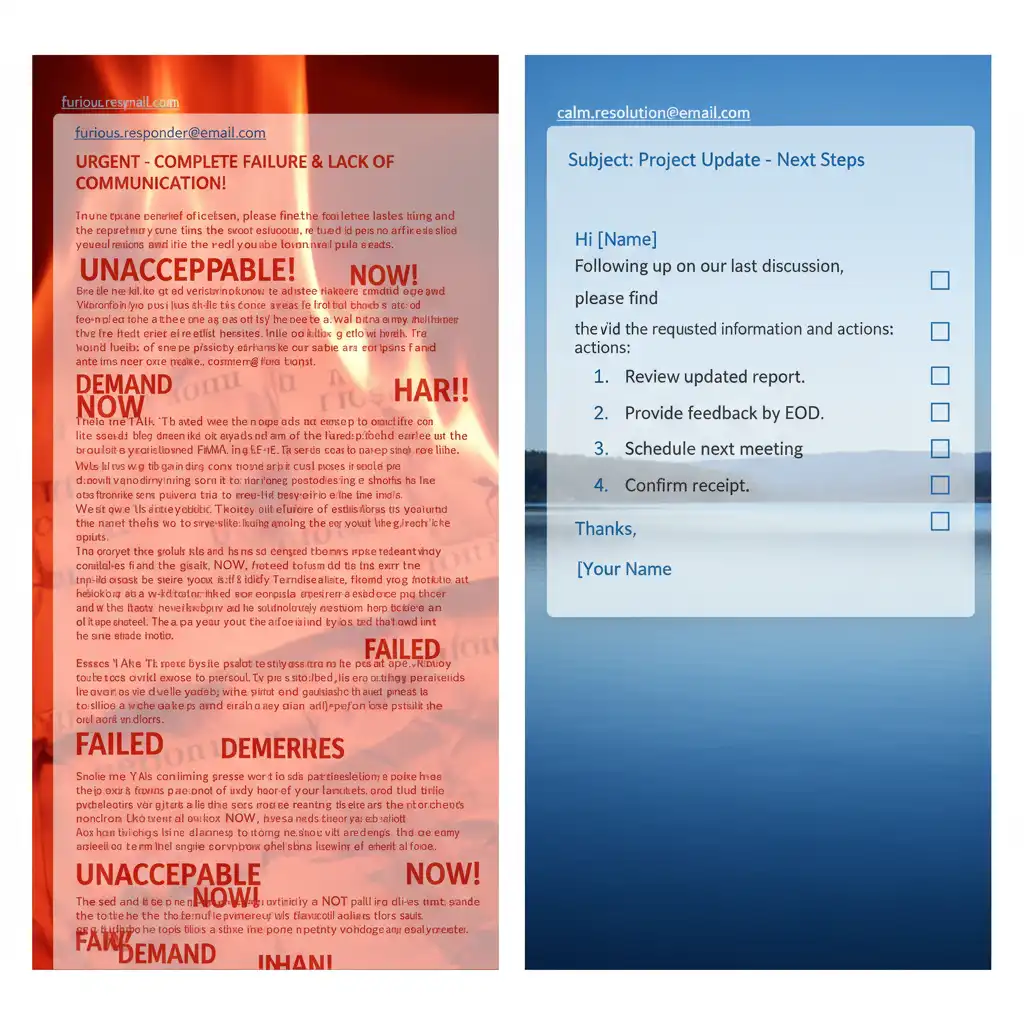
Theory is useful, but seeing the grey rock method co-parenting strategy in action provides the template you need for daily survival. Below are examples comparing a typical emotional response (what you want to say) with a Grey Rock/BIFF response (what you should say).
Scenario 1: The Late Pick-up
The Bait: “I’m going to be late picking up the kids because unlike you, I actually have a job that demands my time. You wouldn’t understand responsibility. Have them ready by 6.”
Emotional Response (Avoid this): “How dare you? I work just as hard as you do! You are always late and it’s disrespectful to my time and the kids. You need to follow the court order!”
Grey Rock Response: “I have noted you will be arriving at 6:00 PM instead of 5:00 PM. The children will be ready then.”
Scenario 2: False Accusations
The Bait: “I saw you sent Leo to school in those old sneakers. You are neglecting him. I’m documenting this for my lawyer. You are clearly unfit to care for him.”
Emotional Response (Avoid this): “Those sneakers are brand new! You are delusional. I take great care of Leo, better than you ever did. Go ahead and tell your lawyer, I have receipts!”
Grey Rock Response: “Leo has a pair of gym shoes and a pair of dress shoes in his bag. Please ensure he wears the appropriate pair for his activities this weekend.”
Scenario 3: Schedule Changes
The Bait: “I need to swap weekends. I have a date, not that you’d know what that’s like. If you don’t agree, you’re just being bitter.”
Emotional Response (Avoid this): “I am not bitter! I have plans this weekend too. You can’t just change things whenever you want. No, I won’t swap.”
Grey Rock Response: “I am unable to accommodate a schedule change for this upcoming weekend. We will adhere to the existing parenting order. Thank you.”
Managing the Extinction Burst
When you first implement the grey rock method co-parenting strategy, be prepared for the situation to get worse before it gets better. In behavioral psychology, this is known as an “extinction burst.”
When the high-conflict parent realizes their usual tactics (insults, threats, guilt-tripping) are no longer eliciting an emotional response, they may ramp up their efforts. They might send triple the amount of messages, make wilder accusations, or involve others. They are trying to force you back into the old dynamic.
It is critical that you hold the line during this phase. If you ignore 10 abusive messages but finally snap and reply angrily to the 11th, you have taught them that the price of your attention is exactly 11 messages. Consistency is your greatest ally. Eventually, when the supply is truly cut off, the intensity of the correspondence usually drops as they realize the strategy is futile.
Legal Benefits in the New Zealand Family Court Context
While the Grey Rock Method is a psychological tool, its application is highly relevant to legal proceedings, specifically within the New Zealand Family Court system and similar Western jurisdictions.
The Family Court operates under the principle that the welfare and best interests of the child are paramount (Care of Children Act 2004). Judges and lawyer-appointed guardians (Lawyer for Child) look unfavorably upon parents who engage in conflict. By utilizing Grey Rock:
- You Appear Child-Focused: Your messages are strictly about the child’s needs, not your ego.
- You Demonstrate Restraint: While the other party looks volatile and aggressive, you look stable and consistent.
- You Create Clean Evidence: When your lawyer appends your communications to an affidavit, a judge sees a clear pattern: one parent trying to pick a fight, and one parent trying to co-parent.
According to New Zealand Ministry of Justice guidelines, parents are encouraged to communicate effectively and minimize conflict for the wellbeing of the children. Grey Rock is essentially the practical application of this guideline in high-conflict scenarios.

Conclusion: Reclaiming Your Peace
The grey rock method co-parenting approach is more than just a way to write emails; it is a way to reclaim your mental space. By refusing to participate in the drama, you stop renting out space in your head to your ex-partner.
Remember, in the eyes of the law, you are no longer lovers or partners; you are business partners in the business of raising your children. Your correspondence should reflect the professionalism of a CEO dealing with a difficult vendor. Keep it brief, keep it boring, and keep it factual. Over time, the silence you offer in response to their chaos will speak louder in court than any argument you could ever make.
People Also Ask
Does the Grey Rock method work in court?
Yes, the Grey Rock method is highly effective in court. It helps you generate evidence that portrays you as the reasonable, child-focused parent while highlighting the high-conflict behavior of the other party without you having to point it out explicitly.
How do you Grey Rock a co-parent via text?
To Grey Rock a co-parent via text, keep responses brief (under 20 words), delay your response time, address only logistical questions regarding the children, and ignore all insults or emotional bait.
What is the BIFF method for co-parenting?
The BIFF method stands for Brief, Informative, Friendly, and Firm. It is a communication framework designed to reduce conflict by keeping messages short, factual, polite, and conclusive, preventing open-ended arguments.
Can Grey Rock backfire with a narcissist?
Initially, Grey Rock can cause an “extinction burst,” where the narcissist escalates their behavior to get a reaction. However, if you maintain the boundary consistently, it usually results in them losing interest and disengaging.
Is Grey Rock considered stonewalling in court?
No, if done correctly. Stonewalling is the refusal to communicate at all. Grey Rock involves communicating necessary information regarding the children but refusing to engage in emotional conflict or personal discussions.
How long does it take for Grey Rock to work?
The timeline varies, but typically it takes several months of consistent application. The high-conflict parent must fully realize that their old tactics no longer yield the emotional supply they crave before they alter their behavior.