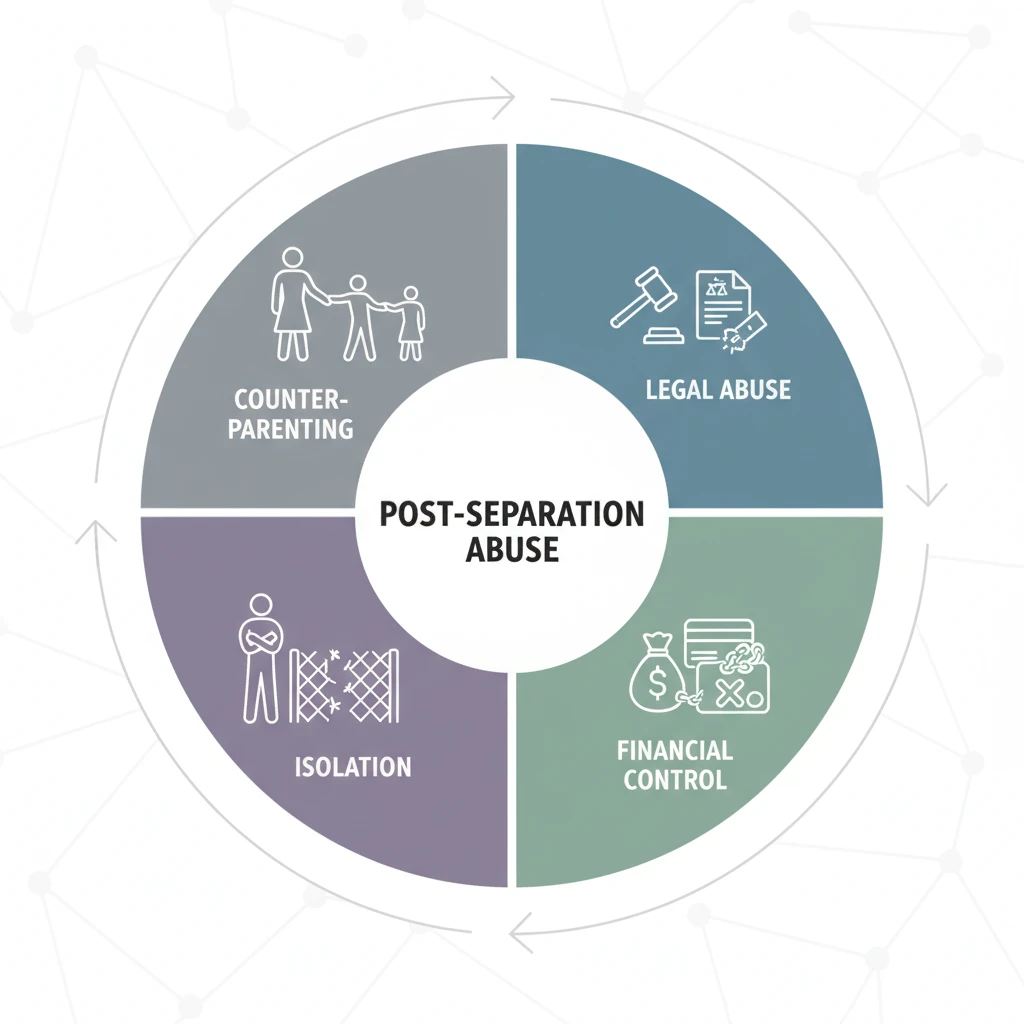
Legal abuse syndrome NZ refers to a form of post-traumatic stress disorder resulting from prolonged, vexatious litigation within the New Zealand Family Court system. It occurs when a high-conflict individual weaponizes legal proceedings to harass, deplete, and control a former partner, causing severe psychological and financial injury to the victim.
Understanding Legal Abuse Syndrome in New Zealand
Separation and divorce are inherently stressful life events, often ranking high on the scale of psychological distress. However, for those separating from a partner with high-conflict personality traits—often associated with Narcissistic Personality Disorder (NPD) or Antisocial Personality Disorder—the legal process transforms from a method of dispute resolution into a tool of continued abuse. This phenomenon is increasingly recognized by psychologists and legal professionals in New Zealand as Legal Abuse Syndrome (LAS).
In the context of New Zealand’s legal framework, LAS is not merely “stress.” It is a cumulative psychic injury. The abuser utilizes the court system not to seek justice or resolution, but to maintain contact and control over their victim. By exploiting procedural loopholes, filing endless affidavits, and manipulating the focus of the court, the abuser ensures that the victim remains in a state of hyper-arousal and fear long after the relationship has physically ended.
The Family Court of New Zealand operates on the principle of the “best interests of the child.” Unfortunately, sophisticated abusers often mimic the language of concern, presenting themselves as the protective parent while painting the victim as unstable. This form of gaslighting, performed on a judicial stage, exacerbates the trauma, leaving the victim feeling helpless and invalidated by the very system designed to protect them.
Signs Your Ex-Partner is Using the Court to Harass You
Identifying legal abuse requires distinguishing between vigorous legal defense and malicious procedural harassment. While high emotions are common in Family Court, a pattern of calculated actions designed to punish the other party indicates legal abuse. Below are the primary indicators that your ex-partner is weaponizing the legal system.

Vexatious Litigation and Frivolous Motions
The hallmark of legal abuse is the filing of repetitive, meritless applications. In New Zealand, this might look like constant applications for “urgent” hearings without notice, seeking variations to parenting orders for trivial reasons, or filing affidavits filled with irrelevant personal attacks. The goal is to force you to respond, thereby incurring legal fees and emotional exhaustion.
Financial Attrition
A narcissist understands that legal representation is expensive. A common tactic is to bleed the victim dry financially. They may refuse to disclose financial documents, forcing your lawyer to file for disclosure orders, or they may switch lawyers frequently to delay proceedings. By driving up your costs, they hope to force you into submission or leave you unrepresented, making you vulnerable to their manipulation in court.
False Allegations and Projection
High-conflict individuals are masters of projection. They often accuse the victim of the very behaviors they are enacting. You may find yourself defending against fabricated claims of parental alienation, substance abuse, or mental instability. In the NZ Family Court, where safety is paramount, these allegations trigger investigations (such as Section 133 reports), which prolong the litigation and increase the trauma for both the parent and the children.
Non-Compliance and Delays
Legal abuse also manifests as passive-aggressive non-compliance. This includes failing to show up for mediation, arriving late to court hearings, ignoring court orders regarding property division or child support, and withholding children during scheduled contact times. These actions are designed to provoke a reaction from you, which they can then document and present as evidence of your “unreasonableness.”
The Intersection of Narcissism and the NZ Family Court
To navigate this terrain, one must understand the psychology of the opponent. Narcissists thrive on attention, whether positive or negative. The courtroom provides a stage, an audience (judges, lawyers, court staff), and a direct channel to their victim. Unlike a rational litigant who seeks to minimize cost and stress, a narcissist derives “supply” from the conflict itself.
The adversarial nature of the legal system can inadvertently fuel this dynamic. The structure of “winning” and “losing” appeals to the narcissist’s binary worldview. Furthermore, court professionals may not always have the specific training required to identify high-conflict personality patterns immediately. They may initially view the conflict as “he said, she said,” failing to recognize the power imbalance and the unilateral nature of the aggression until significant damage has been done.
It is crucial to recognize that you cannot “reason” with a narcissist in the traditional sense. Concessions are viewed as weakness, and settlements are often ignored or relitigated. Understanding this helps in shifting your strategy from persuasion to containment.
Documenting Abuse for the Judge and Legal Counsel
In the face of legal abuse, documentation is your shield. Judges rely on evidence, not sentiment. To prove that the litigation is vexatious and that the other party is acting in bad faith, you must present a clear, organized factual history.
The BIFF Method
When communicating with a high-conflict co-parent, adhere to the BIFF method: Brief, Informative, Friendly, and Firm. Keep all correspondence (texts, emails, parenting app messages) strictly factual. This minimizes the material they can use against you and demonstrates to the court that you are the reasonable, child-focused parent.
Creating a Chronology of Events
Maintain a detailed chronology of the litigation. This should be a document listing dates, events, and evidence. For example:
- Date: 12 Oct 2023
- Event: Applicant failed to return children at 5:00 PM as per Order.
- Evidence: Text message screenshot at 5:30 PM; Police report number.
This chronology helps your solicitor and the judge see the pattern of behavior rather than isolated incidents. Patterns are what reveal the abusive intent.
Evidence Gathering
Save everything. Do not delete emails or texts. Use parenting apps like talkingparents.com or similar platforms often recommended in NZ, as these create an unalterable record of communication that is admissible in court. When the abuser files a false affidavit, go through it line by line and refute their claims with your objective evidence (bank statements, school records, medical reports).
For more information on understanding the dynamics of family violence and court processes, you can refer to the New Zealand Ministry of Justice Family Violence resources, which provide guidelines on protection orders and safety planning.
Coping Strategies for Ongoing Litigation
Surviving legal abuse requires a robust mental health strategy. The process is a marathon, not a sprint, and preserving your sanity is essential for your ability to parent effectively.

Radical Acceptance
Accept that the legal system is imperfect and that your ex-partner will likely not change. Fighting the reality of the situation causes suffering. Radical acceptance does not mean approving of the abuse; it means acknowledging the facts so you can make strategic decisions without being clouded by the hope that “this time they will be reasonable.”
Parallel Parenting
Co-parenting requires collaboration, which is impossible with a high-conflict abuser. Shift to a parallel parenting model. This involves disengaging from each other and parenting independently during your respective times. Communication is limited to emergencies and logistics only, minimizing the opportunity for conflict.
Trauma-Informed Therapy
Legal abuse syndrome shares many symptoms with PTSD, including hypervigilance, insomnia, and intrusive thoughts. Seek a therapist who specializes in narcissistic abuse or complex trauma. Standard talk therapy may not be enough; modalities like EMDR (Eye Movement Desensitization and Reprocessing) can be effective in processing the trauma of ongoing litigation.
Legal Remedies and Civil Restraint Orders
While the process is grueling, New Zealand law does provide mechanisms to curb vexatious litigation. It is vital to discuss these options with your barrister or solicitor.
Costs Orders
Under the Family Court Rules, you can apply for costs if the other party has acted unreasonably or if their application was frivolous. While costs are not always awarded in Family Court (to prevent discouraging genuine applications), a pattern of bad faith litigation can lead to an award of costs against the abuser.
Civil Restraint Orders
If a litigant persistently issues proceedings without merit, the High Court or District Court can issue a Civil Restraint Order (CRO). This prevents the individual from filing further applications without the leave (permission) of a judge. This is a high bar to meet, but it is the ultimate shield against a vexatious litigant.
According to Community Law Aotearoa, understanding your rights regarding harassment and the harmful digital communications act is also relevant, as legal abuse often spills over into digital harassment.
Recovering from Legal Abuse Syndrome
Recovery begins when the legal threat subsides, but the psychological work continues. Survivors of legal abuse often report feeling “waiting for the other shoe to drop” for years after the final court order.

Rebuilding your life involves reclaiming your narrative. You are not just a litigant or a victim; you are a survivor. Focus on rebuilding financial stability, reconnecting with support networks that may have been strained during the litigation, and fostering a peaceful environment for your children. The abuser used the court to try and break you; your recovery and happiness are the ultimate defiance.
Frequently Asked Questions
What is legal abuse syndrome?
Legal Abuse Syndrome (LAS) is a form of post-traumatic stress disorder (PTSD) caused by prolonged, unethical, or vexatious litigation. It is characterized by intense anxiety, financial devastation, and a sense of helplessness resulting from an abuser weaponizing the court system against a victim.
How do you prove legal abuse in court?
Proving legal abuse requires documenting a pattern of behavior rather than isolated incidents. Evidence includes a chronology of frivolous motions, proof of financial withholding, records of non-compliance with court orders, and communication logs that demonstrate harassment. A solicitor can help present this pattern as “bad faith” litigation.
Can you sue for legal abuse in NZ?
You generally cannot “sue” for legal abuse as a standalone tort in New Zealand family law. However, you can apply for costs orders (Section 135 of the Care of Children Act allows for costs in certain circumstances) or seek a Civil Restraint Order to stop the abuser from filing further meritless applications.
What are the signs of a narcissistic litigant?
Signs include filing repetitive affidavits, making false allegations of abuse (projection), changing lawyers frequently to delay proceedings, refusing to negotiate or mediate, and using the court process to maintain contact with or control over the former partner.
How do I stop my ex from dragging me to court?
While you cannot physically stop them from filing, you can request that the court strike out applications that disclose no reasonable cause of action. If the behavior is persistent, your lawyer can apply for a Civil Restraint Order, which requires the ex-partner to get a judge’s permission before filing any new documents.
Is legal abuse considered domestic violence in NZ?
Yes, under the Family Violence Act 2018, “psychological abuse” is a form of family violence. If the legal proceedings are used to harass, intimidate, or control a person, this can be considered part of a pattern of psychological abuse, which may be grounds for a Protection Order.