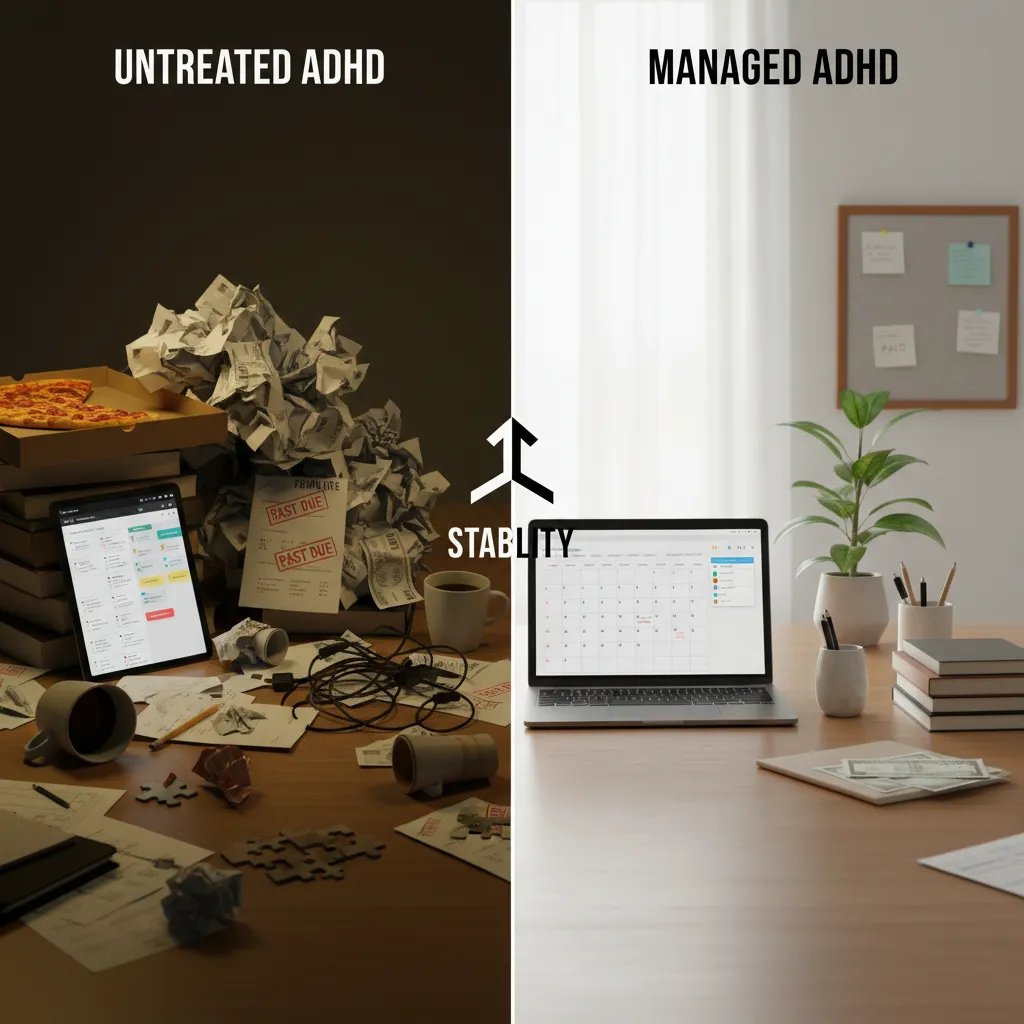
ADHD parenting legal issues arise when symptoms of neurodivergence—such as executive dysfunction, time blindness, and emotional dysregulation—are misinterpreted by family courts or co-parents as willful neglect or parental unfitness. To navigate these challenges, parents must proactively distinguish between neurological symptoms and safety risks, documenting their adherence to medical treatment and implementing visible organizational systems that satisfy the court’s standard for the child’s best interests.
The Intersection of Executive Dysfunction and Family Law
In the high-stakes arena of family court, particularly within high-conflict divorces, perception often hardens into legal fact. For parents with Attention Deficit Hyperactivity Disorder (ADHD), the courtroom can feel like a hostile environment designed to highlight their greatest challenges. The core of the conflict usually lies in the misunderstanding of executive dysfunction.
Executive dysfunction refers to a disruption in the cognitive processes that regulate control, memory, and organization. In a legal context, a neurotypical judge or a hostile ex-partner may look at the symptoms of executive dysfunction—forgotten appointments, clutter, or impulsive verbal reactions—and label them as “parental neglect” or “instability.”
It is critical to understand that the family court system prioritizes the “best interests of the child.” This standard is subjective. When a high-conflict ex-spouse weaponizes ADHD symptoms, they are essentially arguing that your neurotype prevents you from providing a safe, consistent environment. Your legal strategy must therefore shift from merely defending your character to educating the court on the difference between a disability and a danger.

Messy Homes vs. Unsafe Environments: Defining the Legal Threshold
One of the most common allegations in ADHD parenting legal issues involves the state of the home. Parents with ADHD often struggle with the “doom piles” associated with object permanence issues and task paralysis. However, there is a distinct legal difference between a “lived-in” messy home and an “unsafe” home, and understanding this distinction is vital for your defense.
The “Clutter” Defense
Courts are generally not interested in whether your laundry is folded or if there are toys on the floor, provided these things do not pose a hazard. However, in a high-conflict divorce, an opposing party may take photos of a sink full of dishes to allege hygiene neglect. To counter this, you must demonstrate that the mess is temporary and superficial.
The Safety Threshold
Neglect is defined by risk of harm. The court intervenes when the environment poses physical dangers. Indicators that cross the line from executive dysfunction to actionable neglect include:
- Blocked Exits: Can a child escape in a fire?
- Sanitation Issues: Is there rotting food, animal waste, or vermin?
- Medication/Chemical Access: Are dangerous substances left out due to forgetfulness?
If you are facing allegations regarding the state of your home, it is insufficient to simply promise to clean. You must show that the environment does not impede the child’s development or safety. According to diagnostic criteria for ADHD, disorganization is a symptom, not a choice. Framing your defense around managing a symptom is far more effective than denying the reality of the mess.
Time Blindness: When Lateness Becomes a Legal Liability
Time blindness—the inability to sense the passing of time or estimate how long tasks take—is a hallmark of ADHD. In a casual setting, being 15 minutes late is an annoyance. In a custody agreement, it can be viewed as “contempt of court” or a failure to facilitate the other parent’s relationship with the child.
Chronic lateness during custody exchanges is frequently cited in affidavits to prove that a parent is “unreliable” or “chaotic.” If a parent is consistently late dropping a child off at school, it can be argued that they are neglecting the child’s educational needs.
Mitigating the Legal Impact of Time Blindness
To protect your custody rights, you cannot simply ask the court to accept your lateness. You must demonstrate scaffolding. This means showing the court the external structures you have put in place to mimic the internal clock you lack.
- documented alarms and buffers: Evidence that you set alarms 30 minutes prior to departure.
- The “15-Minute Rule” Clause: In your parenting plan, negotiate a clause that allows a 15-minute grace period for both parties before a drop-off is considered “missed” or “late.”
- Third-Party Assistance: Utilizing a support person to ensure timely departures during high-stress transition days.
Strategies to Improve Organization for Court Approval
When facing ADHD parenting legal issues, the court wants to see insight and action. Insight is acknowledging that your executive dysfunction affects your parenting. Action is the tangible steps you take to mitigate it. Implementing robust systems serves two purposes: it makes your life easier, and it generates evidence of your competence.
1. The Command Center
Create a visible “Command Center” in your home. This should include a large whiteboard calendar, color-coded schedules for the children, and a chore chart. Take a photograph of this setup. It serves as physical evidence that you are proactively managing the family’s schedule.
2. Digital Co-Parenting Tools
Move all communication and scheduling to court-monitored apps like OurFamilyWizard or TalkingParents. These tools are invaluable for parents with ADHD because:
- They provide an unalterable record of communication (preventing gaslighting).
- They have built-in calendars and reminders.
- They allow you to slow down and compose responses, preventing impulsive emotional reactions that can be used against you.
3. Professional Support Systems
Hiring a professional organizer or an ADHD coach, even temporarily, demonstrates to the court that you are treating your executive dysfunction responsibly. It shifts the narrative from “this parent is overwhelmed” to “this parent is resourcefully solving a problem.”

Leveraging Expert Reports to Explain Neurotypes
In high-conflict custody battles, the judge is rarely an expert in psychology. They rely on third-party professionals to interpret the family dynamic. This is where you can turn the tide by ensuring your neurotype is explained scientifically rather than characterologically.
Psychological Evaluations
If a psychological evaluation is ordered, it is imperative that the evaluator has specific experience with adult ADHD. A generalist may mistake ADHD symptoms for Bipolar Disorder or Borderline Personality Disorder, diagnoses that carry different stigmas in family court. You must advocate for an evaluator who understands neurodivergence.
Framing the Narrative
Your legal counsel should seek reports that explain how your specific brain works. For example, an expert report can clarify that your “emotional outbursts” are actually emotional dysregulation triggered by rejection sensitivity (RSD), which is manageable with therapy and medication, rather than a sign of an abusive personality.
Furthermore, expert reports can validate the bond between you and your child. Often, neurodivergent parents have a unique, creative, and highly attuned connection with their children (who may also be neurodivergent). An expert can highlight that removing the child from this environment would be detrimental, arguing that the “messiness” is outweighed by the emotional security you provide.
Navigating the New Zealand Family Court Context
For readers navigating the New Zealand jurisdiction, specific nuances apply. The Care of Children Act 2004 places the paramount consideration on the welfare and best interests of the child. In NZ, the court often appoints a “Lawyer for Child” to advocate for the child’s interests.
If allegations of neglect are raised due to executive dysfunction, Oranga Tamariki (Ministry for Children) may become involved. It is vital to engage with them transparently. In NZ, the concept of “whānau support” is strong; demonstrating that you have a wider support network (grandparents, aunties) helping you manage the household organization can be a powerful defense against allegations of individual parental incapacity.
Additionally, New Zealand courts frequently utilize Section 133 reports (specialist psychological reports). If you are in NZ, you must ensure your solicitor briefs the psychologist on your ADHD diagnosis immediately, providing medical records to ensure the report contextualizes your behavior through a neurodivergent lens rather than a behavioral one.
Conclusion: Protecting Your Rights and Your Children
Facing ADHD parenting legal issues is daunting. The scrutiny of the court system often targets the very areas where neurodivergent people struggle most. However, a diagnosis of ADHD is not a sentence to lose custody. By distinguishing between executive dysfunction and neglect, implementing visible organizational scaffolds, and leveraging expert testimony to explain your neurotype, you can protect your relationship with your children.
The goal is not to prove you are a perfect, neurotypical parent. The goal is to prove you are a safe, loving, and capable parent who effectively manages their health conditions. In the eyes of the law, a managed disability is not a disqualifier for custody; it is simply a factor to be accounted for in the parenting plan.
People Also Ask
Can a parent lose custody due to ADHD?
A parent typically will not lose custody solely because they have ADHD. However, unmanaged symptoms that result in child neglect, safety hazards, or consistent failure to follow court orders (like drop-off times) can lead to a reduction in parenting time or loss of custody.
Is a messy house considered child neglect in court?
A messy house is generally not considered neglect unless it poses a safety or health hazard. Courts look for “injurious” environments—such as blocked exits, vermin, feces, or exposed dangerous objects—rather than simple clutter or untidiness.
How can I prove my executive dysfunction isn’t neglect?
You can prove this by documenting your treatment plan (medication and therapy), hiring professional organizers, using co-parenting apps to track schedules, and obtaining expert psychological reports that explain your symptoms are neurological, not willful negligence.
What is the best custody schedule for an ADHD parent?
The best schedule often depends on the individual, but many ADHD parents thrive with schedules that offer fewer transitions (like week-on/week-off) rather than frequent exchanges (like 2-2-3), as this reduces the cognitive load of packing and scheduling logistics.
How do I explain time blindness to a family court judge?
Avoid using “time blindness” as an excuse. Instead, acknowledge the challenge and present the “scaffolding” you use to manage it, such as multiple alarms, GPS tracking for departures, and buffer times in the parenting plan.
Can the other parent force me to take ADHD medication?
Generally, a court cannot force a parent to take medication. However, if the court determines that your unmedicated symptoms are endangering the child, they may make visitation contingent upon you following a doctor’s recommended treatment plan, which may include medication.