
Occupational rent in New Zealand is a legal concept where one party, typically an ex-partner, who remains in the family home after separation, may be required to compensate the other party who has moved out for their exclusive use and occupation of the property. This compensation aims to achieve fairness in the division of relationship property, particularly when one party gains a significant advantage by retaining sole use of a major asset.
What is Occupational Rent in New Zealand?
In the challenging landscape of relationship separation, especially within high-conflict scenarios in New Zealand, the family home often becomes a central point of contention. When one partner vacates the property while the other remains, the concept of “occupational rent” frequently arises. This is not a standard landlord-tenant rent in the commercial sense, but rather an equitable adjustment made by the Family Court under the Property (Relationships) Act 1976.
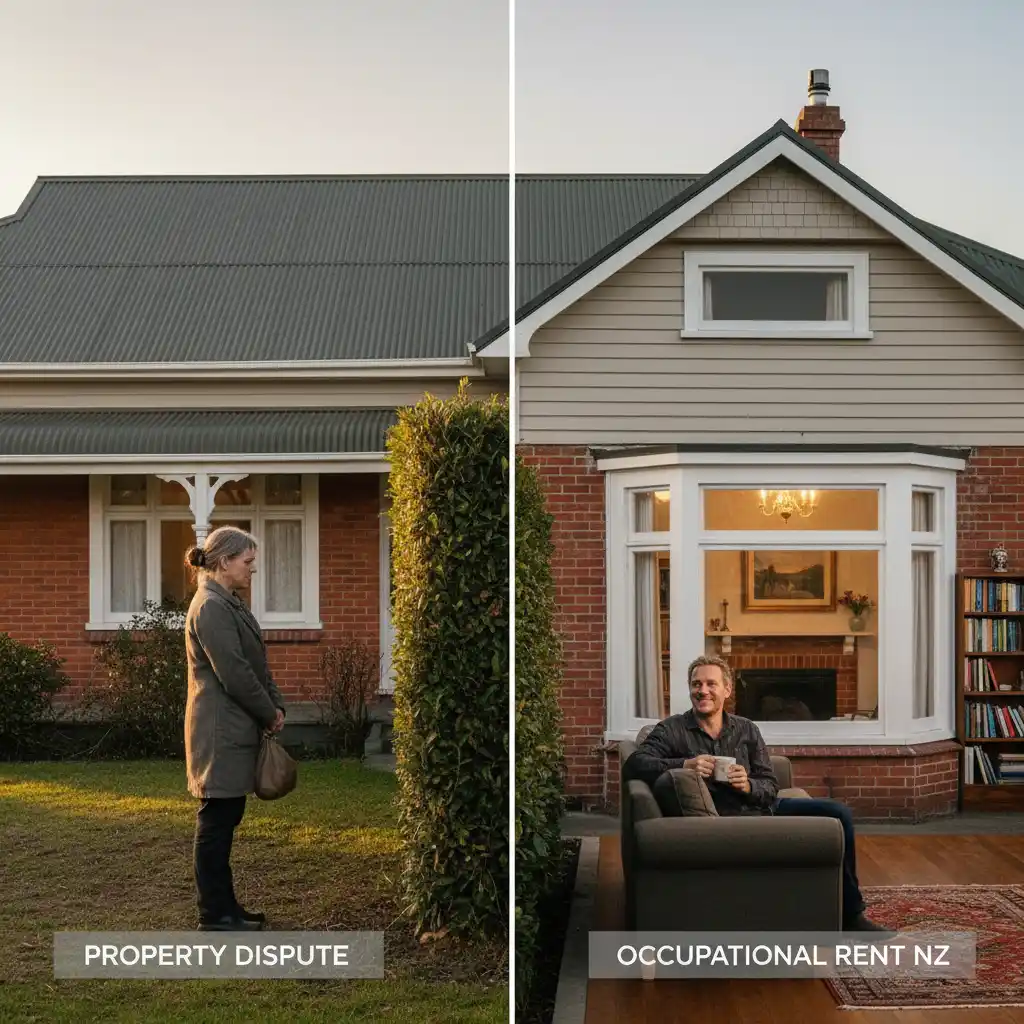
Occupational rent essentially represents a sum, or a notional rent, that the occupying partner might be deemed to owe the non-occupying partner for the exclusive benefit of living in the shared property. The underlying principle is to prevent one party from gaining an unfair advantage during the period between separation and the final division of relationship property. Imagine a scenario where one partner lives rent-free in a substantial family home for years while the other is forced to incur significant rental expenses elsewhere. Occupational rent aims to mitigate this financial disparity.
The legal basis for occupational rent in New Zealand is found within the broad discretion granted to the Family Court by the Property (Relationships) Act 1976. This Act empowers the court to make orders that are “just and equitable” when dividing relationship property. While the Act doesn’t explicitly mention “occupational rent,” the courts have developed the concept as part of their power to make adjustments and effect fair divisions. It’s often considered in conjunction with other adjustments, such as claims for compensation for mortgage payments or maintenance of the property.
Key factors that the court will consider include the duration of the exclusive occupation, the value of the property, the market rental value, and the financial circumstances of both parties. It’s crucial to understand that claiming occupational rent isn’t automatic; it’s a discretionary remedy. The court assesses whether the occupying partner has gained an unfair advantage and whether it would be inequitable not to make such an adjustment. This often involves looking at whether the non-occupying party was effectively excluded from the property, or if they had to move out due to safety concerns or other compelling reasons, rather than a voluntary departure without expectation of compensation. The purpose is not to punish, but to achieve a fair and balanced outcome in the division of relationship assets and liabilities. Understanding this distinction is vital for anyone navigating property division post-separation in NZ.
When Can You Claim Occupational Rent From an Ex-Partner?
Claiming occupational rent in New Zealand is not a straightforward process and depends heavily on the specific circumstances of each separation. The Family Court exercises its discretion based on principles of fairness and equity. Several key conditions and scenarios typically lead to a successful claim.
Firstly, there must be a period of **exclusive occupation** by one party. This means one partner has solely lived in and used the family home while the other has resided elsewhere. The longer this period, generally the stronger the potential claim, assuming other factors align. It’s not enough for one person to simply move out; they must demonstrate that the remaining partner had exclusive benefit of the property.
Secondly, the court will consider whether there has been an **unequal contribution to property-related expenses**. If the occupying party has been solely responsible for the mortgage, rates, insurance, and significant maintenance, their claim for compensation for these payments might offset or even negate a claim for occupational rent against them. Conversely, if the non-occupying party has continued to contribute to these expenses while also paying for alternative accommodation, their claim for occupational rent becomes more compelling.
Thirdly, the **reason for the non-occupying party’s departure** is critical. If one party was effectively excluded from the property, for example, due to domestic violence, threats, or a deliberate change of locks, their claim for occupational rent is significantly strengthened. The court views such exclusion as a clear denial of their property rights. Even if there wasn’t explicit exclusion, if one party’s actions caused the other to feel they had no choice but to leave, this can support a claim.
Conversely, if a party moved out entirely voluntarily, perhaps to start a new life or be closer to family, without making it clear that they expected compensation for the other party’s continued occupation, a claim for occupational rent might be weaker or even denied. The court will assess the intentions and communications at the time of departure.
Another significant factor is **delay in the division of relationship property**. If one party deliberately obstructs or delays the sale or division of the family home, thereby prolonging their exclusive occupation, this can weigh heavily in favour of an occupational rent claim against them. The courts aim to deter tactics that unfairly benefit one party at the expense of the other.
Finally, the overall **equitable considerations** are paramount. The court will look at the financial positions of both parties, the welfare of any children, and any other unique circumstances. For instance, if the occupying party has primary care of children and their removal from the family home would cause significant disruption, the court might be hesitant to order a large occupational rent payment that would necessitate a forced sale. Each case is fact-specific, and the court seeks to achieve a just outcome, balancing all the financial and personal realities involved. Seeking early legal advice from a New Zealand family law expert is crucial to ascertain the strength of your potential claim.
Balancing Occupational Rent Against Mortgage and Other Payments
One of the most intricate aspects of claiming occupational rent in New Zealand divorces and separations involves balancing it against other financial contributions made by the occupying party. It’s rare for a court to simply order an occupying party to pay a straight market rental value without taking into account their ongoing financial responsibilities related to the property.
The most common scenario involves the occupying party continuing to pay the **mortgage**. When one partner remains in the home and pays the mortgage, they are often contributing significantly to an asset that is still considered relationship property. The court will typically offset the mortgage payments made by the occupying party against any occupational rent they might be liable for. It’s important to distinguish between the principal and interest components of the mortgage. Payments towards the principal increase the equity in the home, which benefits both parties equally (as relationship property), whereas interest payments are essentially the cost of borrowing and do not directly increase equity. Courts often consider the entire mortgage payment when making these adjustments, but the principal reduction can be accounted for separately in the overall division of relationship property.
Beyond the mortgage, other essential property outgoings also come into play. These include:
- **Rates:** Local council rates are a necessary expense for maintaining ownership.
- **Insurance:** House and contents insurance protects the asset, again benefiting both parties.
- **Maintenance and Repairs:** Significant and necessary repairs that preserve or enhance the property’s value (e.g., roof repairs, plumbing issues) are often factored in. Routine maintenance (e.g., gardening, minor cleaning) is generally considered part of the cost of occupation and less likely to be offset.
The court’s goal is to arrive at a net figure. For example, if the notional occupational rent for a period is assessed at $500 per week, but the occupying party has paid $400 per week in mortgage and rates for the same period, the net claim for occupational rent might be only $100 per week. This balancing act ensures that neither party is unfairly disadvantaged. It prevents the occupying party from bearing the full financial burden of the property while simultaneously compensating the non-occupying party for their exclusion.
Accurate record-keeping is absolutely paramount here. Both parties must be able to demonstrate precisely what contributions they have made. This includes bank statements showing mortgage payments, receipts for rates and insurance, and invoices for significant maintenance work. Without clear documentation, it becomes very difficult for the court to make an informed and equitable decision. This intricate financial negotiation underscores why expert legal advice is indispensable when dealing with relationship property divisions in New Zealand. Further information on property division can be found via reputable legal resources such as the Ministry of Justice New Zealand.

Strategic Decisions When Considering Moving Out of the Family Home
The decision to move out of the family home during a high-conflict separation is fraught with emotional and financial complexities, and it carries significant strategic implications, particularly concerning claims for occupational rent. It is one of the most critical choices a separating party in New Zealand will face, often dictating the trajectory of subsequent legal negotiations.
Firstly, understand the dual impact of moving out. While vacating the property might provide immediate relief from conflict and the practical necessity of securing alternative accommodation, it immediately gives rise to the potential for an occupational rent claim against the partner who remains. However, it also means you are no longer contributing to the wear and tear of the property or benefiting from its exclusive use. This strengthens your position if you later argue for compensation from your ex-partner for their continued exclusive occupation. Conversely, if you remain in the home, you might face an occupational rent claim, but you retain control over the property and maintain stability for yourself and any children.
The timing and circumstances of moving out are crucial. If your departure is voluntary and without clear communication about your expectations regarding the property, your ability to claim occupational rent might be diminished. However, if you are forced to leave due to safety concerns (e.g., domestic violence), or if the other party’s actions effectively exclude you, your claim will be significantly stronger. Documenting the reasons for your departure, any attempts to access the property, and any threats or abusive behaviour is paramount.
Before making any moves, **seeking urgent legal advice** from a specialist family lawyer in New Zealand is non-negotiable. A lawyer can help you understand your rights and obligations, assess the strength of a potential occupational rent claim (or defence against one), and advise on the best course of action given your unique circumstances. They can also assist in formalising arrangements for property use and financial contributions, possibly through interim court orders, which can prevent future disputes.
If you decide to move out, it is vital to **document everything**. Keep meticulous records of all expenses related to your new accommodation (rent, bond, moving costs), and any continued contributions you make to the family home (e.g., mortgage payments, rates, insurance). Maintain a clear record of all communications with your ex-partner regarding the property, ideally in writing. This documentation will be invaluable if the matter proceeds to court or mediation. For a broader understanding of property laws, one might consult resources like Wikipedia’s overview of Property Law in New Zealand, though specific family law advice is always paramount.
Consider the impact on children. If children are involved, their best interests will be a primary consideration for the Family Court. Maintaining stability for children often means ensuring they can remain in their current home and school environment. This factor can influence how the court views claims for occupational rent and other property adjustments. Sometimes, an arrangement is made where the occupying parent pays a reduced or no occupational rent to ensure the children’s stability, with other financial adjustments made in the overall property division.
Finally, exploring **mediation** as an alternative to court proceedings can be a strategic move. A mediator can help both parties reach an agreement regarding the family home, including arrangements for occupational rent, without the stress and cost of litigation. An agreement reached through mediation, if properly documented and made into a consent order, can be legally binding and provide certainty for both parties. Making informed, strategic decisions at this juncture can significantly impact your financial future and overall well-being post-separation.
People Also Ask About Occupational Rent NZ
What is the legal basis for occupational rent in New Zealand?
The legal basis for occupational rent in New Zealand is not explicitly stated in specific legislation, but it arises from the broad discretion of the Family Court under the Property (Relationships) Act 1976. This Act allows the court to make orders that are “just and equitable” when dividing relationship property, which includes making adjustments for one party’s exclusive occupation of the family home post-separation.
How is occupational rent calculated in NZ?
Occupational rent in NZ is not subject to a fixed formula. The Family Court considers various factors, including the market rental value of the property, the length of exclusive occupation, contributions to property expenses (mortgage, rates, insurance) by both parties, and the overall financial circumstances and conduct of each party. It’s often assessed as a notional rent, taking into account offsets for payments made by the occupying party.
Can I claim occupational rent if I voluntarily left the family home?
Claiming occupational rent after a voluntary departure can be more challenging. While not impossible, the court will closely examine the reasons for your departure and any communication regarding your expectation of compensation. If you were forced to leave due to safety concerns or explicit exclusion, your claim is stronger. If you left without expectation of compensation and the other party wasn’t actively preventing your return, your claim might be weaker or denied, as the court considers whether there was an unfair advantage gained by the occupying party.
Does paying the mortgage reduce an occupational rent claim?
Yes, typically paying the mortgage and other property-related expenses (like rates and insurance) by the occupying party will significantly reduce or offset any occupational rent claim against them. The Family Court balances these contributions against the benefit of exclusive occupation. The aim is to ensure a fair net adjustment between the parties, recognizing the financial burden borne by the occupying party while preserving the relationship asset.
What evidence do I need to claim occupational rent in NZ?
To claim occupational rent in NZ, you should provide evidence of: the period of exclusive occupation by your ex-partner, the market rental value of the property (e.g., appraisals from real estate agents), your expenses for alternative accommodation, any contributions you continued to make towards the family home (mortgage, rates), and evidence of why you vacated the property (e.g., exclusion, safety concerns, or clear communication of intent if voluntary). Meticulous financial records are crucial.
How does occupational rent affect the final division of relationship property?
Occupational rent is typically treated as an adjustment made within the overall division of relationship property. It doesn’t usually result in a separate payment, but rather increases or decreases a party’s share of the final property pool. For instance, if an occupying partner owes occupational rent, their share of the property settlement might be reduced by that amount, or the other party’s share increased. It aims to create an equitable outcome for the entire relationship property division.