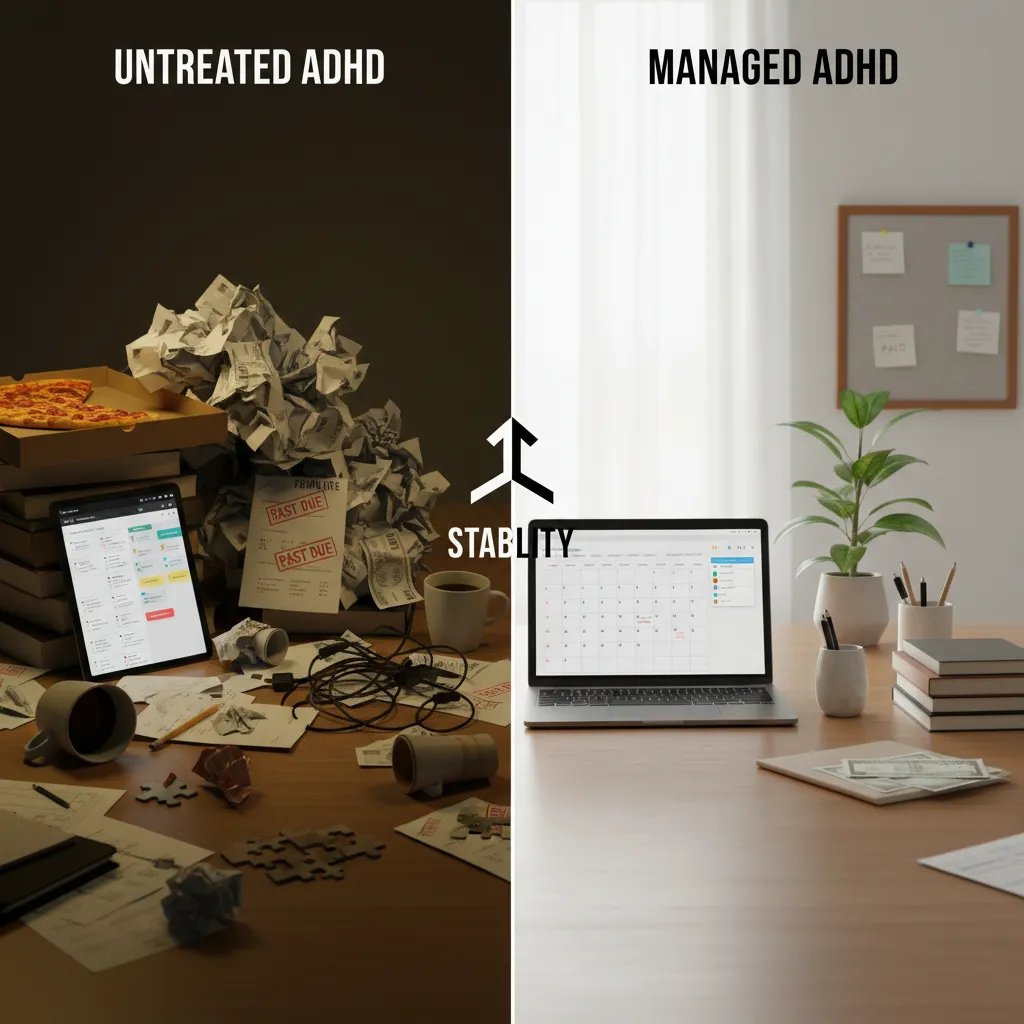
A parenting plan for an ADHD child is a specialized care agreement that incorporates detailed clauses for medication consistency, transition protocols, and executive function support to mitigate behavioral challenges. Unlike standard plans, it prioritizes rigid routines and explicit communication strategies to reduce anxiety and conflict between co-parents.
Understanding the ADHD Brain in Two Homes
Divorce or separation is a traumatic event for any child, but for a child with Attention Deficit Hyperactivity Disorder (ADHD), the disruption of routine can be catastrophic. The neurodiverse brain relies heavily on external structure to manage executive functions such as emotional regulation, organization, and time management. When a family unit splits, that external structure often fractures.
In the context of New Zealand family law and psychology, the “best interests of the child” is the paramount consideration under the Care of Children Act 2004. However, standard parenting orders often fail to account for the neurobiological reality of ADHD. A 50/50 shared care arrangement, while legally equitable, can be psychologically damaging if the child is forced to toggle between two vastly different parenting styles or routines.
For high-conflict separated parents, the symptoms of ADHD—forgetfulness, emotional outbursts, and time blindness—are often weaponized. One parent may accuse the other of negligence because the child forgot their sports gear, not realizing that this is a symptom of the disorder, not a failure of parenting. Therefore, adjusting your parenting plan to specifically address ADHD is not just a logistical necessity; it is a psychological safeguard for your child’s mental health.

Medication Management Clauses
One of the most volatile areas in high-conflict divorces involving neurodiverse children is medication. Disagreements often arise regarding the necessity of medication, dosage consistency, or who is responsible for refilling prescriptions. To minimize conflict and ensure the child’s health is prioritized, your parenting plan must move beyond vague agreements and include specific, enforceable clauses.
The “Consistency of Care” Clause
ADHD medication, particularly stimulants, requires consistency to be effective. A common issue arises when one parent decides to give the child a “medication holiday” during their parenting time without consulting the other parent or the prescribing physician. This can lead to withdrawal symptoms and severe behavioral regression.
Suggested Clause Language:
“Both parents agree to administer all prescription medications strictly according to the regimen prescribed by the child’s treating physician. Neither parent shall unilaterally alter the dosage, discontinue the medication, or introduce new supplements without the written consent of the other parent or a direct written order from the specialist.”
Logistics and Cost Sharing
Who picks up the script? Who pays for it? These minor details often spark major arguments. It is recommended to designate one parent as the “Medical Lead” for logistics, while costs are shared.
Suggested Clause Language:
“Parent A shall be responsible for obtaining medication refills to ensure a sufficient supply travels with the child between homes. The cost of all ADHD-related medications and specialist appointments shall be shared equally (50/50). The child shall carry only the necessary dosage for the specific visitation period, or ideally, each household shall maintain a separate supply to prevent loss during transit.”
For authoritative information on the importance of medication consistency, referring to resources like CHADD (Children and Adults with Attention-Deficit/Hyperactivity Disorder) is essential for understanding the medical baseline.
Homework and School Communication Protocols
Executive dysfunction makes managing schoolwork across two households a nightmare. Children with ADHD often struggle with “task initiation” and “working memory.” Expecting them to remember that a science project is due on Tuesday when they switch houses on Friday is setting them up for failure.
The “Sunday Night Dread” Prevention
Standard parenting plans often state that parents will “oversee homework.” This is insufficient for ADHD. You need a protocol for long-term projects and daily assignments.
Suggested Protocol:
Implement a digital shared calendar (like Google Calendar or a co-parenting app) specifically for school deadlines. The parenting plan should stipulate that the parent who has the child when a project is assigned is responsible for the initial planning, while the parent who has the child when it is due is responsible for the final review.
Educational Advocacy
In New Zealand schools, support is often provided through Individual Education Plans (IEPs) or RTLB (Resource Teachers: Learning and Behaviour) interventions. High-conflict parents often send mixed messages to schools, confusing teachers.
Suggested Clause Language:
“Both parents shall be listed on all school correspondence. However, Parent B is designated as the primary point of contact for administrative purposes regarding the IEP. Both parents agree to attend parent-teacher interviews jointly. If conflict prevents this, they shall request separate appointments. Both parents agree to uphold the accommodations set forth in the child’s IEP/504 plan in their respective homes.”
Handling Transitions and Forgotten Items
Transitions are the “danger zones” for ADHD children. The shift in environment requires a mental gear-switch that is exhausting. Furthermore, issues with object permanence mean that items not immediately visible effectively cease to exist. This leads to the chronic problem of forgotten chargers, retainers, sports gear, and textbooks.
In a high-conflict dynamic, a forgotten iPad is often framed as “irresponsible parenting” by the receiving parent. In reality, it is a symptom of the child’s disability. The parenting plan must account for this to protect the child’s self-esteem.

The “Double-Up” Strategy
The most effective way to eliminate transition stress is to reduce what needs to be transitioned. While expensive, duplicating essential items is a crucial investment in peace.
Recommended Clause:
“To reduce transition anxiety and executive load on the child, parents agree to maintain separate sets of ‘anchor items’ at each residence, including toiletries, pajamas, chargers, and basic school supplies. The child shall only be required to transport their school bag and current medication.”
The Retrieval Protocol
When items are inevitably forgotten, the reaction must be scripted to prevent conflict.
Suggested Clause Language:
“The parents acknowledge that forgetfulness is a symptom of the child’s ADHD. If an essential item is left at the other parent’s home, the parent possessing the item agrees to facilitate its return within 24 hours. This shall be done without disparaging the child or the other parent. Frequent occurrences (more than twice a month) will trigger a review of the packing checklist system, not punitive measures against the child.”
Flexibility vs. Structure: Finding the Balance
There is a paradox in parenting an ADHD child: they crave novelty but require structure to function. In a co-parenting arrangement, this often manifests as one parent being the “fun” parent (high novelty, low structure) and the other being the “strict” parent (low novelty, high structure). This split is confusing for the child.
Standardizing the Routine
While you cannot control what happens in the other house, you can agree on “anchor points.” These are non-negotiable times that remain consistent across households.
- Bedtimes: Sleep hygiene is critical for ADHD management. A shift in bedtime by two hours between houses can ruin the child’s regulation for days.
- Screen Time: Dopamine regulation is a challenge. If one house allows unlimited gaming and the other has strict limits, the transition to the stricter house will result in dopamine-withdrawal meltdowns.
Suggested Clause Language:
“Both parents agree to maintain a bedtime between 8:00 PM and 8:30 PM on school nights. Both parents agree to enforce a ‘screens off’ policy one hour before bedtime to support the child’s sleep hygiene.”
For further reading on the legal aspects of care arrangements in New Zealand, the New Zealand Ministry of Justice provides guidelines on how the Family Court views the child’s welfare.
Dispute Resolution for High-Conflict Scenarios
When parents cannot agree on the interpretation of these clauses, the conflict can escalate quickly. For high-conflict families, standard mediation may fail. It is often necessary to appoint a specific arbitrator or a Parenting Coordinator who understands neurodiversity.
Including a clause that dictates the method of dispute resolution prevents a rush to court for minor disagreements. It forces a “cooling off” period and encourages the use of third-party professionals who can advocate for the child’s neurological needs rather than the parents’ grievances.
Ultimately, a parenting plan for an ADHD child is a living document. As the child matures and their executive functions develop, the plan should evolve. However, in the early stages of separation, rigidity and detail are your greatest allies in creating a sanctuary of calm for a child whose internal world is often chaotic.
Frequently Asked Questions (PAA)
What should be included in a parenting plan for a child with ADHD?
A parenting plan for a child with ADHD should include specific clauses for medication consistency (dosage and refill logistics), a detailed transition plan to minimize anxiety, consistent bedtimes and screen time rules across both homes, and a protocol for handling forgotten items without punishing the child.
How does 50/50 custody affect a child with ADHD?
50/50 custody can be challenging for a child with ADHD if the two households have vastly different routines. The constant context switching can exacerbate executive dysfunction. However, it can work successfully if both parents maintain highly consistent schedules, rules, and environments to reduce the cognitive load on the child.
How do you co-parent a child with ADHD with a difficult ex?
To co-parent with a difficult ex, utilize “parallel parenting” strategies where communication is limited to business-like text or email. Rely on a detailed, legally binding parenting plan that leaves no room for ambiguity regarding medical decisions, schoolwork, and transitions, reducing the need for direct interaction.
Can a non-custodial parent stop ADHD medication?
Generally, no. If a court order or parenting plan stipulates that medical decisions must be joint or follows the recommendation of a primary physician, a non-custodial parent cannot unilaterally stop medication. Doing so may be considered a violation of the child’s best interests and could lead to a modification of custody.
What is the best visitation schedule for a child with ADHD?
The best schedule often minimizes the frequency of transitions. Instead of a 2-2-3 schedule which involves frequent moving, a week-on/week-off schedule (7-7) might be better for older children to allow them to settle. For younger children, frequent contact is needed, so visual calendars and consistent handover rituals are essential.
How do I prove my child needs a structured parenting plan?
You can prove the need for structure by providing medical reports from the child’s psychiatrist or pediatrician detailing their diagnosis and the impact of instability on their condition. School reports, IEPs, and testimony from therapists regarding the child’s regression during unstructured times are also powerful evidence.