
Emotional intelligence in relationships is the capacity to recognize, understand, and manage your own emotions while simultaneously empathizing with the feelings of your partner. It serves as the bedrock of healthy connection, allowing couples to navigate conflict without contempt, communicate needs clearly, and foster a deep sense of psychological safety and intimacy.
The Foundation: Why EQ Matters More Than IQ
For decades, society prioritized Intellectual Quotient (IQ) as the primary predictor of success. However, when it comes to the longevity and quality of romantic unions, emotional intelligence in relationships (often abbreviated as EQ or EI) reigns supreme. While IQ might help you solve a logistical problem regarding household finances, EQ is what prevents that financial discussion from devolving into a shouting match about self-worth and respect.
High emotional intelligence allows partners to read between the lines. It is the ability to sense when a partner’s silence indicates distress rather than peace, or when their anger is actually a mask for fear. According to research popularized by psychologists like Daniel Goleman, EQ is not a fixed trait; it is a set of skills that can be learned and refined. In the context of love, it acts as a buffer against life’s inevitable stressors, ensuring that external pressures do not fracture the internal bond between two people.
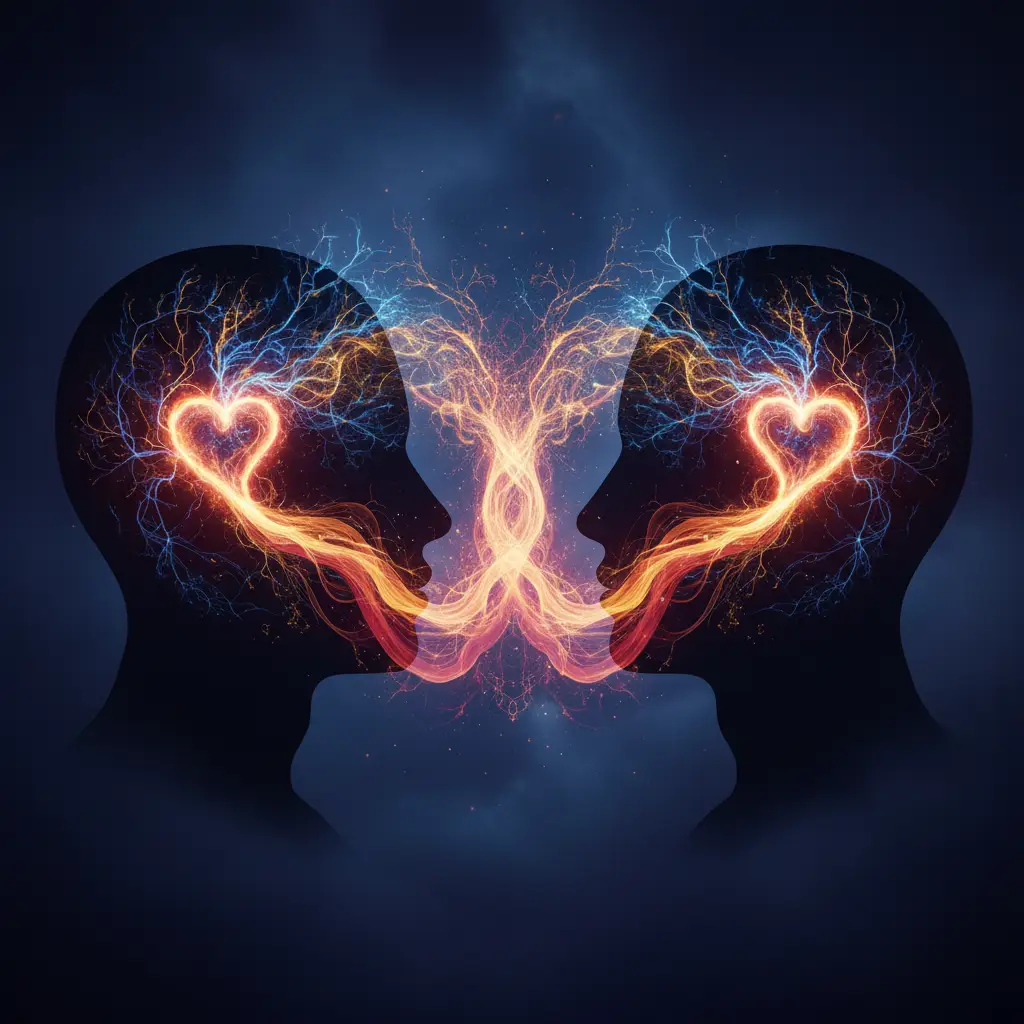
Couples with high EQ create a culture of appreciation and validation. They understand that emotions are not facts to be debated, but experiences to be honored. This distinction is critical: you do not have to agree with your partner’s feelings to validate them. This nuance is often lost in relationships suffering from low EQ, where partners feel the need to “win” arguments rather than understand perspectives.
The 5 Components of EQ in Romantic Partnerships
To truly master emotional intelligence in relationships, one must break down the concept into actionable components. Goleman identified five pillars of EQ, each playing a distinct role in how we relate to our significant others.
1. Self-Awareness
Self-awareness is the cornerstone of EQ. It is the ability to recognize an emotion as it happens. In a relationship, this means acknowledging, “I am feeling defensive right now because my partner’s tone reminded me of a past criticism.” Without self-awareness, we are at the mercy of our emotional reflexes, often lashing out or shutting down without understanding why. A self-aware partner can communicate their state of mind before it dictates their behavior.
2. Self-Regulation
Once you are aware of an emotion, self-regulation allows you to control how you express it. It is the pause between the stimulus and the response. In relationships, this is the difference between screaming an insult in the heat of the moment and taking a deep breath to say, “I’m too angry to discuss this productively right now; I need twenty minutes to cool down.” Self-regulation prevents permanent damage from temporary emotions.
3. Motivation
In the context of EQ, motivation refers to the internal drive to achieve goals for the sake of personal fulfillment rather than external reward. In relationships, this translates to the motivation to be a better partner. It is the desire to grow, to resolve conflicts, and to nurture the bond not because you are forced to, but because you value the health of the union. Motivated partners are resilient; they view relationship hurdles as challenges to be overcome together.
4. Empathy
Empathy is the ability to understand the emotional makeup of other people. It goes beyond sympathy (feeling for someone) to empathy (feeling with someone). High-EQ partners can sense what the other is feeling without a word being spoken. They are attuned to non-verbal cues—body language, tone of voice, and facial expressions—allowing them to respond to their partner’s needs proactively.
5. Social Skills
Social skills in relationships refer to proficiency in managing relationships and building networks. It involves effective communication, conflict management, and the ability to influence the partner positively. It is the practical application of the previous four components—using self-awareness and empathy to navigate a difficult conversation smoothly.
Mastering Self-Regulation During Conflict
Conflict is inevitable in any relationship, but the destruction caused by conflict is optional. The application of emotional intelligence in relationships is most visible during disagreements. Low EQ leads to the “Four Horsemen” identified by the Gottman Institute: criticism, contempt, defensiveness, and stonewalling. High EQ utilizes self-regulation to disarm these horsemen.
Self-regulation during conflict involves physiological soothing. When we get angry, our heart rates rise, and we enter a “fight or flight” mode (diffuse physiological arousal). In this state, we lose access to the prefrontal cortex—the part of the brain responsible for logic and empathy. A partner with high EQ recognizes these physical signs (flushed skin, racing heart) and calls for a timeout.

During this timeout, the goal is not to rehearse your argument but to self-soothe. This might involve deep breathing, a short walk, or listening to music. By returning to baseline, you can re-engage with your partner from a place of logic and love, rather than biological aggression. This practice transforms conflict from a battleground into a problem-solving session.
Empathy Mapping: A Tool for Radical Understanding
Empathy mapping is a technique often used in design thinking, but it is incredibly potent when applied to relationships. It involves consciously mapping out your partner’s experience to gain a holistic understanding of their world. To practice empathy mapping, consider a specific situation where your partner is stressed and ask yourself four questions:
- What are they seeing? (What is their environment like? What problems are they facing?)
- What are they hearing? (What are friends, colleagues, or family telling them?)
- What are they thinking and feeling? (What are their specific worries, aspirations, or fears?)
- What are they saying and doing? (How is their behavior changing? What is their public attitude vs. private reality?)
By mentally walking through these quadrants, you move away from a self-centered view of the relationship. For instance, if your partner is irritable after work, empathy mapping might reveal that they are “hearing” criticism from a boss and “fearing” job instability. This shift in perspective changes your reaction from “Why are you snapping at me?” to “It sounds like you had a really tough day; how can I support you?” This is the essence of emotional intelligence in relationships.
Practical Steps to Improve Your EQ Score
Unlike IQ, emotional intelligence is plastic; it can be developed at any age. If you feel your relationship is suffering due to a lack of emotional attunement, consider these practical exercises to boost your EQ.
The “Check-In” Ritual
Establish a daily ritual where you and your partner share your emotional state without trying to fix anything. Use a simple scale or specific emotion words. For example, “I am feeling anxious about the presentation tomorrow and a bit lonely.” The partner’s job is simply to listen and validate. This builds the muscle of self-awareness and the skill of active listening simultaneously.
Reflective Journaling
Keep a journal dedicated to emotional processing. When you have a strong reaction to your partner, write it down. Analyze the trigger. Was it really about the dirty dishes, or was it about feeling disrespected? identifying the root cause of your emotions prevents you from projecting unrelated frustrations onto your partner.
Seek Feedback (Bravely)
Ask your partner specific questions about your behavior. “Do you feel heard when we argue?” or “How do I typically react when you are sad?” This requires humility and the suppression of defensiveness. Viewing your behavior through your partner’s eyes is the fastest route to improving your social awareness and relationship management skills.

The Long-Term Benefits of High EQ
Investing in emotional intelligence in relationships yields compound interest over time. Couples who practice high EQ report higher levels of satisfaction, better sex lives, and greater resilience against life’s tragedies. They create a “Sound Relationship House,” a concept developed by The Gottman Institute, where trust and commitment are the walls supporting the structure.
High EQ leads to psychological safety. When both partners know they will not be judged or dismissed for their feelings, they become more vulnerable. Vulnerability is the gateway to intimacy. Without it, a relationship is merely a transactional arrangement. With it, a relationship becomes a source of healing and profound connection. Ultimately, emotional intelligence is not just about avoiding fights; it is about creating a safe harbor where both partners can grow individually and together.
People Also Ask
What are the signs of low emotional intelligence in a relationship?
Signs of low emotional intelligence include an inability to control anger, difficulty empathizing with a partner’s perspective, frequent interrupting, refusing to take responsibility for mistakes, and dismissing a partner’s feelings as “irrational” or “too sensitive.”
Can emotional intelligence be learned in adulthood?
Yes, unlike IQ, emotional intelligence is a skill set that can be developed at any stage of life. Through neuroplasticity, practicing mindfulness, active listening, and self-reflection can physically alter the brain’s pathways to improve emotional regulation and empathy.
How does EQ affect romantic relationships?
EQ affects romantic relationships by determining how well a couple communicates, resolves conflict, and supports each other. High EQ fosters trust, intimacy, and stability, while low EQ often leads to misunderstandings, resentment, and emotional distance.
What is the difference between EQ and IQ in love?
IQ (Intellectual Quotient) relates to cognitive abilities like problem-solving and logic, while EQ (Emotional Quotient) relates to understanding and managing emotions. In love, IQ might help plan a future, but EQ ensures the journey is happy, connected, and emotionally safe.
How do I tell my partner they lack emotional intelligence?
Approach the conversation with care, focusing on your feelings rather than their deficits. Use “I” statements, such as “I feel unheard when my feelings are dismissed,” rather than labeling them as having “low EQ.” Suggest learning about these concepts together.
Why is empathy the most important part of EQ?
Empathy is often considered the most critical component because it bridges the gap between two separate individuals. It validates the partner’s experience, reduces defensiveness, and creates the emotional bond necessary for love to survive challenges.