
The psychology of human connection is the scientific study of how emotional bonds are formed, maintained, and deepened between individuals. It encompasses the interplay of attachment styles, neurobiology, and communication patterns that dictate how we perceive safety, belonging, and intimacy within our social environments. Understanding these mechanics is essential for fostering resilient relationships.
Foundations of Interpersonal Psychology
The psychology of human connection is not merely a poetic concept; it is a biological imperative rooted in our evolutionary history. From the moment of birth, humans are wired to seek proximity to caregivers, a drive that ensures survival. This fundamental need evolves into complex social structures and interpersonal dynamics as we mature. To understand why we connect, we must first look at the psychological bedrock of relationships: Attachment Theory.
Attachment Theory: The Blueprint of Bonding
Developed by John Bowlby and later expanded by Mary Ainsworth, Attachment Theory posits that the quality of our early bonds with caregivers creates an internal working model for all future relationships. This model dictates how we perceive intimacy and how we respond to the availability—or unavailability—of others.
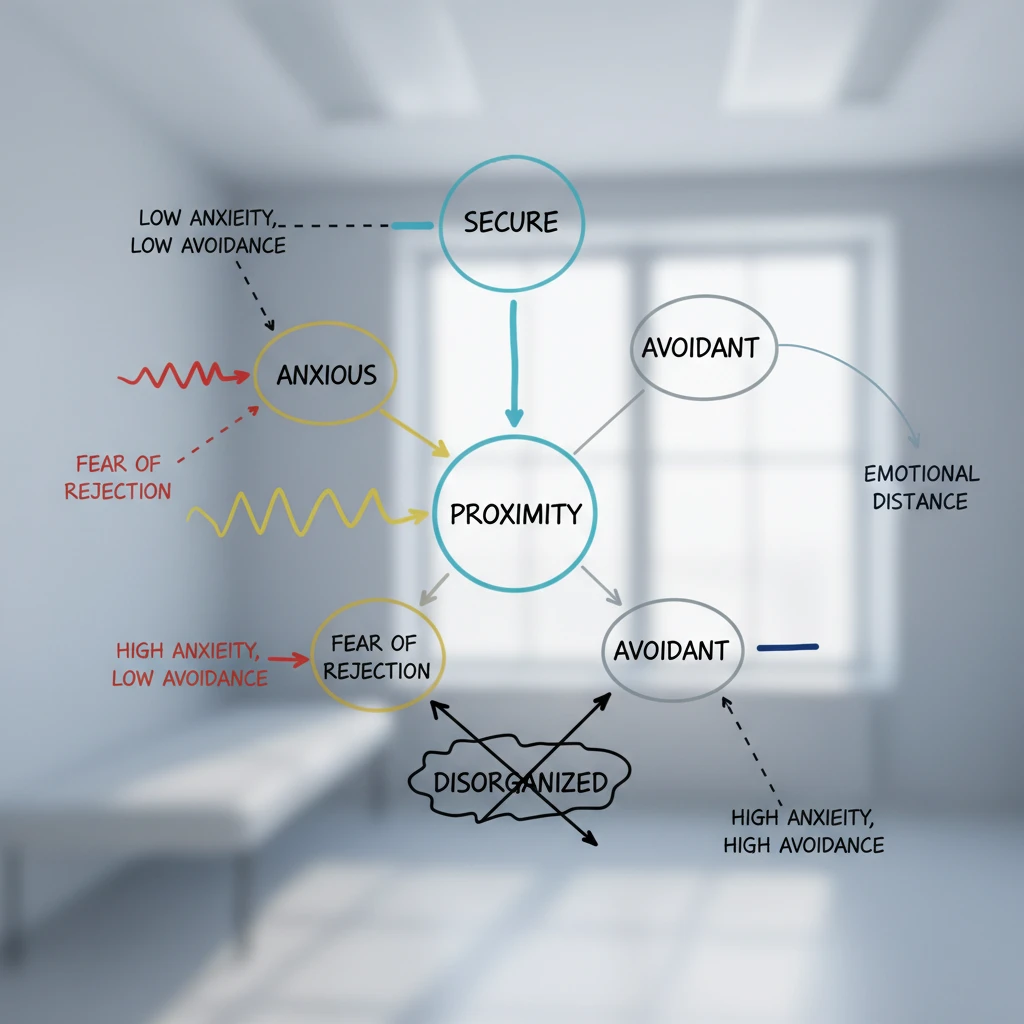
There are generally four attachment styles that influence the psychology of human connection:
- Secure Attachment: Individuals who feel comfortable with intimacy and are usually warm and loving. They do not fear being alone or being rejected.
- Anxious-Preoccupied Attachment: People who crave intimacy but are often plagued by insecurity and the fear that their partners do not desire the same level of closeness.
- Dismissive-Avoidant Attachment: Individuals who equate independence with invulnerability. They often perceive attachment as a weakness and may distance themselves when relationships become too emotionally demanding.
- Fearful-Avoidant (Disorganized) Attachment: A complex style characterized by a desire for closeness coupled with intense fear. This often stems from unresolved trauma where the caregiver was a source of fear rather than comfort.
Understanding these styles is critical because they function as the lens through which we interpret social signals. A secure individual might interpret a partner’s silence as a need for rest, whereas an anxious individual might interpret the same silence as a precursor to abandonment.
Maslow and the Need for Belonging
Abraham Maslow’s Hierarchy of Needs places “Love and Belonging” immediately after physiological and safety needs. This placement underscores a critical psychological truth: once our physical survival is assured, our psychological survival depends on connection. Deprivation of social connection can lead to severe psychological distress, including depression and anxiety, highlighting that connection is not a luxury, but a requirement for mental health.
The Role of Self-Perception in Relationships
A paradox of the psychology of human connection is that our ability to connect with others is deeply contingent upon our connection with ourselves. Self-perception—the mental image we hold of our own personality, strengths, and weaknesses—acts as a gatekeeper for intimacy.
Projection and the Looking-Glass Self
Sociologist Charles Horton Cooley introduced the concept of the “Looking-Glass Self,” suggesting that we develop our self-concept based on how we believe others perceive us. In relationships, this creates a feedback loop. If we possess low self-esteem, we may project critical thoughts onto our partners, assuming they judge us as harshly as we judge ourselves. This projection can sabotage connection, as we react to imagined slights rather than reality.
Differentiation of Self
Murray Bowen’s concept of “Differentiation of Self” is vital here. It refers to the ability to separate one’s own intellectual and emotional functioning from that of the family or group. A highly differentiated person can maintain their sense of self while being in close proximity to others. Poor differentiation leads to emotional fusion, where one person’s mood dictates the entire dynamic of the relationship. True psychological connection requires two distinct individuals who choose to bond, rather than two enmeshed individuals who need each other to regulate their own identities.
Communication Theory Basics
While psychology provides the “why” of connection, communication theory provides the “how.” Effective communication is the vehicle through which psychological intention is translated into interpersonal reality.
Transactional Analysis
Created by Eric Berne, Transactional Analysis (TA) is a psychoanalytic theory and method of therapy wherein social transactions are analyzed to determine the ego state of the communicator. We communicate from three states:
- Parent:Modeled on authority figures; can be nurturing or critical.
- Adult: Rational, objective, and dealing with the here-and-now.
- Child: Based on internal feelings and reactions from childhood; can be free or adapted.
Dysfunctional communication often occurs when lines cross—for example, when one partner speaks from an Adult state (“Where are the keys?”) and the other responds from a defensive Child state (“Why do you always blame me for losing things?”). Mastering the Adult-to-Adult transaction is a cornerstone of healthy human connection.

Active Listening and Validation
True connection requires “active listening,” a structured form of listening and responding that focuses the attention on the speaker. This involves mirroring (repeating back what was said) and validating (acknowledging the emotions behind the words). Validation does not imply agreement; it implies that the other person’s internal experience is legitimate. For further reading on the intricacies of psychological communication, you can refer to resources provided by the American Psychological Association.
The Neuroscience of Bonding
The psychology of human connection is underpinned by potent neurochemistry. Our brains are designed to reward social bonding, reinforcing the behavior through chemical cascades.
The Chemical Trio: Oxytocin, Dopamine, and Serotonin
- Oxytocin: Often called the “love hormone,” oxytocin is released during physical touch, childbirth, and breastfeeding. It lowers cortisol (stress) levels and promotes feelings of trust and safety.
- Dopamine: This neurotransmitter is associated with the reward system. Positive social interactions trigger dopamine release, making connection feel pleasurable and encouraging us to seek it out again.
- Serotonin: Linked to mood regulation and social status. Healthy relationships boost serotonin, contributing to an overall sense of well-being and confidence.
Mirror Neurons and Empathy
Discovered in the 1990s, mirror neurons are brain cells that fire both when an animal acts and when the animal observes the same action performed by another. In humans, this system is believed to be the neurological basis of empathy. When we see someone cry, our mirror neurons simulate that distress, allowing us to “feel” their pain. This neural resonance is what allows for deep, non-verbal psychological connection.
Emotional Regulation and Conflict
Conflict is inevitable in any long-term connection. The difference between a relationship that deepens through conflict and one that fractures lies in emotional regulation.
The Window of Tolerance
Dr. Dan Siegel coined the term “Window of Tolerance” to describe the optimal zone of arousal where we can function and thrive. When we are within this window, we can process information and connect with others. Trauma or high stress can push us out of this window into hyper-arousal (fight/flight/anxiety) or hypo-arousal (freeze/shut down). Meaningful connection is nearly impossible when one or both parties are outside their window of tolerance, as the brain shifts from social engagement to survival mode.
The Power of Co-Regulation
Humans are not designed to self-regulate in isolation entirely; we are designed for co-regulation. This is the process where one nervous system calms another. A calm, grounded presence can help a dysregulated person return to their window of tolerance. This biological synchronization is the essence of safety in the psychology of human connection.

Barriers to Authentic Connection
Despite our biological drive for it, true connection is often elusive. Several psychological barriers can impede the formation of deep bonds.
The Vulnerability Paradox
We often want to be known, but we fear being seen. Vulnerability involves emotional exposure, risk, and uncertainty. While it is the absolute prerequisite for connection, it triggers our defense mechanisms. We may use perfectionism, cynicism, or intellectualization as shields to protect our ego, inadvertently walling off the very connection we seek.
Cognitive Distortions
Cognitive distortions are biased ways of thinking about oneself and the world. Examples include “mind reading” (assuming we know what others are thinking, usually negative) or “personalization” (taking responsibility for events outside our control). These distortions create a false narrative about our relationships, leading to unnecessary conflict and isolation. For more on how cognitive processes affect mental health, the National Institute of Mental Health offers extensive research.
People Also Ask
What are the 4 levels of human connection?
The four levels of human connection are generally categorized as: 1) Physical connection (touch and proximity), 2) Intellectual connection (sharing ideas and stimulating conversation), 3) Emotional connection (sharing feelings, vulnerability, and empathy), and 4) Spiritual connection (shared values, purpose, or existential beliefs). A holistic relationship often involves elements of all four.
Why is human connection so important to psychology?
Human connection is central to psychology because humans are obligate social species. Social isolation is linked to higher risks of mortality, depression, cognitive decline, and heart disease. Psychologically, connection regulates our nervous systems, validates our identity, and provides the emotional safety required for personal growth and resilience.
What triggers emotional connection?
Emotional connection is triggered by vulnerability, active listening, and shared experiences. When one person expresses an emotion and the other responds with validation and empathy (rather than judgment), trust is built. Neurochemically, this releases oxytocin, which reinforces the bond and creates a feeling of closeness.
How does trauma affect human connection?
Trauma can severely disrupt human connection by altering the nervous system’s threat detection mechanism. Survivors may perceive neutral social cues as dangerous, leading to avoidance or aggression. Trauma often results in insecure attachment styles, making it difficult to trust others or feel safe in intimacy.
What is the psychology behind instant connection?
An “instant connection” is often the result of pattern matching. Psychologically, we may recognize familiar traits (from caregivers or past positive relationships) in a stranger. Biologically, it can be driven by pheromones and high compatibility in communication styles or mirror neuron activity, creating a rapid sense of rapport.
Can you rebuild a psychological connection?
Yes, psychological connection can be rebuilt through intentional effort. This involves “turning towards” each other’s bids for connection, practicing radical honesty, and engaging in repair attempts after conflicts. Rebuilding trust requires consistent, reliable behavior over time to overwrite past negative associations.