
The psychology of friendship encompasses the biological, emotional, and cognitive processes that drive humans to form voluntary, reciprocal social bonds. It is rooted in evolutionary survival mechanisms, where cooperation and group belonging increased the likelihood of survival, and is sustained today by neurochemical rewards like oxytocin and dopamine, which reinforce social connection and alleviate the physiological stress of isolation.
The Evolutionary Roots of Connection
To understand the profound impact friendship has on the human psyche, one must look backward to our ancestral origins. The psychology of friendship is not merely a modern sociological construct; it is a biological imperative wired into our DNA. Early humans who formed strong social networks were better equipped to hunt, gather, and protect one another from predators. Isolation was not just an emotional inconvenience; it was a death sentence.
This evolutionary pressure created what is known as the “social brain hypothesis.” This theory suggests that the human brain evolved to be disproportionately large primarily to manage complex social relationships. We are cognitively designed to track alliances, understand social hierarchies, and maintain group cohesion.

Dunbar’s Number and Cognitive Limits
A critical concept in understanding our social limitations is Dunbar’s number, proposed by British anthropologist Robin Dunbar. Based on the size of the neocortex, Dunbar theorized that humans can maintain stable social relationships with approximately 150 people. Beyond this number, the cognitive load required to track the emotional nuances and reciprocal obligations of a relationship becomes too great.
Within this 150, there are concentric circles of intimacy:
- Support Clique (3-5 people): Closest friends and family who provide critical emotional and financial support.
- Sympathy Group (12-15 people): People you interact with frequently and whose death would cause significant distress.
- Affinity Group (50 people): Extended friends you might invite to a large dinner or party.
- Active Network (150 people): The limit of people you can genuinely call “friends” rather than just acquaintances.
The Psychological Triad of Friendship Formation
While evolution explains why we need friends, social psychology explains how we choose them. Research consistently highlights three primary factors that dictate the formation of friendship: proximity, repeated exposure, and similarity.
Proximity and the Mere Exposure Effect
Historically, geography was destiny. The “propinquity effect” suggests that we are most likely to befriend those with whom we cross paths physically. This is closely tied to the “mere exposure effect,” a psychological phenomenon where people tend to develop a preference for things merely because they are familiar with them. In a dormitory setting, for instance, students are statistically more likely to become friends with their immediate neighbors than with those living two doors down.
Similarity and Validation
Despite the adage that “opposites attract,” psychological evidence heavily favors the concept of homophily—birds of a feather flock together. We are drawn to individuals who share our values, socioeconomic status, interests, and even personality traits. This similarity provides consensual validation; when a friend agrees with our worldview, it reinforces our sense of self and reduces cognitive dissonance.
Reciprocity and Equity
Friendship is fundamentally an economic exchange of emotional resources. The “Social Exchange Theory” posits that we evaluate relationships based on a cost-benefit analysis. We seek relationships where the rewards (companionship, support, fun) outweigh the costs (drama, time commitment, emotional energy). Crucially, this exchange must feel equitable. If one party consistently gives more than they receive, the psychological contract of the friendship is violated, leading to resentment and eventual dissolution.
Sociological Structures: Strong vs. Weak Ties
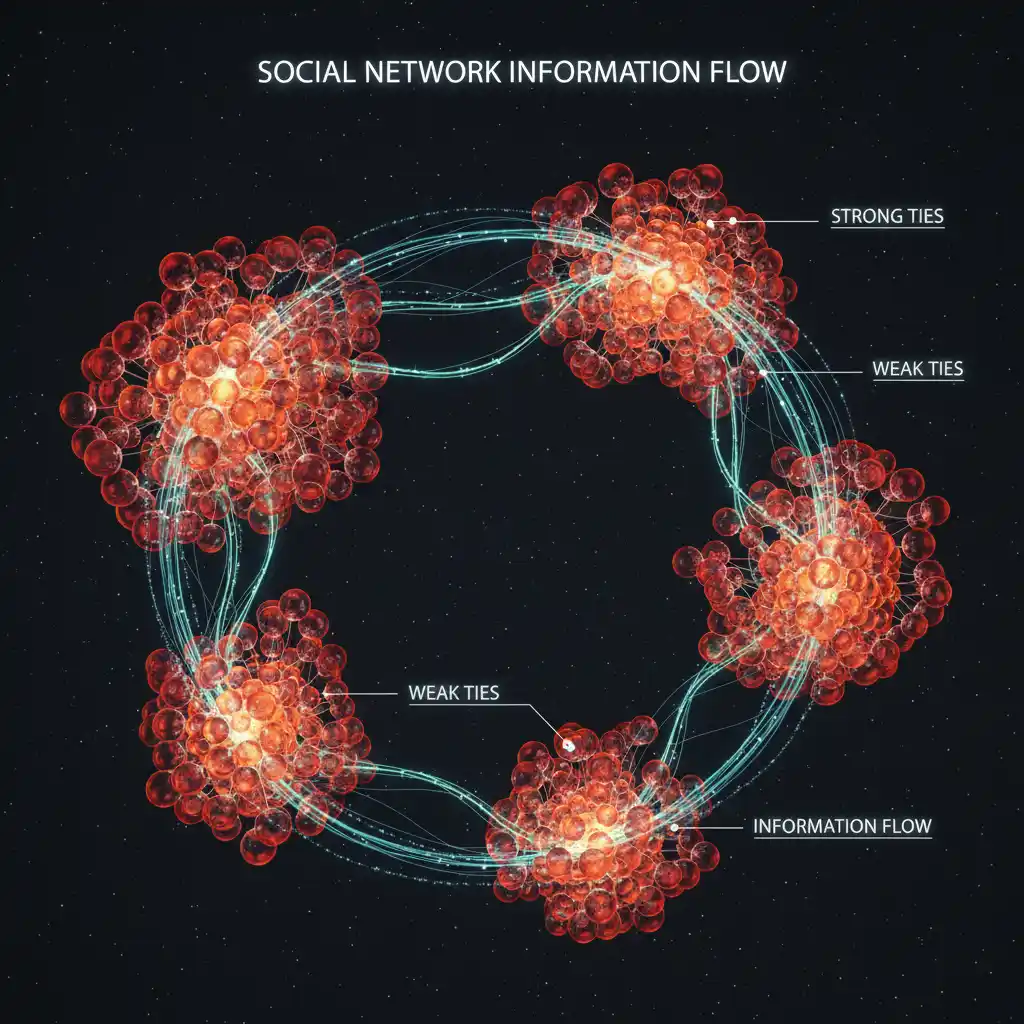
The fabric of society is woven not just by our closest confidants, but also by our acquaintances. Sociologist Mark Granovetter introduced the seminal concept of “the strength of weak ties.” While strong ties (close friends) provide emotional support, weak ties (acquaintances, colleagues, friends of friends) are vital for information diffusion and opportunity.
Weak ties act as bridges between disparate social clusters. A close friend likely knows the same people and information you do. A weak tie, however, operates in different circles and can introduce you to new ideas, job opportunities, and cultural perspectives. A healthy social ecosystem requires a balance of both.
The Neuroscience of Belonging
When we interact with friends, our brains undergo a symphony of chemical reactions. Positive social interactions trigger the release of oxytocin, often called the “love hormone,” which fosters trust and bonding. Simultaneously, the brain’s reward center releases dopamine, creating a sensation of pleasure.
Conversely, social rejection activates the same neural pathways as physical pain. fMRI studies have shown that the anterior cingulate cortex—the region responsible for processing physical pain—lights up when individuals experience social exclusion. This suggests that to the brain, a broken friendship or social isolation is not a metaphor; it is a literal injury.
The Health Implications of Loneliness
In contemporary society, the psychology of friendship has become a matter of public health. We are currently facing what many experts call a “loneliness epidemic.” The absence of quality social bonds triggers a chronic stress response in the body.
When an individual feels isolated, their body remains in a state of hyper-vigilance. Cortisol levels rise, inflammation increases, and the immune system weakens. According to the U.S. Surgeon General, the mortality risk associated with chronic loneliness is equivalent to smoking 15 cigarettes a day. It is a greater risk factor for early death than obesity or physical inactivity.
Loneliness is not just about being alone; it is the subjective discrepancy between an individual’s desired and actual social connection levels. One can be lonely in a crowd, and one can be solitary without being lonely. However, the lack of a “confidant”—someone with whom to share deep emotional burdens—is a primary predictor of depression and anxiety.
Digital vs. Physical Bonds in the Modern Era
The advent of social media has radically altered the landscape of friendship, presenting a paradox: we are more connected than ever, yet increasingly isolated. Digital platforms allow us to bypass geographical barriers, maintaining relationships that would have otherwise faded. However, the quality of these interactions often differs significantly from physical presence.
Passive Consumption vs. Active Engagement
Scrolling through a friend’s feed constitutes passive consumption. It creates an illusion of connection without the reciprocal vulnerability required for true intimacy. Psychology distinguishes between “bonding social capital” (deep, emotional support) and “bridging social capital” (information sharing). Social media is excellent for bridging but often poor for bonding.

The Loss of Non-Verbal Cues
Face-to-face interaction provides a wealth of non-verbal data—tone of voice, micro-expressions, body language, and touch. These cues are essential for empathy and emotional regulation. Digital communication, even video calls, often introduces a latency or “mirror anxiety” that disrupts the natural flow of synchrony between two nervous systems. While digital friends are real friends, physical presence remains the gold standard for satisfying our biological hunger for belonging.
Cultivating Deep Connections
Understanding the psychology of friendship empowers us to take agency over our social lives. Building a robust “social fabric” requires intentionality.
- Prioritize Vulnerability: Deep bonds are formed through self-disclosure. Sharing fears and failures, rather than just highlights, invites reciprocal trust.
- Consistency Over Intensity: Friendship is built on the accumulation of small interactions over time. Regular check-ins are more valuable than sporadic grand gestures.
- Revive Third Places: Engage in communities outside of work and home—clubs, religious groups, or volunteer organizations—to facilitate organic repeated exposure.
In conclusion, friendship is not a luxury; it is the scaffolding of a healthy life. By acknowledging the biological and psychological necessity of connection, we can better navigate the complexities of modern relationships and build a community that sustains us.
People Also Ask
What are the 3 types of friendship according to psychology?
Aristotle, whose work influences modern psychology, defined three types: Friendships of Utility (based on mutual benefit), Friendships of Pleasure (based on shared enjoyment of an activity), and Friendships of the Good (based on mutual respect and admiration of character). The latter is considered the rarest and most enduring form.
How does psychology explain the formation of friendship?
Psychology explains friendship formation primarily through the Proximity Principle (being physically near), the Mere Exposure Effect (familiarity breeds liking), and the Similarity-Attraction Effect (sharing values and traits). Additionally, Reciprocity is essential; we bond with those who like us back and provide emotional equity.
Why is friendship important for mental health?
Friendship acts as a buffer against stress. Positive social interactions release oxytocin and dopamine, which reduce anxiety and improve mood. Having a strong support system increases resilience against trauma and depression, while loneliness is linked to cognitive decline and higher cortisol levels.
What is the Dunbar number in friendship?
The Dunbar number is a cognitive limit suggested by anthropologist Robin Dunbar, stating that humans can comfortably maintain stable social relationships with about 150 people. Within this, circles of intimacy decrease in size, with only about 5 people usually being in the inner “support clique.”
Can men and women be just friends according to psychology?
Yes, psychology supports that cross-sex platonic friendships are possible and healthy. However, they can face challenges such as the sexual tension or mismatched romantic expectations (the “friend zone”). Success often depends on clear communication regarding boundaries and the absence of romantic intent from both parties.
How does social media affect the psychology of friendship?
Social media can maintain weak ties and bridge geographical gaps, but it can also increase feelings of loneliness if used passively (doom-scrolling). It may create FOMO (Fear Of Missing Out) and encourage social comparison. Active, direct communication on these platforms is linked to better well-being than passive consumption.