
Leadership styles and organizational culture are intrinsically linked, as a leader’s behavioral approach directly dictates the norms, values, and psychological safety within a team. Whether employing transformational, transactional, or servant methodologies, a leader’s actions set the emotional tone, determining whether a workplace culture thrives on innovation and trust or stagnates in fear and rigidity.
The Foundation of Influence: How Leaders Shape Culture
The saying “culture eats strategy for breakfast” is a staple in management theory, but it is the leader who sets the table. Organizational culture is often described as the collective personality of a company—the shared assumptions, values, and behaviors that determine how people interact and get work done. However, this culture does not emerge in a vacuum. It is essentially the “shadow of the leader.”
From a psychological perspective, employees look to leadership figures to model acceptable behavior. If a leader prioritizes transparency and vulnerability, the culture tends to become open and communicative. Conversely, if a leader is secretive and punitive, the culture often morphs into one of silence and risk-aversion. Understanding the symbiotic relationship between leadership styles and organizational culture is the first step in diagnosing team health and prescribing the necessary changes for organizational longevity.

Transformational vs. Transactional Leadership
When analyzing the psychology of leadership, two dominant theories often stand in contrast: transformational and transactional leadership. Each creates a vastly different cultural environment, influencing employee motivation and retention in distinct ways.
The Transformational Approach: Inspiring Innovation
Transformational leadership is characterized by leaders who inspire and motivate employees to exceed their own self-interest for the good of the organization. These leaders focus on a shared vision, intellectual stimulation, and individual consideration. In a culture driven by transformational leadership, employees often report higher levels of job satisfaction and commitment.
The impact on culture is profound. Because these leaders encourage creativity and challenge the status quo, the resulting culture is one of innovation and agility. Mistakes are viewed as learning opportunities rather than failures. This style fosters a high-trust environment where team members feel emotionally connected to the mission. According to research often cited by the American Psychological Association, transformational leadership is strongly correlated with positive organizational citizenship behaviors.
The Transactional Approach: Ensuring Compliance
In stark contrast, transactional leadership operates on a system of rewards and punishments. It is based on the premise that employees are motivated primarily by external factors. The relationship is an exchange: “You do this work, and I will give you this pay.”
While effective for short-term goals and maintaining order in highly regulated industries, the cultural impact of purely transactional leadership can be limiting. It tends to create a culture of compliance rather than commitment. Innovation may stifle because employees are conditioned to follow strict procedures to avoid penalties or gain specific rewards. The psychological contract here is rigid; there is rarely room for emotional investment or “going the extra mile” unless it is directly incentivized.
Servant Leadership: Cultivating Empathy and Growth
Moving beyond the traditional hierarchy, servant leadership flips the script. Coined by Robert K. Greenleaf, this philosophy posits that the primary goal of a leader is to serve. This implies prioritizing the needs of the team, ensuring they develop and perform as highly as possible.
A culture built on servant leadership is distinctively communal and supportive. It is characterized by:
- High Empathy: Leaders actively listen and validate the feelings of their team.
- Stewardship: A sense of responsibility for the well-being of the wider community.
- Commitment to Growth: Resources are allocated to the personal and professional development of employees.
In such an environment, psychological safety is high. Employees feel valued as human beings, not just as assets. This leads to deep loyalty and a resilient culture that can weather crises because the team trusts that the leader has their best interests at heart.

Recognizing Toxic Leadership and Its Fallout
To fully understand the spectrum of leadership styles and organizational culture, one must address the dark side: toxic leadership. This style is often characterized by narcissism, aggressive micromanagement, and a lack of empathy. Toxic leaders may achieve short-term results through fear and intimidation, but the long-term cultural damage is often catastrophic.
The Culture of Fear
Toxic leadership breeds a culture of fear and silence. In psychology, this triggers the “freeze” response in employees. Creativity dies because proposing a new idea opens one up to criticism or ridicule. Information hoarding becomes common as employees try to protect their own status.
Impact on Mental Health and Turnover
The psychological toll of a toxic culture includes high rates of burnout, anxiety, and depression among staff. Turnover becomes a chronic issue, often referred to as a “revolving door” culture. Even high performers will eventually leave to preserve their mental health. Recognizing these signs early—such as high absenteeism or a palpable tension in meetings—is critical for organizational survival.
Adapting Your Style to Team Needs
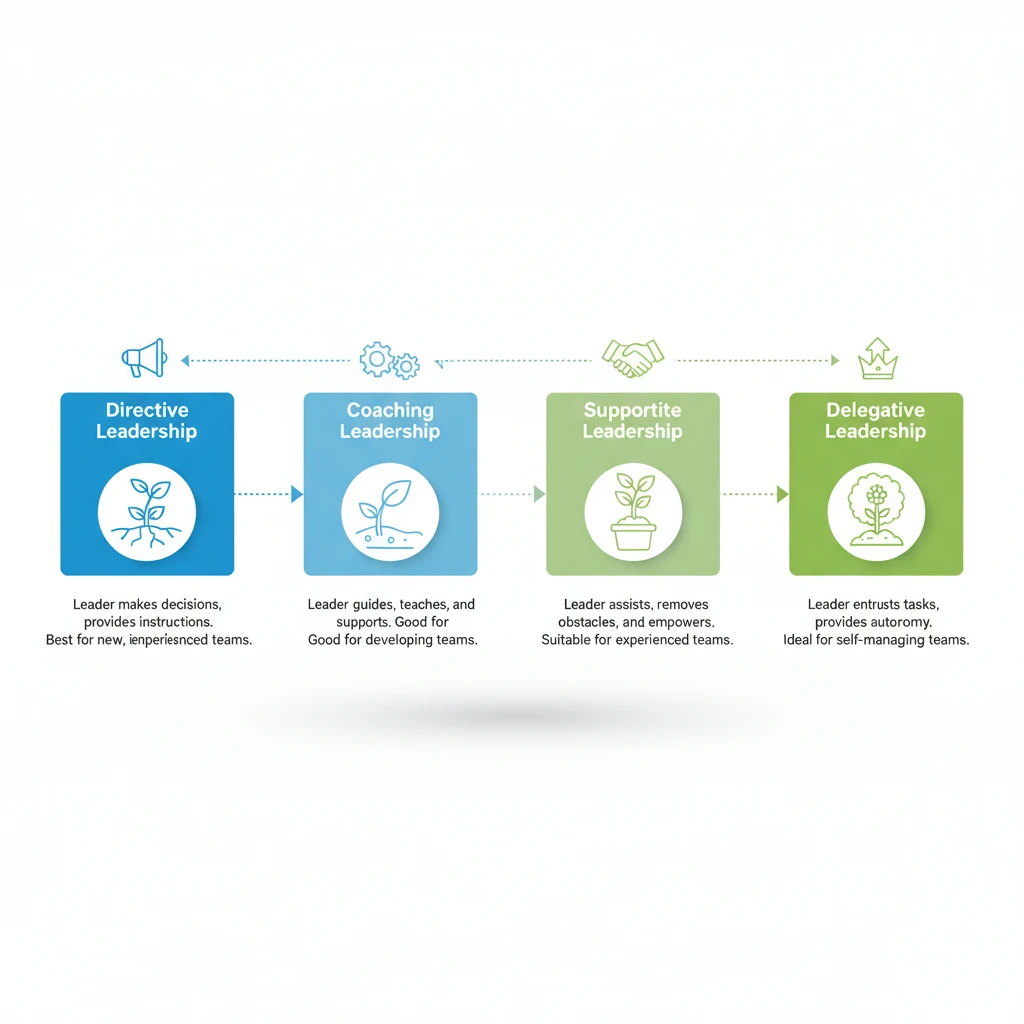
The most effective leaders do not adhere to a single style rigidly; they possess situational adaptability. This concept, rooted in the Situational Leadership Theory developed by Hersey and Blanchard, suggests that the best leadership style depends on the maturity and competence of the team regarding a specific task.
For example, a team of new hires may require a more directive (transactional) approach to understand workflows and expectations. As they gain competence and confidence, the leader should shift toward a coaching or supporting (transformational or servant) style.
Adapting your style requires high emotional intelligence (EQ). A leader must be able to read the room—understanding the cultural undercurrents—and adjust their behavior to provide what the team needs at that moment. This flexibility prevents cultural stagnation and ensures that the leadership style evolves alongside the team’s growth.
The Role of Psychological Safety
Regardless of the specific style employed, the ultimate metric of a healthy culture is psychological safety. Defined by Harvard Business School professor Amy Edmondson, psychological safety is the belief that one will not be punished or humiliated for speaking up with ideas, questions, concerns, or mistakes.
Leaders cultivate this by:
- Framing work as a learning problem, not an execution problem.
- Acknowledging their own fallibility.
- Modeling curiosity by asking questions.
When leadership styles prioritize psychological safety, the organizational culture becomes robust. It allows for cognitive diversity, where different viewpoints are leveraged for better decision-making. For further reading on organizational dynamics, resources from Harvard Business Review provide extensive case studies on how safety drives performance.
People Also Ask
What are the 4 main types of leadership styles?
The four most commonly cited leadership styles are Autocratic (authoritarian control), Democratic (participative decision-making), Laissez-Faire (hands-off approach), and Transformational (inspiring change and growth). Each style impacts organizational culture differently, ranging from rigid hierarchies to flexible, innovative environments.
How does leadership style affect employee performance?
Leadership style directly influences employee motivation, engagement, and stress levels. Supportive styles like Transformational or Servant leadership typically boost morale and discretionary effort, leading to higher performance. Conversely, overly controlling or toxic styles can induce stress and burnout, significantly lowering productivity and quality of work.
Why is culture important in leadership?
Culture acts as the operating system for an organization. A leader cannot effectively implement strategy if the culture (values, beliefs, behaviors) opposes it. Leadership must align with and nurture a culture that supports the company’s goals, as culture dictates how employees interact, solve problems, and serve customers.
What is the relationship between leadership and organizational behavior?
Leadership is a primary driver of organizational behavior. Leaders model the behaviors that become acceptable norms within the group. Through reward systems, communication styles, and decision-making processes, leaders reinforce specific behaviors, effectively shaping the collective psychology and actions of the organization.
Can a leader change an existing organizational culture?
Yes, but it requires intentionality and time. A leader can change culture by articulating a new vision, modeling desired behaviors consistently, aligning incentives with new values, and holding individuals accountable. It is a slow process that involves unlearning old habits and reinforcing new social norms.
What is the best leadership style for a positive culture?
While there is no single “best” style, Transformational and Servant leadership are most consistently linked to positive, high-trust cultures. These styles prioritize employee well-being, growth, and shared purpose, which fosters psychological safety and high engagement, unlike authoritarian styles that may create fear-based cultures.