
Family mediation in New Zealand is a confidential, voluntary process that helps separating or separated parents resolve disagreements about the care of their children without going to court. It involves a neutral third-party mediator who facilitates communication and helps families reach mutually agreeable solutions, focusing on the child’s best interests.
Understanding Family Disputes in New Zealand
Family disputes, particularly those involving children following separation or divorce, can be emotionally charged and complex. In New Zealand, the legal framework prioritises the welfare and best interests of children, encouraging parents to work collaboratively to resolve care arrangements. While court intervention is an option, it is often seen as a last resort due to its adversarial nature, time commitment, and financial implications. This is where family mediation steps in as a vital alternative, offering a constructive and less confrontational path forward for many Kiwi families.
The landscape of family law in New Zealand is designed to support parents in making decisions that serve their children’s future. Mediation provides a structured environment for this, helping to bridge communication gaps and facilitate understanding during a difficult period. By choosing mediation, families can navigate potential conflicts with greater autonomy and focus on creating practical, sustainable solutions tailored to their unique circumstances.

Benefits of Mediation for New Zealand Families
Family mediation offers numerous advantages over traditional court proceedings, particularly for New Zealand families navigating separation. These benefits extend beyond just legal convenience, impacting the long-term well-being of all involved, especially children.
Cost-Effectiveness and Efficiency
Engaging in Family Dispute Resolution (FDR) is typically far more cost-effective and time-efficient than pursuing matters through the Family Court. Court processes can be lengthy, with multiple hearings, legal fees for lawyers, and significant delays. Mediation, conversely, often concludes within a few sessions over a shorter period, reducing financial strain and allowing families to move forward sooner.
Child-Focused Approach
New Zealand law places the child’s welfare as paramount. Mediation inherently supports this principle by focusing discussions on what is best for the children. Mediators are trained to keep the children’s needs at the forefront, encouraging parents to create co-parenting plans that prioritise stability, routine, and positive relationships with both parents. This contrasts with adversarial court battles where the focus can sometimes shift to parental rights rather than child well-being.
Confidentiality and Privacy
Unlike court proceedings, which are generally public, mediation sessions are confidential. This privacy allows parents to discuss sensitive issues openly and honestly without fear of public disclosure. The discussions held during mediation cannot be used as evidence in court, fostering a safe space for genuine negotiation and compromise.
Preserving Parental Relationships
Even after separation, parents must continue to co-parent. Court battles can exacerbate animosity and damage the ability of parents to communicate effectively in the future. Mediation, by encouraging cooperation and mutual respect, helps to preserve or even improve the parental relationship, which is crucial for successful long-term co-parenting and the children’s emotional health.
Empowerment and Tailored Solutions
Mediation empowers parents to make their own decisions regarding their children’s future, rather than having decisions imposed upon them by a judge. This leads to solutions that are more likely to be practical, sustainable, and tailored to the unique circumstances of the family. When parents actively participate in crafting their agreements, they are also more likely to adhere to them.
The Family Dispute Resolution Process in NZ
Understanding the steps involved in family mediation, specifically Family Dispute Resolution (FDR) in New Zealand, can help families prepare for the process and maximise its effectiveness.
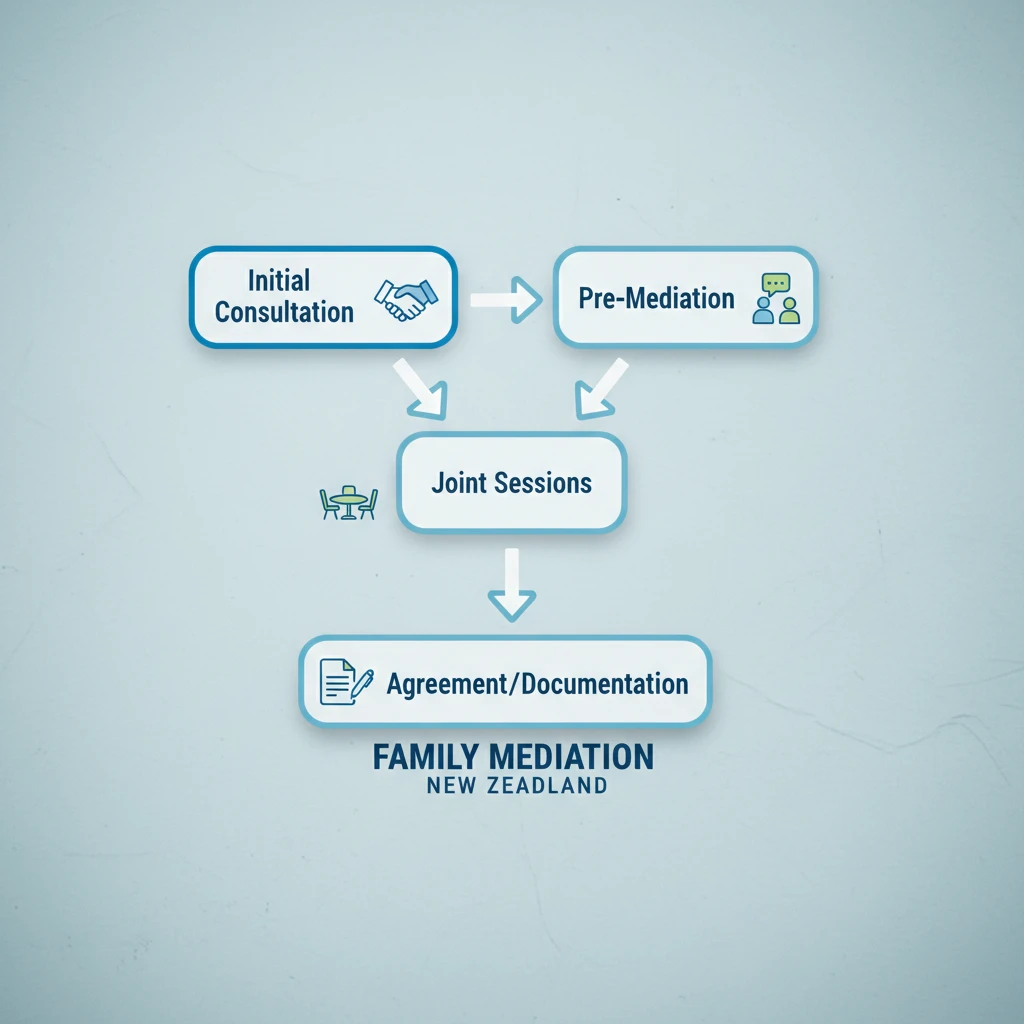
Initial Steps and FDR Service
The process typically begins with one or both parents contacting an FDR provider. In New Zealand, many accredited mediators offer services under the Family Dispute Resolution scheme, which can be partially or fully funded by the government depending on eligibility criteria. An initial consultation, often separate for each parent, assesses the suitability of mediation for their situation and helps identify key issues.
Pre-Mediation and Joint Sessions
Before any joint sessions, the mediator may meet with each party individually (pre-mediation) to understand their perspectives, explain the process, and prepare them for joint discussions. The core of the process involves one or more joint mediation sessions where both parents and the mediator are present. During these sessions, the mediator guides discussions, helps identify common ground, and works towards resolving disagreements regarding care arrangements, contact, and specific responsibilities.The Mediator’s Role
A family mediator in New Zealand is a neutral, impartial third party. Their role is not to make decisions for the parents or to offer legal advice, but rather to facilitate communication, manage conflict, and help the parties explore options. They ensure discussions remain constructive and child-focused, maintaining an environment conducive to reaching agreement. Mediators are highly skilled in conflict resolution and communication techniques.
Documenting Agreements
If an agreement is reached during mediation, the mediator can help document it. While these agreements are not legally binding on their own, they can be formalized through an application to the Family Court for a Consent Order. A Consent Order makes the agreement legally enforceable, providing certainty and stability for the family moving forward. It is highly recommended that both parties seek independent legal advice before signing any agreement reached in mediation or applying for a Consent Order.
For more detailed information on Family Dispute Resolution services in New Zealand, visit the New Zealand Ministry of Justice website.
When Mediation is Mandatory or Recommended
While mediation is largely voluntary, New Zealand law has provisions that encourage or, in some cases, require parties to attempt Family Dispute Resolution before applying to the Family Court for a parenting order.
FDR Requirements and Exemptions
Under the Care of Children Act 2004, if parents cannot agree on care arrangements for their children, they generally must attend FDR before they can apply to the Family Court for a parenting order. This requirement underscores the legal system’s commitment to non-adversarial resolution pathways. However, there are important exemptions. Mediation may not be suitable, and thus not mandatory, in situations involving family violence, child abuse, or if one party is unable to participate safely or effectively. In such cases, a lawyer or a Family Court Registrar can advise on direct court application pathways.
Family Court and FDR
Even if an application is made directly to the Family Court due to an exemption, a judge may still recommend or order parties to attend mediation if they deem it safe and appropriate. The court views mediation as a valuable tool for resolving disputes efficiently and amicably, even at later stages of a legal process. Parties can also choose to engage in private mediation services outside of the government-subsidized FDR scheme at any time.
Achieving Amicable Resolutions Through Mediation
The success of mediation in fostering amicable resolutions largely depends on the willingness of both parties to engage constructively and focus on future-oriented solutions. While the mediator guides the process, parents play a crucial role in shaping the outcome.
Effective Communication Strategies
Mediation provides a structured environment where effective communication can be re-established. Parents are encouraged to listen actively, express their needs and concerns clearly, and refrain from blame or accusations. The mediator helps to reframe negative statements into constructive dialogue, fostering an atmosphere of respect. Learning these communication skills can also benefit ongoing co-parenting relationships long after mediation concludes.
Focusing on Shared Interests
Instead of battling over positions, successful mediation shifts the focus to shared interests, particularly the well-being of the children. Both parents typically share a common interest in their children’s happiness, health, and stability. By highlighting these common goals, mediators help parents find creative solutions that address underlying needs rather than simply compromise on demands. This often involves exploring a range of options before settling on a specific agreement.Legal Advice and Support
While mediators are impartial and do not provide legal advice, it is highly recommended that each party seeks independent legal counsel throughout the mediation process. Lawyers can advise on legal rights and obligations, review proposed agreements, and help ensure that any final agreement is fair and legally sound. This ensures that parents make informed decisions and that their children’s best interests are legally protected. Organisations like Community Law Centres O Aotearoa can provide initial legal guidance and support.

Conclusion: Empowering Families Through Mediation
Family mediation in New Zealand stands as a powerful, child-focused alternative to traditional court litigation for resolving family disputes. By offering a confidential, cost-effective, and empowering process, it enables parents to retain control over decisions affecting their children’s future. The emphasis on open communication, shared interests, and tailored solutions helps families navigate separation with dignity, preserve essential parental relationships, and ultimately achieve amicable and sustainable care arrangements. Engaging with FDR services not only meets legal requirements in many cases but also provides a pathway to healthier family dynamics post-separation, ensuring the enduring well-being of New Zealand’s children.
People Also Ask
What is Family Dispute Resolution (FDR) in NZ?
Family Dispute Resolution (FDR) in New Zealand is a type of mediation specifically designed to help separated or separating parents resolve disagreements about the care of their children. It involves a trained mediator who facilitates communication and helps parents develop a parenting plan that prioritises their children’s best interests, without needing to go to court.
Is family mediation mandatory in New Zealand before going to court?
Generally, yes. Under the Care of Children Act 2004, most parents are required to attend FDR before they can apply to the Family Court for a parenting order. However, there are exceptions, particularly in cases involving family violence or child abuse, where direct application to the court may be permitted.
How much does family mediation cost in NZ?
The cost of family mediation in NZ can vary. The government-subsidised FDR scheme offers services that are free for eligible low-income families, or partially funded for others. Private mediation services are also available and their costs depend on the mediator’s fees and the complexity of the dispute. It’s best to check with an FDR provider or the Ministry of Justice for current eligibility criteria and costs.
What happens if we don’t reach an agreement in mediation?
If an agreement cannot be reached through FDR, the mediator will issue a ‘Certificate of Non-Agreement’. This certificate allows either party to apply to the Family Court for a parenting order. The court will then consider the dispute and make a decision based on the evidence presented, always prioritising the child’s welfare.
Can I bring a lawyer to family mediation in NZ?
While lawyers generally do not attend the actual mediation sessions in the government-subsidised FDR scheme, it is highly recommended that each party seeks independent legal advice before, during, and after the mediation process. Your lawyer can explain your rights and obligations, help you understand the implications of any proposed agreement, and assist with formalising agreements into Consent Orders.
How long does family mediation usually take in New Zealand?
The duration of family mediation can vary depending on the complexity of the issues and the willingness of the parties to cooperate. Typically, the FDR process involves an initial assessment, individual pre-mediation meetings, and one to three joint mediation sessions. The entire process might take a few weeks to a couple of months from initial contact to reaching an agreement, significantly faster than court proceedings.