
High conflict co-parent communication refers to a structured, boundary-driven approach designed to minimize emotional volatility between separated parents. To manage this effectively, parents must treat their interaction as a strict business arrangement, utilizing written channels like parenting apps, employing the BIFF (Brief, Informative, Friendly, Firm) response technique, and prioritizing the child’s emotional safety above all else.
The Business Partnership Mindset: Setting Boundaries
Navigating the choppy waters of separation is difficult enough without the added turbulence of a high-conflict dynamic. For many parents in New Zealand, the transition from romantic partners to co-parents is fraught with unresolved emotion. The most effective strategy for stabilizing high conflict co-parent communication is a radical shift in perspective: you are no longer ex-partners; you are now business partners in the business of raising your children.
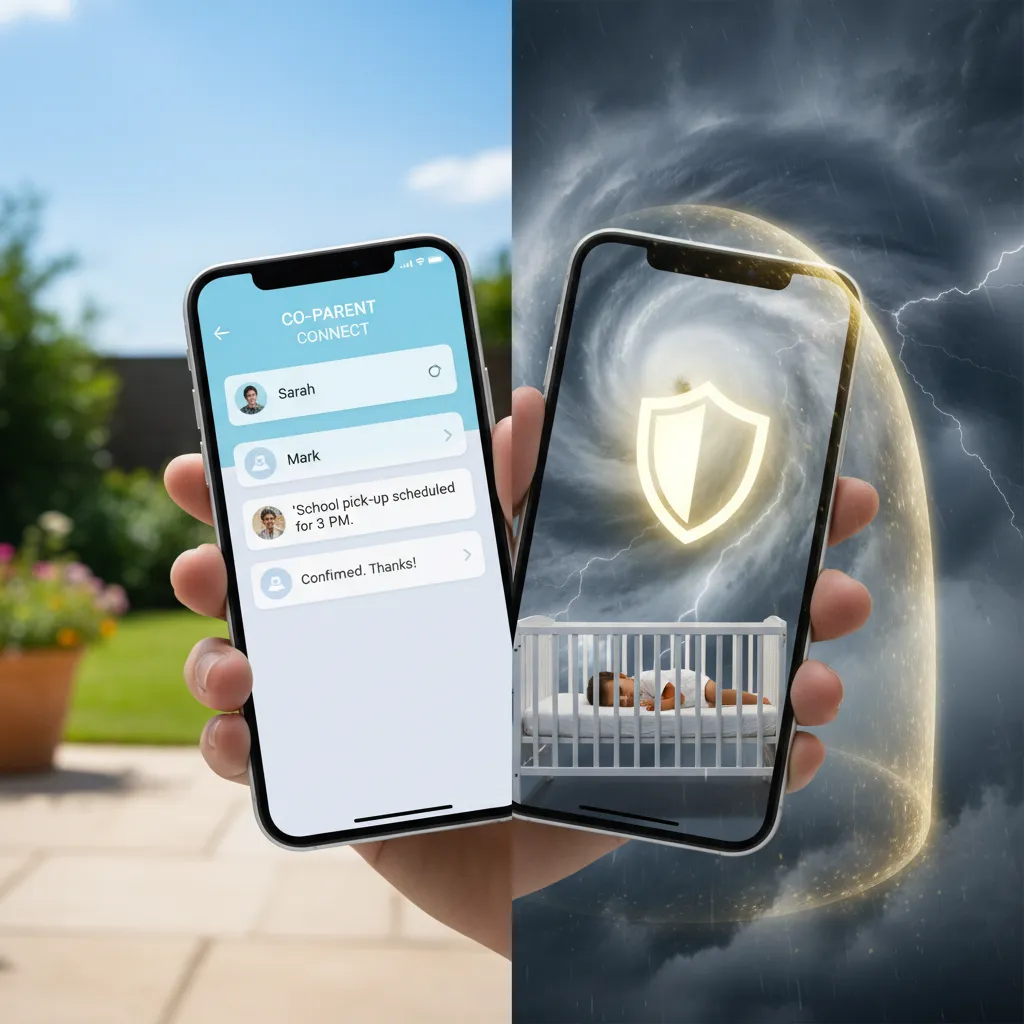
In a high-conflict scenario, the casual fluidity of normal communication is often weaponized. Boundaries are not just helpful; they are essential for mental health and legal safety. Establishing expectations early on prevents “scope creep,” where conversations about school pickup devolve into re-litigating the relationship breakdown.
Defining the Scope of Communication
To treat this relationship as a business, you must strictly define what is “on the agenda.” In a corporate setting, you would not discuss your personal life with a hostile vendor. The same rule applies here. Communication should be strictly limited to:
- Logistics (pick-up/drop-off times and locations).
- Medical appointments and health updates.
- Education (school reports, parent-teacher interviews).
- Emergency situations involving the child.
Any topic outside this scope—such as your personal life, finances unrelated to child support, or past relationship grievances—should be considered off-limits. If a message contains both relevant logistics and personal attacks, address only the logistics and ignore the rest completely.
Using Neutral Language and Strategic Mediums
The medium is just as important as the message. In high-conflict dynamics, verbal communication (phone calls or face-to-face conversations) often leads to escalation because it allows for tone, interruption, and immediate emotional reaction. Furthermore, verbal agreements are impossible to prove in the New Zealand Family Court if a dispute arises later.
The Power of Written Documentation
Transitioning to 100% written communication is a standard recommendation for high-conflict cases. Written records provide accountability and encourage people to pause before hitting send. However, standard text messaging (SMS) can be intrusive and disorganized. It demands immediate attention and can feel like harassment when a phone buzzes incessantly.
Instead, experts recommend using dedicated co-parenting applications. Platforms like OurFamilyWizard or similar tools widely accepted in New Zealand courts offer distinct advantages:
- Unalterable Records: Messages cannot be deleted or edited, providing an accurate evidentiary trail.
- Tone Meters: Some apps use AI to flag aggressive language before a message is sent, prompting the user to revise.
- Shared Calendars: This reduces the need to communicate about dates, as the schedule is visible to both parties.
De-escalation Techniques: The BIFF Method
When you receive a hostile message, the natural human instinct is to defend yourself. In a high-conflict dynamic, defense is interpreted as engagement, which fuels the conflict cycle. To break this cycle, you need a protocol for responding. The gold standard for this is the BIFF method, developed by the High Conflict Institute.
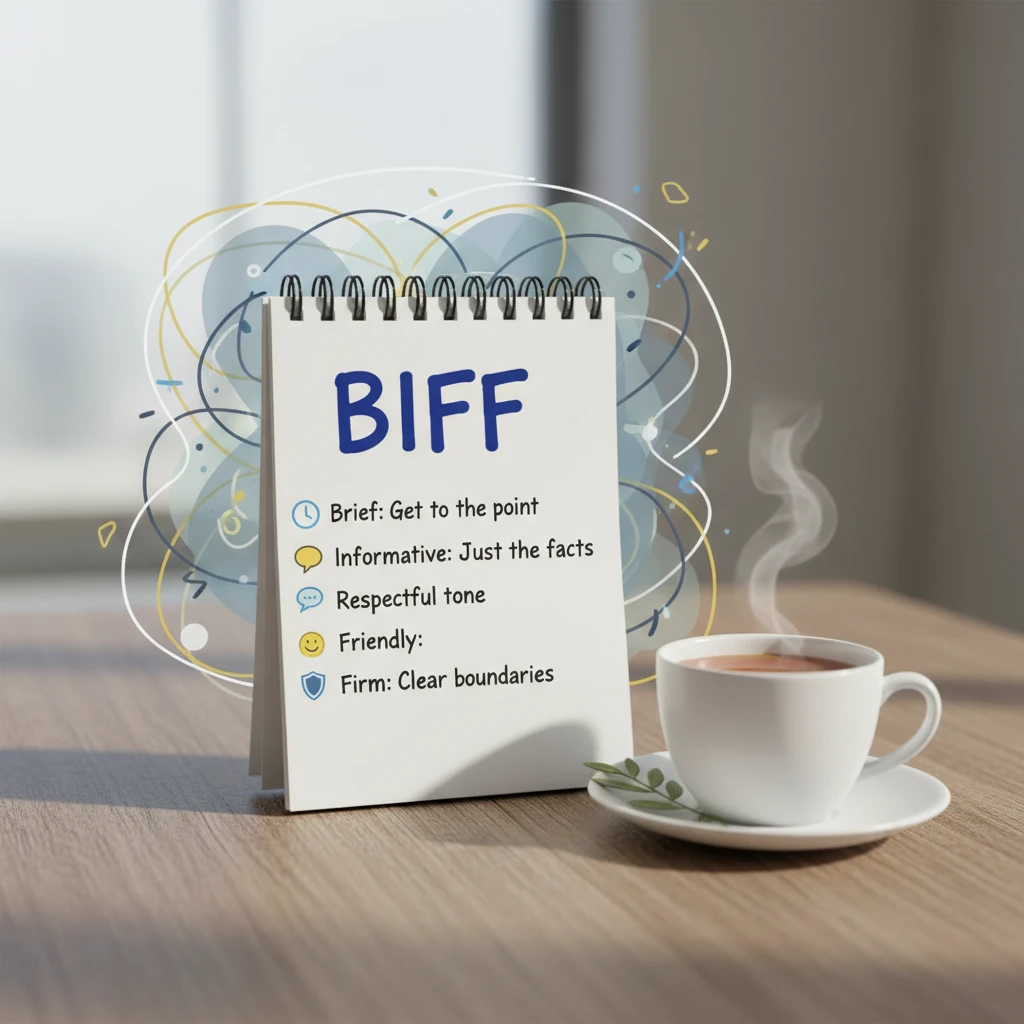
BIFF stands for:
- Brief: Keep your response short. The fewer words you use, the less material there is for the other person to react to.
- Informative: Focus entirely on facts. Avoid opinions, advice, or admonishments.
- Friendly: Maintain a polite tone. This does not mean being overly warm; it means using a neutral, professional greeting and sign-off (e.g., “Thanks,” “Regards”).
- Firm: This does not mean harsh. It means the conversation ends here. Do not leave the door open for further debate on settled matters.
Example of BIFF in Action
The Hostile Message: “You are so irresponsible. You never sent Sarah’s soccer boots back. You’re trying to sabotage her hobby just like you ruined our marriage. I’m coming over to get them now.”
The Wrong Response: “I’m not irresponsible! You forgot to pack them last week. Don’t you dare come to my house.” (This defends and counter-attacks).
The BIFF Response: “Hi [Name], Sarah’s soccer boots are in her bag for the exchange tomorrow at 3:00 PM at the school. See you then.”
Notice how the BIFF response ignores the insults about the marriage and irresponsibility completely. It addresses the logistical fact (where the boots are) and confirms the next interaction time.
Protecting Children from Conflict Exposure
The ultimate goal of managing high conflict co-parent communication is to shield the children. Research consistently shows that it is not the separation itself that damages children, but the ongoing conflict between parents. When parents fight, children often internalize the blame, leading to anxiety, behavioral issues, and loyalty conflicts.
The Messenger Trap
Never use your child as a messenger. Asking a child to “Tell your father he’s late with child support” or “Ask your mother if you can stay extra time” places a heavy psychological burden on them. It forces the child to navigate the emotional minefield of their parents’ relationship. All communication regarding logistics, money, and schedules must go directly between the adults, utilizing the neutral mediums discussed above.
Buffer Zones and Transitions
Hand-overs (the transition of care from one parent to another) are high-risk times for conflict. To protect children:
- Choose Neutral Locations: If home drop-offs lead to arguments, exchange the children at a neutral, public location like a library, a park, or a school.
- The “Business Silence” Rule: If you must see your co-parent, say a polite “Hello” and “Goodbye” for the child’s benefit, but do not engage in substantive conversation during the exchange.
- Third-Party Support: In extreme cases, utilize a trusted family member or a professional contact centre to facilitate the handover so the parents do not have to interact.
New Zealand Legal Context: Parenting Orders and Communication
In New Zealand, the Care of Children Act 2004 governs these disputes. The paramount consideration of the court is the welfare and best interests of the child. When communication breaks down to the point where it affects the child’s safety or wellbeing, the Family Court can intervene.
If you are in the process of drafting a Parenting Order or a parenting agreement, it is vital to be specific about communication. Vague clauses like “parents will consult on major decisions” often fail in high-conflict cases. Instead, request specific orders such as:
- “Communication between parties shall be limited to text or email, except in medical emergencies.”
- “The parties will use [Specific App] for all communication regarding the children.”
- “Neither party will speak negatively about the other party in the presence or hearing of the children.”
The New Zealand Family Court generally encourages a shared care approach, but they recognize that high conflict requires specific management. Documentation of abusive or harassing communication is crucial if you need to return to court to modify a Parenting Order.
When to Move to Parallel Parenting
Sometimes, despite your best efforts at “co-parenting,” the conflict remains too high. In these instances, a strategy known as Parallel Parenting may be necessary. Unlike co-parenting, which implies collaboration, parallel parenting minimizes contact to the absolute minimum.
In a parallel parenting arrangement:
- Parents do not attend the child’s appointments or school events simultaneously.
- Household rules are allowed to differ; what happens at Mum’s house stays at Mum’s, and what happens at Dad’s stays at Dad’s (provided the child is safe).
- Communication is strictly limited to emergencies and essential logistics.

This approach allows the dust to settle. By disengaging completely from the conflict loop, parents can focus on being the best parent they can be during their own parenting time, without the constant stress of dealing with a hostile ex-partner. Over time, as emotions cool, some parents find they can slowly transition back to a more collaborative model, but parallel parenting serves as a vital circuit breaker for high-conflict families.
For more information on legal structures for high-conflict families, resources like Wikipedia’s overview on Co-parenting or local NZ legal aid guides can provide foundational knowledge.
People Also Ask
How do you communicate with a narcissistic co-parent?
Communicating with a narcissistic co-parent requires strict emotional discipline. Use the “Gray Rock” method (becoming uninteresting and unresponsive to drama) and the BIFF method (Brief, Informative, Friendly, Firm). Keep all communication in writing to maintain a record and avoid phone calls where manipulation is easier.
What is the BIFF method in co-parenting?
The BIFF method is a communication strategy developed for high-conflict people. It stands for Brief, Informative, Friendly, and Firm. It is designed to deliver necessary information without triggering defensiveness or fueling further conflict.
Can a judge order parents to use a co-parenting app in NZ?
Yes, in New Zealand, a Family Court judge can include specific conditions in a Parenting Order requiring parents to use a specific app (like OurFamilyWizard) for communication. This is often done to ensure there is an accurate, unalterable record of interactions.
What is parallel parenting?
Parallel parenting is a style of parenting where high-conflict ex-partners disengage from each other to reduce conflict. They parent independently during their respective times, with minimal communication and separate attendance at the child’s events.
How do I stop my ex from harassing me via text?
Set a boundary by stating you will only respond to messages regarding the children. If harassment continues, mute notifications, use a co-parenting app to filter language, and keep a record of all messages. In severe cases in NZ, you may need to apply for a Protection Order or vary your Parenting Order.
What are the rules for communication in a parenting order?
Communication rules in a Parenting Order vary by case but often specify the method (e.g., text only), the frequency (e.g., once per day), and the topics allowed. Breaching these rules can have legal consequences in the Family Court.