
Anger management courses NZ provide structured frameworks for individuals to identify behavioral triggers, develop self-regulation techniques, and prioritize family safety. Often utilized in conjunction with Family Court proceedings or self-referrals, these programs aim to replace aggressive responses with non-violent communication strategies, fostering healthier relationships within the whānau.
Anger is a powerful, often misunderstood emotion. While it is a natural human response to perceived threats or injustices, the expression of anger can become destructive, leading to relationship breakdowns, legal consequences, and lasting harm to families. In the context of New Zealand society, where family harm statistics remain a pressing concern, taking responsibility for one’s emotional regulation is not just a personal improvement goal—it is a civic and familial duty.
For those navigating the complexities of relationships or the Family Court system, understanding the landscape of anger management is critical. Whether you are self-referring to save a marriage or complying with a court directive, the path to change begins with education and accountability. This guide explores the mechanisms of anger, the specifics of available courses in New Zealand, and the profound shift required to live a life free from violence.
The Anatomy of Anger: Recognizing the Iceberg
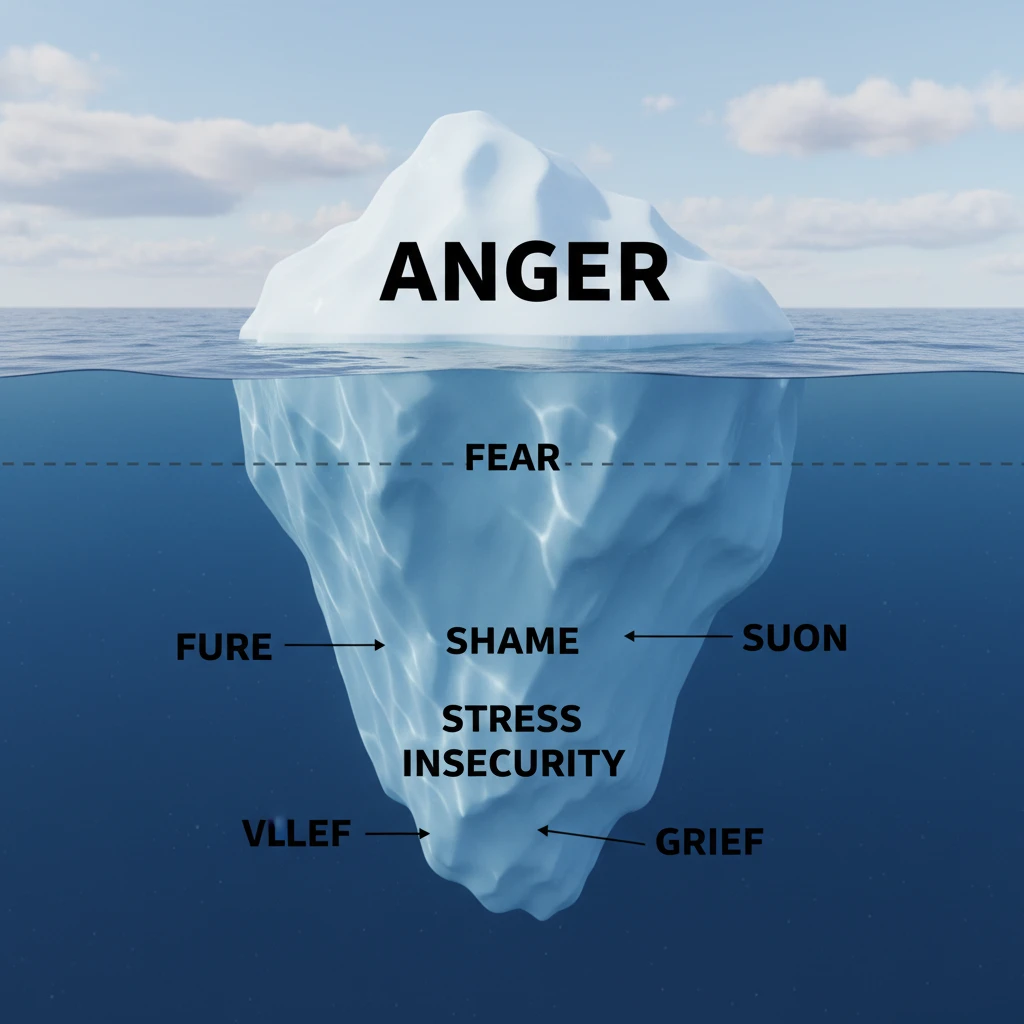
To effectively manage anger, one must first understand its origins. Anger is rarely a standalone emotion; it is frequently described by psychologists as a “secondary emotion.” This concept is best illustrated through the “Anger Iceberg” theory. What is visible on the surface—shouting, aggression, silence, or irritability—is merely the tip. Beneath the waterline lies a vast mass of underlying feelings such as shame, fear, guilt, loneliness, or exhaustion.
Physiological Responses and Triggers
Anger triggers a biological “fight or flight” response. The amygdala, the part of the brain responsible for processing emotions, hijacks the prefrontal cortex, which handles logic and decision-making. This leads to an adrenaline surge, increased heart rate, and muscle tension. Recognizing these physical cues is the first step in interception. If you can identify that your chest is tightening or your jaw is clenched, you can intervene before the behavioral explosion occurs.
Identifying Your Triggers
Triggers are external events that spark an internal reaction. In the context of New Zealand family dynamics, common triggers might include financial stress, parenting disagreements, or perceived disrespect. However, the trigger is not the cause of the violence or aggression; the individual’s reaction to the trigger is where the responsibility lies. Effective anger management courses NZ focuses heavily on mapping these triggers so that individuals are not blindsided by their own reactions.
Navigating Anger Management Courses NZ
When searching for “anger management courses NZ,” it is essential to distinguish between general personal development workshops and clinical or court-approved programs. The landscape in New Zealand is diverse, offering options ranging from one-on-one counselling to group programs funded by the Ministry of Justice.
Types of Courses Available
1. Private Individual Counselling:
Many members of the New Zealand Association of Counsellors (NZAC) specialize in anger management. This option offers privacy and a tailored approach, allowing individuals to dig deep into their personal history and trauma. It is often the preferred route for those who are self-referring and want to address issues before they escalate to legal involvement.
2. Group Programmes:
Group work is highly effective for anger management. Being in a room with others who struggle with similar issues reduces shame and isolation. It allows participants to see their behaviors reflected in others, which can be a powerful catalyst for insight. Organizations like Man Alive or local community law centers often facilitate these groups.
3. Online Courses:
With the rise of digital health, several accredited providers now offer online modules. While convenient, these are generally recommended for mild to moderate issues. For situations involving family violence or court orders, in-person attendance is usually required to ensure safety and active participation.
It is vital to verify the credentials of any course provider. For those involved in Family Court proceedings, the court generally requires attendance at specific Ministry of Justice-approved programs. You can find more information on approved providers through the New Zealand Ministry of Justice website.
Living Without Violence Programs
In New Zealand, there is a distinct difference between standard “anger management” and “Living Without Violence” programs. While anger management deals with the emotion of anger, Living Without Violence programs are specifically designed to address power and control dynamics, domestic abuse, and family harm.
The Role of the Family Court
If a Protection Order has been issued against an individual (the respondent), the Family Court will almost always direct them to attend a non-violence program. These are not optional. They are funded by the government and are designed to hold the respondent accountable while providing them with the tools to change.
Curriculum and Objectives
These programs go beyond deep breathing techniques. They challenge the cognitive distortions that lead to violence. Key components include:
- Accountability: Accepting full responsibility for past actions without blaming the victim, drugs, alcohol, or stress.
- Understanding Impact: exploring how violence affects partners and, crucially, the neurological development of children.
- Gender Dynamics: Discussing societal expectations of masculinity and how they contribute to control issues.
- Tikanga Māori: Many NZ programs incorporate Tikanga Māori principles, utilizing concepts like Mana (prestige/authority) and Tapu (sacredness) to frame the restoration of family well-being.
Self-Regulation Techniques for Immediate Relief
While attending a course is a long-term strategy, individuals need immediate tools to manage acute stress responses. Self-regulation is the ability to monitor and manage your energy states, emotions, thoughts, and behaviors in ways that are acceptable and produce positive results such as well-being, loving relationships, and learning.
The “Time-Out” Method
The Time-Out is a critical safety tool, but it is often misused. It is not an excuse to storm off or stonewall a partner. A responsible Time-Out involves:
- Recognition: Noticing physical signs of anger (heart rate above 100bpm).
- Communication: Stating clearly, “I am feeling angry and need to take a time-out to calm down. I will be back in 20 minutes.”
- Disengagement: Leaving the situation physically to ensure safety.
- De-escalation: Using the time to breathe and calm down (not ruminating on the argument).
- Return: Returning at the agreed time to resolve the issue or agree to discuss it later.
Grounding and Breathing
Simple physiological interventions can reset the nervous system. The “Box Breathing” technique (inhale for 4, hold for 4, exhale for 4, hold for 4) is used by high-performance professionals to reduce cortisol levels. Grounding techniques, such as the “5-4-3-2-1” method (identifying 5 things you see, 4 you feel, etc.), bring the mind back to the present moment, disengaging it from the anger narrative.

The Journey to Accountability and Change
Attending anger management courses NZ is not a “cure”; it is the beginning of a journey. The most difficult part of this journey is shifting from a mindset of blame to a mindset of accountability. Blame sounds like, “I wouldn’t get angry if she didn’t nag me.” Accountability sounds like, “I felt frustrated, but my reaction was my choice, and it was unacceptable.”
Impact on Relationships and Family Law
In the realm of Family Law, judges look for genuine change, not just course completion certificates. They assess whether an individual has gained insight into their behavior. Demonstrating accountability can significantly influence custody arrangements and the lifting of Protection Orders. It signals to the court—and more importantly, to the whānau—that the individual is safe.
The Role of Shame
Shame can be a barrier to accountability. Many people feel that admitting to anger problems makes them a “bad person.” However, separating the behavior from the person is essential. You are not your anger. By addressing the behavior, you reclaim your mana and ability to protect and provide for your family emotionally.
Choosing the Right Provider in New Zealand
Selecting the right provider is crucial for success. In New Zealand, the cultural context is significant. For Māori, attending a program that operates within a Kaupapa Māori framework can be far more effective than Western clinical models. These programs often involve Kaumātua and focus on healing intergenerational trauma.
When researching providers, consider the following:
- Accreditation: Are they registered with NZAC, NZPB, or approved by the Ministry of Justice?
- Specialization: Do they specialize in family violence or general anger management?
- Format: Do they offer after-hours sessions if you are working full time?
For additional resources on mental health and finding support, the Mental Health Foundation of New Zealand provides an extensive directory of services and helplines available throughout the country.
Conclusion: Committing to a Safer Future
Participating in anger management courses in NZ is a courageous step toward breaking cycles of negativity and harm. It requires vulnerability to admit that one’s coping mechanisms are failing, but the rewards are immeasurable. For parents, it means modeling emotional intelligence for the next generation. For partners, it means restoring trust and safety.
Whether mandated by the courts or driven by a personal desire to be better, the tools acquired in these courses—identifying triggers, self-regulation, and accepting accountability—are life skills that extend far beyond the suppression of anger. They are the building blocks of a peaceful, fulfilling life.
Frequently Asked Questions
How much do anger management courses cost in NZ?
Costs vary significantly. Private counselling can range from $120 to $200 per hour. However, courses mandated by the Family Court under the Domestic Violence Act are funded by the Ministry of Justice and are free for the respondent. Some NGOs and community groups also offer low-cost or donation-based group programs.
Are online anger management courses accepted by NZ courts?
Generally, the NZ Family Court prefers or requires in-person attendance at Ministry of Justice-approved programs, especially for non-violence orders. Online courses may be accepted for minor issues or as supplementary education, but you must check with your lawyer or the court registrar before enrolling to ensure it meets legal requirements.
What is the difference between anger management and non-violence programs?
Anger management focuses on regulating the emotion of anger and stress. Non-violence programs (often called stopping violence programs) specifically address the use of power, control, and abusive behaviors in relationships. The latter is typically required when a Protection Order is in place.
How long does an anger management course take to complete?
Course durations vary. A standard group program might run for 8 to 12 weeks, with weekly 2-hour sessions. Intensive weekend workshops exist but are less common for deep behavioral change. Court-mandated programs have specific hour requirements that must be met to be signed off.
Can I self-refer to a Living Without Violence program?
Yes, most providers allow self-referrals. You do not need a court order to attend. Taking the initiative to self-refer is often viewed positively by family members and the courts, as it demonstrates a genuine willingness to change without legal compulsion.
Do these courses work for everyone?
Success depends heavily on the participant’s willingness to change and take accountability. The courses provide the tools, but the individual must apply them. Research shows that completion of these programs significantly reduces recidivism in family violence cases when the participant engages fully with the material.