
Divorce in New Zealand, legally termed the Dissolution of Marriage, is the formal legal process used to end a marriage or civil union. To qualify, a couple must prove they have lived apart for at least two years and that the relationship has broken down irreconcilably, operating strictly under a no-fault legal framework.
Navigating the end of a marriage is one of life’s most challenging transitions. In New Zealand, the landscape of separation involves specific legal steps, distinct rules regarding property division, and a strong focus on the welfare of children. Whether you are contemplating separation or are already in the midst of proceedings, understanding the intricacies of New Zealand family law is essential for securing your future.
Understanding Divorce in New Zealand
Unlike many other jurisdictions, New Zealand operates on a purely “no-fault” basis. This means the Family Court is not interested in why the marriage ended. Infidelity, unreasonable behavior, or abandonment are not grounds for divorce in the eyes of the law, nor do they influence the division of assets or custody arrangements.
The sole ground for the dissolution of marriage is that the marriage has broken down irreconcilably. The only way to prove this to the court is by demonstrating that the parties have been living apart for a period of at least two years.
The Separation Requirement
The two-year separation period is a strict requirement. However, “living apart” does not necessarily mean living in different houses. Given the high cost of housing in New Zealand, many couples continue to cohabit while separated. To satisfy the legal requirement while living under the same roof, you must demonstrate that you are leading separate domestic lives. This includes sleeping in separate rooms, no longer sharing meals or domestic chores, and separating finances.
It is highly advisable to record the date of separation. While you do not need to register a separation legally to start the clock, having a written agreement or a confirmed date helps avoid disputes later when filing for the dissolution order.
The Legal Process of Dissolution
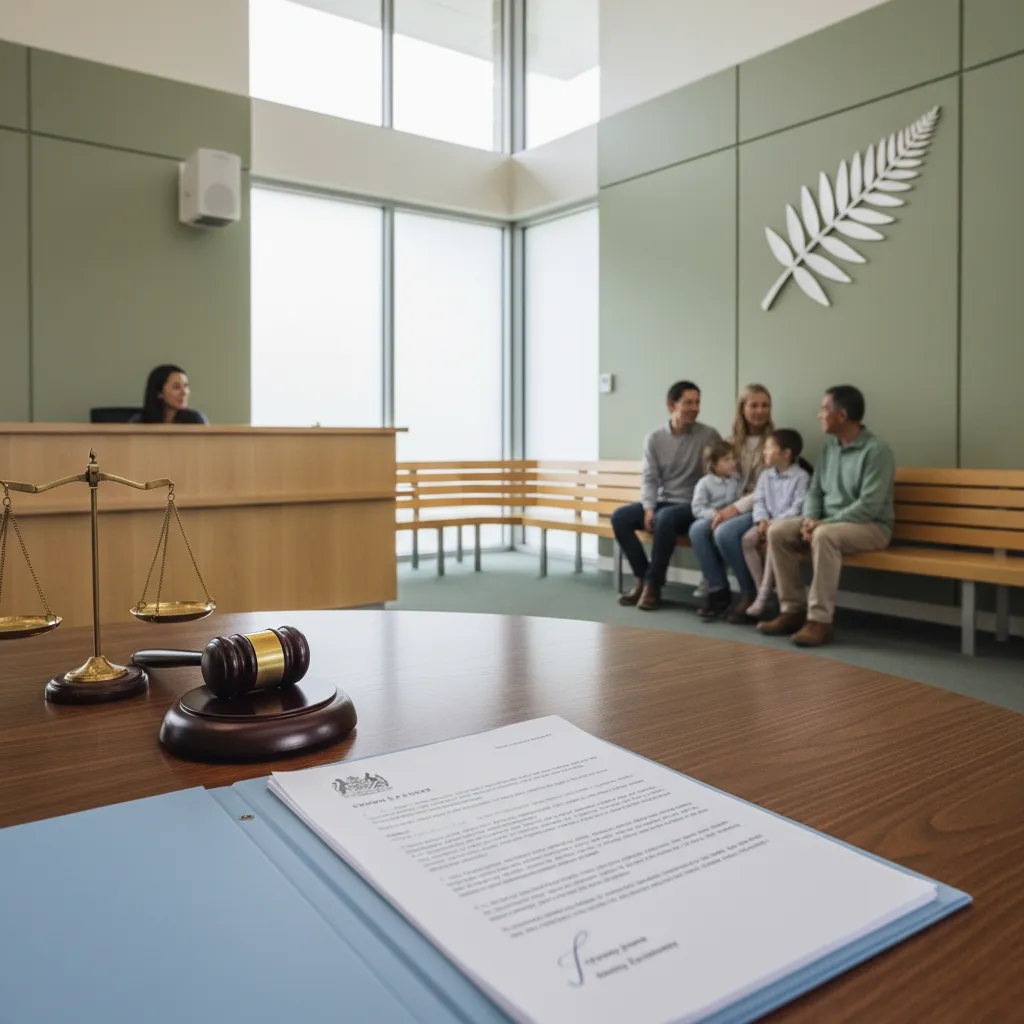
Once the two-year separation period has passed, you can apply for a Dissolution of Marriage order. This process is handled by the Family Court. The complexity of the application depends largely on whether you and your ex-spouse agree on the divorce.
Joint Application vs. Single Application
There are two primary ways to file:
- Joint Application: This is the most straightforward and cost-effective method. Both parties sign the application form, agreeing that the marriage is over and the separation requirement has been met. In most joint applications, you do not need to appear in court. The registrar will review the paperwork and issue the order.
- Single Application: If one party refuses to sign or cannot be located, you can file a single application. This is more complex because you must formally “serve” the documents to your ex-spouse, giving them a chance to defend the application (though defenses are rare and limited to disputing the two-year separation timeframe).
The Timeframe and Costs
As of the current Ministry of Justice fee structure, the filing fee for a dissolution of marriage is approximately $211.50 (NZD). If the application is straightforward, the order is usually made within a few weeks of filing. However, the dissolution does not become final immediately. There is a mandatory one-month waiting period after the order is granted before the divorce becomes absolute. At that point, you are legally free to remarry.
Dividing Relationship Property Fairly
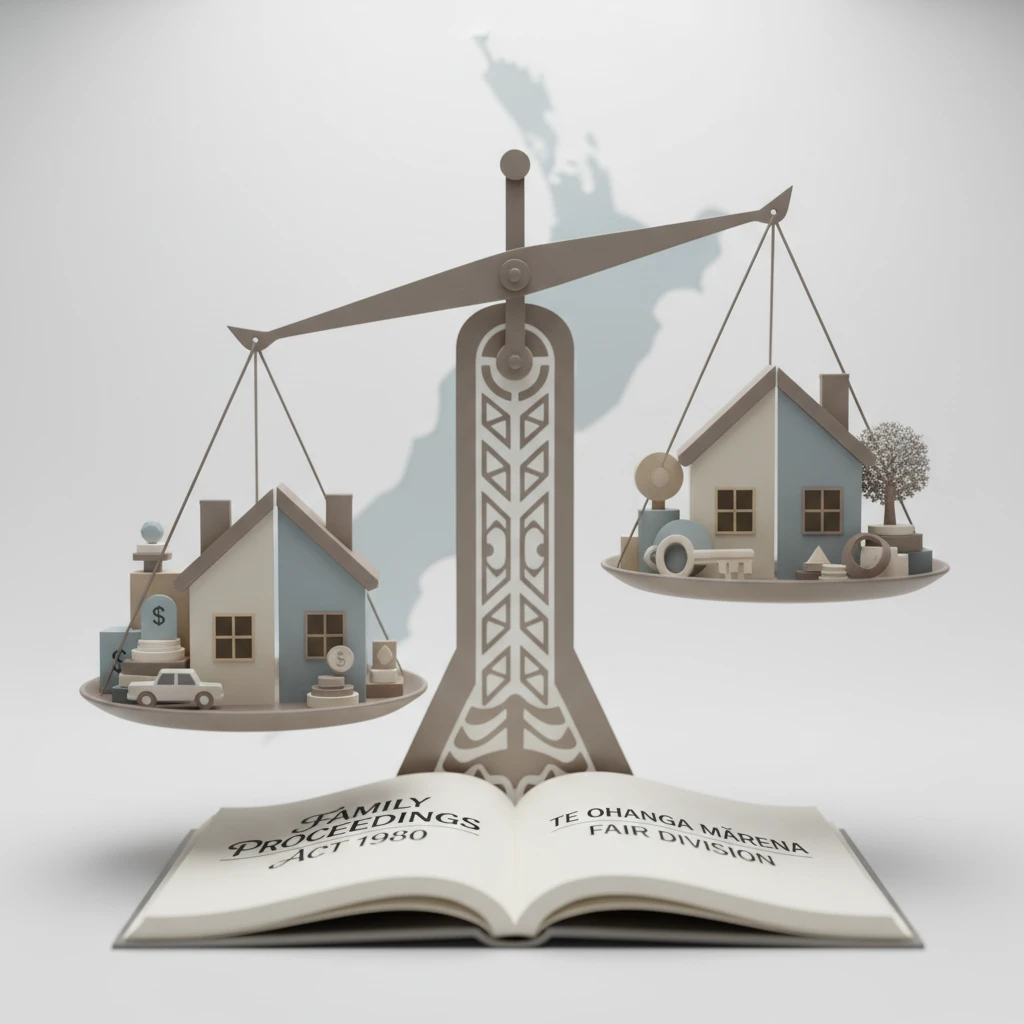
One of the most contentious aspects of separation is the division of assets. In New Zealand, this is governed by the Property (Relationships) Act 1976. This Act applies to all married couples, civil union partners, and de facto couples who have lived together for at least three years.
The Equal Sharing Rule
The starting point of the Act is the presumption of equal sharing. This means that all “relationship property” should be divided 50/50 between the partners. Relationship property generally includes:
- The family home (even if it was owned by one person prior to the relationship).
- Family chattels (furniture, cars, household equipment).
- Superannuation and KiwiSaver (the portion accumulated during the relationship).
- Income earned during the relationship.
- Debts incurred for the benefit of the relationship.
Separate Property
Not everything is split. “Separate property” remains with the original owner. This typically includes inheritances or gifts received by one partner (provided they were not intermingled with relationship funds) and assets acquired before the relationship began (excluding the family home and chattels).
Economic Disparity and Section 15
While 50/50 is the standard, the court can award a larger share to one partner under Section 15 of the Act if there is a significant “economic disparity” resulting from the division of functions within the relationship. For example, if one partner sacrificed their career to raise children while the other advanced their earning potential, the court may award a lump sum to the disadvantaged partner to redress this imbalance.
For authoritative details on the Property (Relationships) Act, you can refer to the New Zealand Ministry of Justice guidelines.
Co-Parenting and Care of Children
When children are involved, the legal focus shifts entirely from the rights of the parents to the welfare and best interests of the child, as mandated by the Care of Children Act 2004.
Parenting Plans and Guardianship
In New Zealand, both parents usually remain guardians of the child after separation. Guardianship involves decision-making power regarding the child’s name, education, religion, medical treatment, and residence. Separation does not remove guardianship rights.
Parents are encouraged to agree on a “Parenting Plan” privately. This document outlines day-to-day care (custody) and contact (visitation). The court prefers not to intervene unless necessary.
Family Dispute Resolution (FDR)
If parents cannot agree on care arrangements, they generally cannot go straight to court. They must first attempt Family Dispute Resolution (FDR). This is a mediation process where an independent professional helps parents reach an agreement. Only if FDR fails can you apply to the Family Court for a Parenting Order.
Financial Support and Spousal Maintenance
Financial ties often outlast the relationship itself. There are two main types of ongoing financial support to consider: Child Support and Spousal Maintenance.
Child Support
Child Support in New Zealand is administered by the Inland Revenue Department (IRD). It is a formula-based assessment that considers the income of both parents and the amount of time the child spends in each parent’s care. It is mandatory and distinct from relationship property settlements.
Spousal Maintenance
Spousal maintenance (often called alimony overseas) is financial support paid by one partner to the other after separation. It is not automatic. To qualify, the applicant must prove they cannot meet their own reasonable needs because of the division of functions during the relationship or the ongoing care of children.
Maintenance is usually temporary—designed to bridge the gap until the recipient can become self-sufficient. It acts as a buffer rather than a permanent income stream.
Emotional Recovery and Moving On
The legal dissolution is merely paperwork; the emotional dissolution is a journey. Psychologists recognize that divorce triggers a grieving process similar to the death of a loved one. The stages of denial, anger, bargaining, depression, and acceptance are common.
Rebuilding Your Identity
Life after divorce in New Zealand offers a chance for reinvention. Support networks are vital. Organizations such as Community Law can provide guidance, while counseling services can assist with the psychological impact.
Moving on requires a shift in focus from the past relationship to future goals. Whether it is re-entering the workforce, downsizing property, or navigating new relationships, the post-divorce phase is a reconstruction period. Taking time to heal before making major life decisions is universally recommended by experts.

Conclusion
Divorce in New Zealand is a structured process designed to be fair and child-focused. From the two-year separation rule to the equal division of relationship property, the law aims to provide a clean break while protecting the vulnerable. By understanding the legal framework of the Dissolution of Marriage and the Property (Relationships) Act, you can navigate this difficult chapter with clarity and confidence, paving the way for a stable future.
People Also Ask
How much does a divorce cost in NZ?
The filing fee for a Dissolution of Marriage application in the Family Court is approximately $211.50 NZD. However, this only covers the court fee for the divorce order itself. Legal fees for lawyers to handle property division, contracting out agreements, or custody disputes can range from a few thousand dollars to significantly more depending on the complexity of the case.
Can I get a divorce immediately in New Zealand?
No, you cannot get a divorce immediately. New Zealand law requires a mandatory separation period of two years before you can file for a Dissolution of Marriage. You must prove to the court that you have lived apart for this duration and that the marriage has broken down irreconcilably.
What is the difference between separation and divorce in NZ?
Separation is when you stop living together as a couple, which can happen immediately without a court order. Divorce (Dissolution of Marriage) is the formal legal order ending the marriage, which can only be applied for after you have been separated for two years. You remain legally married until the Dissolution Order is final.
How are assets split in a divorce in NZ?
Under the Property (Relationships) Act 1976, relationship property is generally split 50/50. This includes the family home, vehicles, household items, and income earned during the relationship. Exceptions exist if there is a pre-nuptial agreement (Contracting Out Agreement) or if extraordinary circumstances render equal sharing repugnant to justice.
Do I need a lawyer to get a divorce in NZ?
You do not need a lawyer to file for the Dissolution of Marriage itself, especially if it is a joint application. You can fill out the forms yourself. However, you strictly need independent legal advice for dividing relationship property. A separation agreement regarding property is not legally binding unless both parties have received independent legal advice and certified it.
What happens if my ex refuses to sign the divorce papers?
If your ex-spouse refuses to sign a joint application, you can file a ‘Single Application’ for Dissolution of Marriage. You will need to arrange for the documents to be served to them legally. They can oppose the application, but only on the grounds that the two-year separation requirement has not been met. They cannot stop the divorce simply because they do not want it.