
Adoption attachment issues refer to the emotional and behavioral challenges an adopted child may face when struggling to form a secure bond with their new caregivers, often resulting from early trauma, neglect, or institutionalization. These issues range from mild anxiety and difficulty expressing needs to severe clinical diagnoses like Reactive Attachment Disorder (RAD), requiring consistent, trauma-informed parenting to facilitate healing.
Understanding the Roots of Attachment Challenges
Attachment is the deep, enduring emotional bond that connects one person to another across time and space. In the context of child development, it serves as the foundation for all future relationships, emotional regulation, and self-esteem. When discussing adoption attachment issues, it is crucial to recognize that the struggle to bond is rarely a choice made by the child; rather, it is a physiological and psychological response to early life interruptions.
For many adopted children, the initial attachment cycle—where a need is expressed, the caregiver meets the need, and trust is established—was disrupted. This disruption can occur due to various factors, including prenatal exposure to substances, early hospitalization, neglect, abuse, or the inherent trauma of being separated from birth parents. Even children adopted at birth may experience a primal physiological stress response to separation from the maternal biological rhythm.
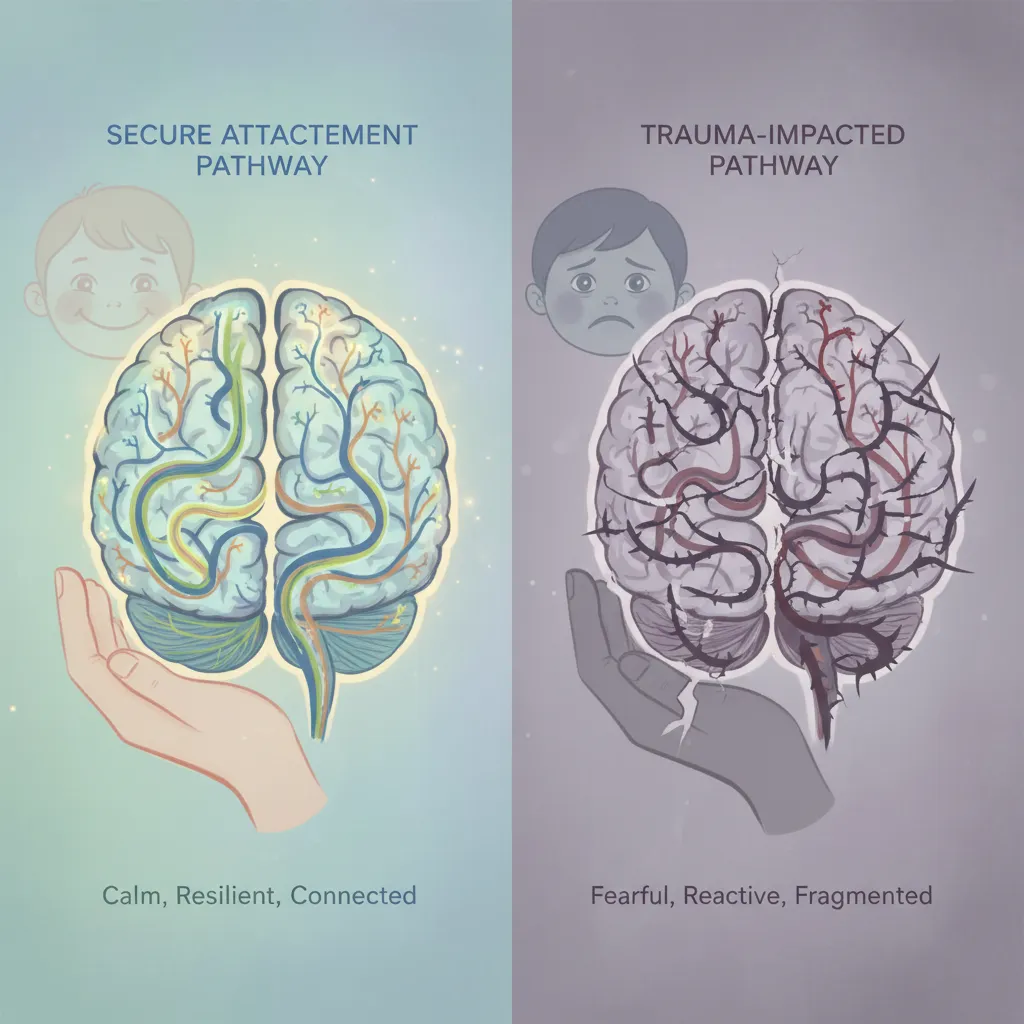
The impact of these early experiences is often rooted in neurobiology. A child who has experienced chronic fear or neglect may have an overactive amygdala (the brain’s fear center) and an under-developed prefrontal cortex (responsible for reasoning and impulse control). Consequently, their behaviors—often labeled as “acting out” or “manipulative”—are actually survival mechanisms. Understanding this biological basis is the first step in moving from judgment to empathy.
Understanding Reactive Attachment Disorder (RAD)
While many adopted children experience mild attachment difficulties, some may develop a more severe condition known as Reactive Attachment Disorder (RAD). RAD is a rare but serious condition in which an infant or young child does not establish healthy attachments with parents or caregivers. It is distinct from general behavioral issues and requires a specific clinical approach.
Inhibited vs. Disinhibited Symptoms
RAD generally presents in two distinct patterns, though the DSM-5 now separates Disinhibited Social Engagement Disorder (DSED) as a distinct diagnosis. However, in general discussions of attachment pathology, parents often encounter two types of behaviors:
- Emotionally Withdrawn/Inhibited: The child rarely seeks comfort when distressed and rarely responds to comfort when it is offered. They may show limited positive affect, unexplained irritability, sadness, or fearfulness during non-threatening interactions with adult caregivers.
- Indiscriminately Social/Disinhibited: The child may exhibit a lack of reticence in approaching unfamiliar adults, overly familiar verbal or physical behavior, and a willingness to go off with a stranger with little or no hesitation. This behavior stems from a lack of a specific, secure attachment figure to check in with for safety.
The Cycle of Mistrust
Children with significant adoption attachment issues often operate within a cycle of mistrust. They may push caregivers away to prove their internal belief that they are unlovable or that adults are unreliable. When a parent reacts with frustration or anger, it reinforces the child’s worldview. Breaking this cycle requires the parent to remain the “secure base,” responding to rejection with consistent calm and availability, a task that requires immense emotional stamina.
Trauma-Informed Parenting Strategies
Traditional parenting methods—such as time-outs, star charts, or strict consequences—often fail with children suffering from adoption attachment issues. These methods rely on a foundation of trust and a desire to please the parent, which may not yet exist. Instead, trauma-informed parenting focuses on connection before correction.
Trust-Based Relational Intervention (TBRI)
One of the most respected frameworks for adoptive parenting is Trust-Based Relational Intervention (TBRI). This holistic approach considers the child’s physical needs, attachment needs, and fear responses. The core principles include:
- Empowering Principles: Addressing physical needs such as hydration, blood sugar regulation, and sensory processing issues. A dysregulated body cannot house a regulated mind.
- Connecting Principles: Creating engagement strategies that build attachment. This includes eye contact, healthy touch (if tolerated), and playful interaction.
- Correcting Principles: Proactive strategies to teach social skills and responsive strategies to handle behavioral episodes without inducing shame or fear.
The “Time-In” Method
Instead of sending a dysregulated child away (Time-Out), which can trigger abandonment trauma, trauma-informed parents use “Time-In.” This involves keeping the child close during a meltdown. The parent might sit nearby, offering a calming presence until the child’s nervous system settles. This communicates, “I am here with you in the hard moments, and you are not too much for me to handle.”
For more deep-dive resources on child welfare and trauma strategies, the Child Welfare Information Gateway provides extensive government-backed research and guides for adoptive families.
Navigating Open Adoption Dynamics
Modern adoption practices have shifted largely toward open adoption, where some level of contact is maintained between the birth family and the adoptive family. While openness is generally beneficial for a child’s identity, it can add layers of complexity to attachment.
Impact on Attachment Security
A common myth is that open adoption confuses the child about who their “real” parents are, thereby hindering attachment. Research suggests the opposite: secrecy creates confusion, while clarity builds trust. When adoptive parents speak respectfully of birth parents and facilitate contact, they validate the child’s history. This validation signals to the child that all parts of them are welcome, fostering a deeper safety within the adoptive relationship.
Managing Boundaries
However, attachment issues can flare up around visits or contact. A child might exhibit regression, anxiety, or aggression before or after interactions with birth family members. This is often not a sign that contact should stop, but rather that the child is processing big emotions. Adoptive parents must act as the emotional container, helping the child articulate feelings of grief, loss, and divided loyalty. Consistent rituals and predictable routines surrounding visits can help mitigate this anxiety.
Identity Formation in Adoptees
Attachment is intrinsically linked to identity. As adoptees grow, particularly into adolescence, they grapple with the question, “Who am I?” If the attachment to the adoptive parents is insecure, this exploration can become turbulent.
The Seven Core Issues in Adoption
Experts often refer to the “Seven Core Issues in Adoption” which include Loss, Rejection, Guilt and Shame, Grief, Identity, Intimacy, and Mastery/Control. An adoptee struggling with identity may feel a sense of “genealogical bewilderment”—a lack of knowledge about their ancestors which leads to a feeling of being ungrounded.

Attachment as a Launchpad
Secure attachment allows an adoptee to explore their identity without fear of losing their family. Parents can support this by being open to conversations about race, culture, and biology. When parents react with insecurity or jealousy regarding the child’s interest in their biological roots, it damages the attachment bond. Conversely, actively supporting the child’s search for identity strengthens the parent-child connection.
Professional Support and Therapy Options
Resolving adoption attachment issues is rarely a journey a family can take alone. Professional intervention is often necessary to provide the tools for healing. It is vital to seek therapists who specialize in adoption and trauma, as standard talk therapy or behavioral modification can sometimes be ineffective or counterproductive for attachment trauma.
Theraplay
Theraplay is a child and family therapy for building and enhancing attachment, self-esteem, trust in others, and joyful engagement. It is based on the natural patterns of playful, healthy interaction between parent and child. Unlike traditional play therapy where the child leads, Theraplay is directed by the therapist and parent to create a safe, regulated environment.
EMDR (Eye Movement Desensitization and Reprocessing)
For older children who have specific traumatic memories that impede attachment, EMDR can be highly effective. This therapy helps the brain reprocess traumatic memories so they no longer trigger a fight-or-flight response in the present. By reducing the trauma load, the child becomes more capable of accepting love and connection.
According to the American Psychological Association (APA), trauma-focused therapies are essential for treating children with histories of neglect or abuse, ensuring that interventions address the root causes rather than just symptoms.
Conclusion
Building bonds in the face of adoption attachment issues is a marathon, not a sprint. It requires a paradigm shift from controlling behavior to understanding the fear behind it. With patience, trauma-informed strategies, and professional support, the wiring of the brain can change. Healing is possible, and secure, loving attachments can be formed, creating a resilient family unit built on the hard-won foundation of trust.
People Also Ask
What are the signs of attachment issues in adopted children?
Signs of attachment issues vary by age but often include avoiding eye contact, difficulty being comforted, lack of fear toward strangers (indiscriminate affection), aggression, control battles, hoarding food, and a lack of guilt or remorse after misbehavior.
Can attachment issues in adopted children be cured?
While “cure” may not be the right term, attachment issues can be significantly healed and managed. With consistent trauma-informed parenting, therapy (such as TBRI or Theraplay), and time, many children with attachment challenges go on to form secure, healthy bonds with their families.
What is the 3-3-3 rule in adoption?
The 3-3-3 rule is a guideline for adjusting to a new home: 3 days to decompress (feeling overwhelmed/scared), 3 weeks to settle into a routine (testing boundaries), and 3 months to start feeling secure and building real trust. It reminds parents that adjustment takes time.
How does age at adoption affect attachment?
Generally, children adopted at an older age may have more ingrained trauma or behavioral patterns, making attachment more complex. However, infants can also suffer from primal wound trauma. Attachment is possible at any age, but older children may require more intensive therapeutic intervention.
Is Reactive Attachment Disorder (RAD) common in adoption?
RAD is relatively rare, even among adopted children. While many adoptees experience some degree of attachment difficulty or insecurity, full-blown RAD is a clinical diagnosis reserved for severe cases where a child is unable to form attachments due to extreme early neglect or abuse.
How do I bond with an older adopted child?
Bonding with an older child involves respecting their history, engaging in shared interests, maintaining consistent routines, and using “side-by-side” activities (like driving or walking) to talk, which reduces the pressure of eye contact. Patience and not forcing physical affection are key.