
Conflict resolution strategies in the workplace are structured methods used to address and settle disputes between employees or departments efficiently. These strategies, which include collaboration, compromise, and active mediation, aim to identify root causes, restore professional relationships, and transform interpersonal friction into opportunities for organizational growth and improved team cohesion.
Identifying the Root Cause of Office Conflict
Before implementing any resolution strategy, it is imperative to diagnose the underlying source of the friction. Workplace conflict is rarely just about the surface-level argument; it often stems from deeper systemic or psychological issues. Leaders who attempt to treat the symptoms without addressing the disease often find themselves mediating the same arguments repeatedly.
Psychologically, most workplace conflicts fall into three distinct categories: task-based, relationship-based, or value-based. Task-based conflicts involve disagreements over work assignments, resource allocation, or interpretation of facts. Relationship-based conflicts are often more volatile, involving personality clashes and emotional friction. Value-based conflicts arise when fundamental beliefs or ethical standards differ between colleagues.
Communication Breakdowns vs. Resource Scarcity
The most common culprit in organizational disputes is poor communication. This can manifest as unclear expectations, lack of feedback, or information hoarding. When employees feel they are operating in a vacuum or that information is being weaponized, trust erodes rapidly. Conversely, resource scarcity—whether it be a lack of time, budget, or personnel—creates a competitive environment where team members feel they must fight for survival rather than collaborate.
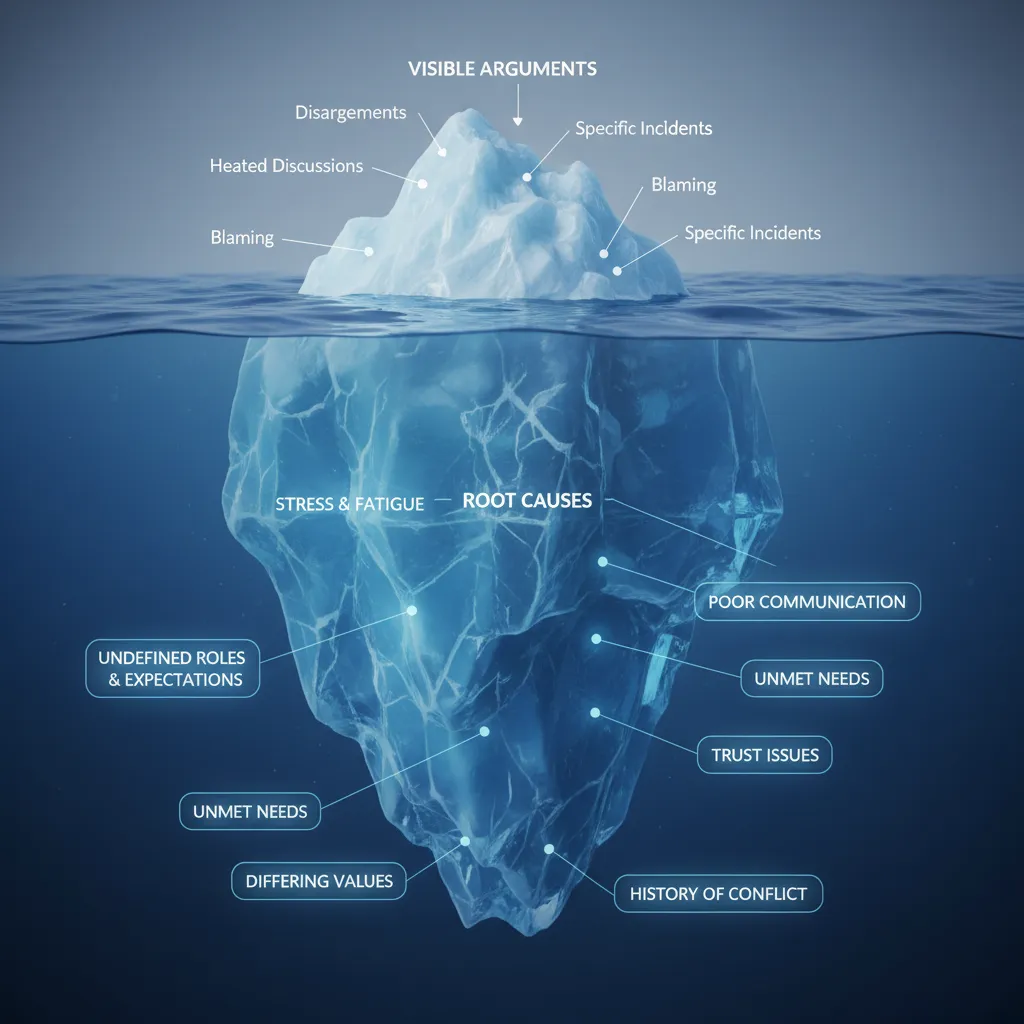
To accurately identify the root cause, managers must engage in “diagnostic listening.” This involves separating the emotional reaction from the factual trigger. For example, an employee complaining about a coworker’s “attitude” may actually be frustrated by a bottleneck in the workflow that the coworker controls.
Core Conflict Resolution Strategies
Once the root cause is identified, selecting the right approach is critical. The Thomas-Kilmann Conflict Mode Instrument (TKI) is widely regarded as the standard framework for understanding how to navigate disputes. It outlines five primary styles based on assertiveness and cooperativeness.
The Collaborative Approach (Win-Win)
Collaboration is the gold standard for high-stakes conflict resolution strategies in the workplace. It involves a high degree of both assertiveness and cooperation. In this model, parties work together to find a solution that fully satisfies the concerns of both sides. This is not about splitting the difference; it is about creative problem-solving to expand the “pie.”
This strategy requires time and energy. It is best used for complex issues where the relationship is important, and the outcome has significant long-term impact. To execute this, parties must be willing to be vulnerable and share information openly.
Compromise and Accommodation
Compromise is often confused with collaboration, but it is distinct. In a compromise, both parties give up something to reach a mutually acceptable middle ground. This is effective for temporary solutions or when time is of the essence. However, relying too heavily on compromise can lead to a culture of mediocrity where no optimal solutions are ever reached.
Accommodation involves one party yielding to the other’s needs. While this might seem weak, it is a strategic move when the issue matters more to the other person than to you, or when preserving harmony is more critical than the specific outcome of the dispute.
Mediation Techniques for Managers
When direct communication between employees fails, a manager or third-party mediator must intervene. Effective mediation requires neutrality, patience, and a structured process. The goal of mediation is not to decide who is right, but to facilitate a dialogue that leads to a self-determined resolution.
The Art of Active Listening and Reframing
Mediators must model active listening. This means fully concentrating on what is being said rather than passively hearing the message of the speaker. Techniques include mirroring (repeating the last few words), labeling (identifying the emotion behind the words), and summarizing.
Reframing is a powerful tool in mediation. It involves taking a toxic or accusatory statement and stripping it of its negativity to reveal the underlying need. For instance, if an employee says, “He never sends the reports on time because he’s lazy,” a mediator might reframe this as, “So, timely access to data is crucial for your workflow, and delays are causing stress.” This shifts the focus from the person to the process.
Establishing Ground Rules
Before the discussion begins, establish clear ground rules to ensure psychological safety. Common rules include:
- No interrupting.
- Use “I” statements (e.g., “I feel frustrated when…” instead of “You always…”).
- Focus on the problem, not the person.
- Confidentiality regarding the discussion.
According to the Program on Negotiation at Harvard Law School, creating a neutral environment where parties feel heard is often more important than the specific technical details of the settlement.
Documenting Issues for HR
While the goal is often informal resolution, there are times when conflict escalates to the point of harassment, discrimination, or policy violation. In these instances, meticulous documentation is required to protect the organization and the employees involved.
The FACT Method
When documenting conflict, HR professionals recommend the FACT method to ensure objectivity:
- Facts: Record exactly what happened without emotional interpretation. Avoid adjectives like “aggressive” or “rude” unless describing specific behaviors (e.g., “slammed the door,” “raised voice”).
- Actions: What specific actions were taken immediately following the incident? Did a manager intervene? Was a warning issued?
- Consequences: How did this conflict impact business operations? Did a deadline get missed? Was a client affected?
- Timeline: Dates, times, and locations are crucial for establishing patterns of behavior.
Documentation should be contemporaneous—meaning it is written down as soon as possible after the event. Memories fade and distort over time, and a log created weeks later carries less weight in legal or disciplinary proceedings.

Restoring Team Cohesion Post-Conflict
The resolution of the specific dispute is not the end of the process; it is the beginning of the healing phase. Post-conflict residue can linger in the form of resentment, awkwardness, or reduced morale. Leaders must actively work to restore the social fabric of the team.
Rebuilding Trust Through Shared Goals
Trust is rebuilt through consistent, positive interactions. One of the most effective ways to accelerate this is by assigning the conflicting parties to a low-stakes, high-success project. This forces interaction in a controlled environment where they can experience success together, rewriting the narrative of their relationship from “adversaries” to “partners.”
It is also vital to hold a “retrospective” on the conflict—not to rehash the argument, but to discuss what the team learned about their communication styles. This turns a negative event into a developmental milestone.
Reinforcing Psychological Safety
Psychological safety is the belief that one will not be punished or humiliated for speaking up with ideas, questions, concerns, or mistakes. Conflict often damages this safety. Leaders must explicitly reassure the team that conflict is a natural part of collaboration and that the recent dispute was handled constructively. Celebrating the fact that the team navigated a difficult conversation successfully can be a powerful morale booster.
Building a Conflict-Resilient Culture
Ultimately, the best conflict resolution strategy is prevention—or more accurately, early intervention. A conflict-resilient culture is one where employees are trained in emotional intelligence and negotiation skills as part of their onboarding.
Regular one-on-one meetings between managers and direct reports can act as an early warning system, catching small grievances before they calcify into major disputes. By normalizing feedback and encouraging open dialogue, organizations can ensure that when conflict does arise, it is handled with maturity and professionalism.
People Also Ask
What are the 5 conflict resolution strategies?
The five core conflict resolution strategies, based on the Thomas-Kilmann model, are Avoiding (ignoring the issue), Accommodating (yielding to the other party), Competing (pursuing one’s own goals assertively), Compromising (finding a middle ground), and Collaborating (working together for a win-win solution).
How do you handle a toxic coworker?
Handling a toxic coworker involves setting strict professional boundaries, documenting all negative interactions, maintaining emotional detachment, and limiting engagement to work-related tasks. If the behavior persists or violates policy, it should be reported to management or HR with specific evidence.
What is the most effective conflict resolution technique?
While situational, Collaboration is generally considered the most effective technique for long-term success. It addresses the root cause of the problem and satisfies the needs of all parties involved, leading to stronger relationships and higher commitment to the solution.
Why is conflict resolution important in the workplace?
Conflict resolution is vital because unresolved disputes lead to decreased productivity, low morale, high employee turnover, and a toxic work environment. Effective resolution fosters innovation, improves team dynamics, and creates a psychologically safe space for employees.
What are examples of conflict in the workplace?
Common examples include personality clashes (e.g., an introvert vs. an extrovert), resource disputes (fighting over budget or staff), creative differences regarding project direction, and perceived unfairness in workload distribution or promotions.
How can HR help with conflict resolution?
HR can help by acting as a neutral third party, providing mediation services, interpreting company policies, conducting formal investigations into harassment or bullying, and organizing training sessions on communication and emotional intelligence.