
Professional relationship building is the strategic practice of establishing and nurturing trust-based connections within a workplace or industry to foster mutual growth, collaboration, and career advancement. It goes beyond casual networking by prioritizing long-term value exchange, emotional intelligence, and the navigation of complex organizational dynamics over short-term transactional gains.
The Sociology of the Workplace: Understanding the Ecosystem
To master professional relationship building, one must first accept that the modern office—whether physical, hybrid, or remote—is a complex social ecosystem. It is governed by both explicit rules (HR policies, job descriptions) and implicit norms (culture, social hierarchy, unwritten codes of conduct). The sociology of the workplace dictates that humans are inherently tribal; we form groups based on shared interests, proximity, and perceived status.
Successful professionals view their organization not merely as a flowchart of roles but as a living network of human behaviors. Research in organizational psychology suggests that social capital—the value derived from positive connections—is often a stronger predictor of career success than human capital (skills and experience). When you understand the sociological underpinnings of your environment, you stop viewing colleagues as mere functionaries and start seeing them as integral parts of a social web.

This perspective requires a shift from an egocentric worldview to a sociocentric one. You must ask: How does information flow here? Who are the cultural gatekeepers? Which behaviors are rewarded with social approval? By analyzing these factors, you lay the groundwork for relationships that are culturally aligned and strategically sound.
Transactional vs. Relational Networking
One of the most critical distinctions in professional mastery is the difference between transactional networking and true relational building. Transactional networking is often what gives “networking” a bad reputation. It is short-term, self-serving, and score-keeping. It asks, “What can you do for me right now?” This approach treats people as commodities or stepping stones.
In contrast, professional relationship building is relational. It is characterized by a “farmer” mentality rather than a “hunter” mentality. Relational builders plant seeds of trust, water them with consistency, and wait for the harvest, which may come years down the line. This approach focuses on:
- Mutuality: Seeking outcomes where both parties benefit.
- Longevity: Prioritizing the sustainability of the connection over immediate gain.
- Vulnerability: Being willing to share challenges, not just victories.
The shift to relational networking requires a fundamental change in how you approach interactions. Instead of entering a room looking for the most powerful person to pitch to, you enter looking for opportunities to be helpful. This paradox of generosity—that giving without expectation of return often yields the highest returns—is central to building a robust professional network. When you are known as a connector or a resource, you attract high-quality relationships naturally.
Navigating Power Dynamics in Organizational Structures
Every organization has a hierarchy, but the organizational chart rarely tells the whole story. Power dynamics refer to how influence is distributed and exercised within a group. Understanding these dynamics is essential for professional relationship building because it helps you identify who actually gets things done.
Social psychologists French and Raven identified five bases of power, a concept that remains crucial for understanding workplace interactions. These include legitimate power (formal title), reward power, coercive power, expert power, and referent power. While you may not have control over your legitimate power immediately, you can always cultivate expert power (knowledge) and referent power (being liked and respected).
For a deeper understanding of these psychological foundations, you can review the bases of power theory on Wikipedia.
Navigating these dynamics requires political astuteness. You must identify the informal leaders—those who may not have a VP title but whose opinion sways the room. Building relationships with these influencers is often more valuable than knowing the CEO. Furthermore, understanding power dynamics prevents you from accidentally stepping on landmines. It allows you to align your initiatives with the goals of those who hold the resources, ensuring your projects—and your career—gain momentum rather than resistance.
Emotional Intelligence: The Currency of Trust
If technical skills are the engine of your career, emotional intelligence (EQ) is the fuel. High EQ is the single most significant predictor of performance in the workplace and the strongest driver of leadership and personal excellence. In the context of professional relationship building, EQ manifests as the ability to perceive, understand, and manage your own emotions and the emotions of others.
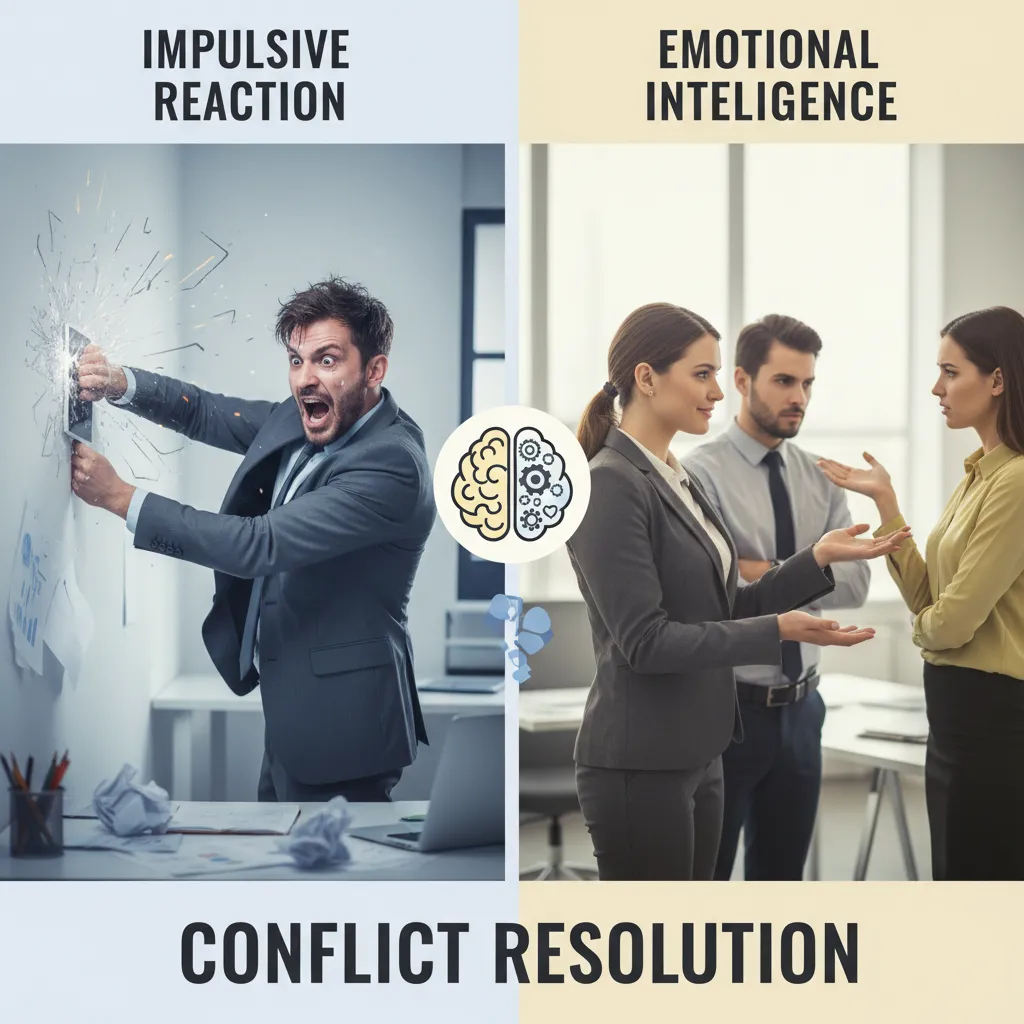
There are four pillars of EQ relevant to relationship building:
- Self-Awareness: Recognizing your triggers and how your behavior affects others.
- Self-Management: Keeping disruptive emotions and impulses in check.
- Social Awareness: Empathy and the ability to read the room.
- Relationship Management: Inspiring others, influencing, and managing conflict.
Empathy, specifically, is the bridge to trust. When a colleague feels heard and understood, their psychological defenses lower, and collaboration becomes possible. In high-stress environments, the leader who can remain calm and validate the team’s feelings creates a safe harbor. This psychological safety is the bedrock of high-performing teams. By cultivating EQ, you transform from a competent worker into a trusted advisor and ally.
Reframing Office Politics as Organizational Diplomacy
The term “office politics” often elicits groans, yet it is simply the manifestation of differing interests, limited resources, and human ambition. To claim you “don’t do politics” is to claim you don’t participate in the decision-making processes of your organization. Mastery involves reframing politics as organizational diplomacy.
Bad politics is manipulative, gossipy, and destructive. Good politics (diplomacy) is about building coalitions to achieve worthy goals. It involves:
- Stakeholder Management: Identifying who is affected by a decision and involving them early.
- Visibility: Ensuring your contributions are seen by the right people without being boastful.
- Conflict Resolution: Addressing disagreements directly and professionally rather than through backchannels.
Effective diplomats understand that burning bridges is rarely a good strategy. Even when you disagree with a colleague, maintaining a respectful professional relationship is paramount because organizational structures change. Today’s adversary on a project could be tomorrow’s boss or client. Viewing politics through the lens of diplomacy allows you to navigate friction without compromising your integrity.
Strategies for Professional Mastery
To move from theory to practice, you must implement specific behaviors that enhance your professional relationship building capabilities. Here are actionable strategies to achieve mastery:
1. The Art of Active Listening
Most people listen with the intent to reply, not to understand. Active listening involves giving your full attention, asking clarifying questions, and summarizing what you heard. This validates the speaker and provides you with critical intelligence about their needs and motivations.
2. Consistent Value Addition
Become a resource. Share relevant industry news, introduce people who should know each other, or offer to help with a project outside your immediate scope. When you consistently add value, you build a “favor bank” that you can draw upon when necessary.
3. Manage Up, Down, and Across
Don’t just network with superiors. Peers are your future executive team, and subordinates are the engine of execution. Treat everyone with the same level of respect. This 360-degree approach ensures you have support at all levels of the organization.
For further reading on leadership and social capital, the Program on Negotiation at Harvard Law School offers excellent resources on how relationships influence leadership outcomes.
People Also Ask
What are the 5 key elements of building professional relationships?
The five key elements are Trust, Respect, Communication, Shared Values, and Consistency. Trust is the foundation, respect ensures mutual dignity, open communication prevents misunderstandings, shared values align goals, and consistency proves reliability over time.
How do you build professional relationships with difficult coworkers?
To handle difficult coworkers, focus on maintaining professional boundaries and practicing empathy. Try to understand their underlying motivations or stressors. Keep interactions solution-focused, avoid gossip, and document interactions if necessary, while always remaining polite and composed.
Why is professional relationship building important for career growth?
It is crucial because most opportunities (promotions, new jobs, partnerships) come through referrals and reputation. Strong relationships provide mentorship, support during crises, and access to information that isn’t publicly available, acting as a catalyst for career advancement.
What is the difference between networking and relationship building?
Networking is often the initial point of contact—meeting new people and exchanging information. Relationship building is the deeper, ongoing process of nurturing those contacts into trusted allies through mutual support and consistent interaction over time.
How can introverts excel at professional relationship building?
Introverts can excel by focusing on quality over quantity. They are often better at deep listening and one-on-one interactions. By preparing for meetings, leveraging digital communication, and focusing on deep connections with a few key people, introverts can build highly effective networks.
How does emotional intelligence affect professional relationships?
Emotional intelligence allows you to read social cues, manage your own reactions, and empathize with others. High EQ helps in conflict resolution, negotiation, and creating a positive work environment, making it easier for others to trust and collaborate with you.