
Getting over a breakup psychology requires understanding that romantic rejection triggers the same neural pathways in the brain as physical pain and drug withdrawal. To heal effectively, individuals must interrupt the dopamine reward loop associated with their ex-partner, actively rebuild their independent self-concept, and utilize cognitive reframing techniques to process grief rather than suppressing it.
The Neuroscience of Heartbreak: Why It Hurts So Much
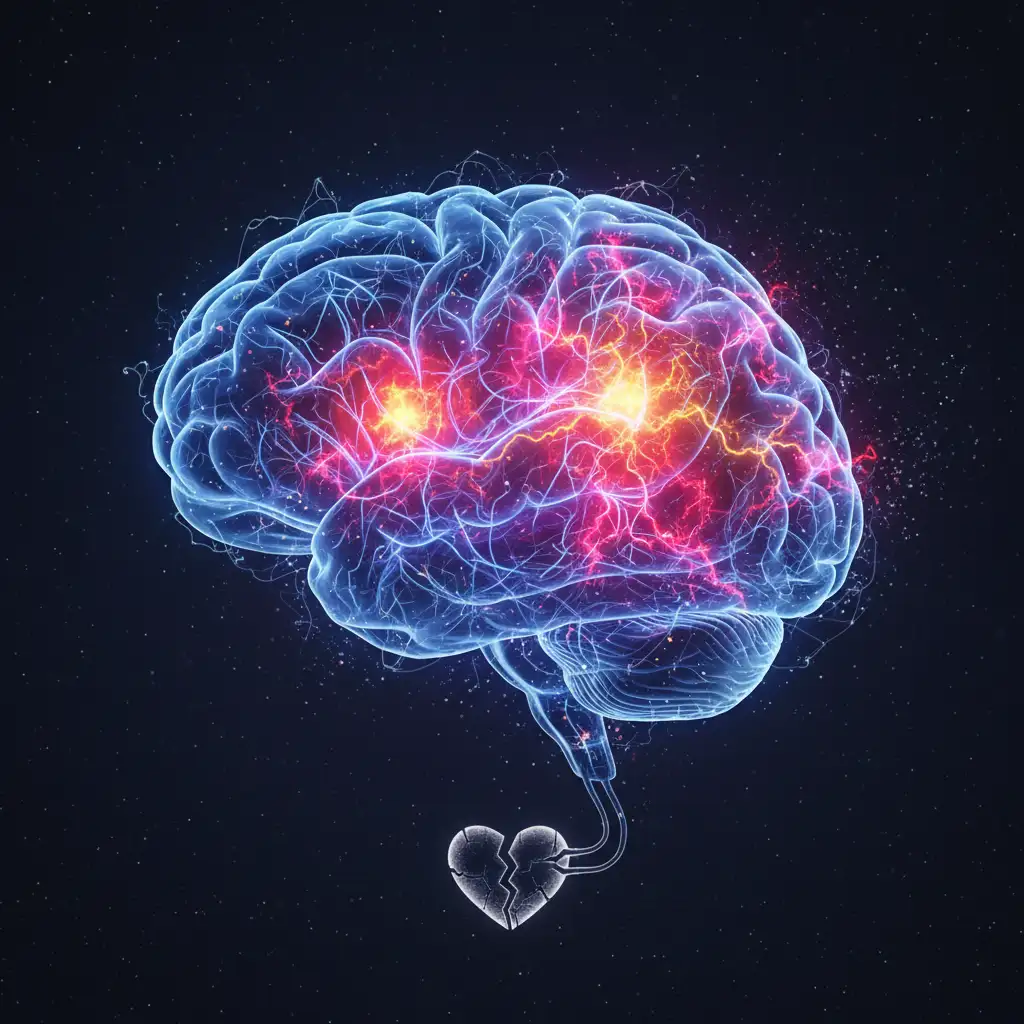
When we discuss getting over a breakup psychology, we must first address the physiological storm occurring within the brain. It is a common misconception that heartbreak is purely emotional; in reality, it is a profound biological event. Functional MRI (fMRI) studies have shown that looking at a photograph of a former lover activates the secondary somatosensory cortex and the dorsal posterior insula—the exact regions responsible for processing physical pain.
This explains why the anguish feels somatic: the chest tightness, the nausea, and the physical lethargy are not imagined. Your brain is signaling distress in the same language it uses for a broken bone or a burn.
Love as an Addiction
Perhaps the most critical insight from relationship psychology is that romantic love functions like an addiction. During a relationship, your brain becomes accustomed to a steady stream of dopamine and oxytocin provided by your partner. When the relationship ends, that supply is abruptly cut off, sending the brain into a state of chemical withdrawal.
This withdrawal manifests as obsessive thinking, intense cravings for contact, and emotional instability. The ventral tegmental area (VTA), the brain’s reward system, becomes hyperactive, desperately seeking the “fix” that the partner once provided. Understanding this biological baseline is crucial for healing; you are not “crazy” or “obsessed,” you are detoxing.
The Psychology Behind the No-Contact Rule
The “No-Contact Rule” is often touted as a manipulative tactic to win an ex back, but in the realm of clinical psychology, it is a vital mechanism for recovery. Its effectiveness is rooted in the concept of neural pruning and breaking the habit loop.
Every time you check your ex’s social media, text them, or look at old photos, you re-activate the neural pathways associated with them. You are essentially scratching a wound that is trying to scab over. By maintaining strict no-contact, you allow those pathways to weaken over time through a process known as long-term depression (in the synaptic sense, not the mood disorder).
Overcoming the “Extinction Burst”
Behavioral psychology introduces the concept of the “extinction burst.” When a reinforcement (your ex) is removed, your brain initially tries harder to get it back. This is why the urge to text is strongest a few days or weeks after the silence begins. Recognizing this as a predictable psychological phase can help you ride out the wave without succumbing to the impulse.
For more on the biological underpinnings of attachment and separation, you can refer to the extensive research on Attachment Theory, which explains how early bonds influence our adult reactions to loss.
Navigating the Psychological Stages of Separation
While the Kubler-Ross model of grief (Denial, Anger, Bargaining, Depression, Acceptance) is well-known, breakup grief has unique characteristics due to the fact that the object of grief is still alive and often reachable. This availability complicates the process, often trapping individuals in the “Bargaining” stage for extended periods.
In the context of getting over a breakup psychology, we often see a non-linear progression:
- Shock and Denial: The brain refuses to accept the new reality to protect the ego from immediate trauma.
- Rumination: An obsessive review of the relationship history, looking for clues or “what if” scenarios. This is the brain’s attempt to solve the “problem” of the breakup.
- Anger and Devaluation: A necessary step where the pedestal crumbles. You begin to see the partner’s flaws, which helps detach the emotional bond.
- Relapse: Brief periods of missing them or breaking no-contact, followed by renewed grief.
- Integration: The final stage where the relationship is accepted as a chapter of the past, rather than the definition of the present.
Rediscovering Self-Identity Post-Breakup
One of the most devastating aspects of a split is the loss of the “self” that existed within the couple. Psychologists refer to this as a contraction of the self-concept. When you are partnered, you share memories, resources, friends, and routines. Losing the partner means losing a part of your own identity.
Healing requires a psychological process called Self-Expansion. This involves engaging in new activities, acquiring new skills, and deepening existing friendships to “fill the void” left by the partner with your own growth.
Reclaiming the Narrative
To move on, you must rewrite the story of your life where the ex is no longer the protagonist. Cognitive Behavioral Therapy (CBT) techniques can be highly effective here. When you catch yourself thinking, “I will never be happy again,” challenge that thought. Replace it with, “I am currently in pain, but I have been happy before this person, and I will be happy after.”

When Are You Psychologically Ready to Date Again?
A common question in the journey of getting over a breakup psychology is determining the right time to re-enter the dating market. Jumping back in too soon can lead to “rebound” relationships, which often serve as a distraction rather than a genuine connection.
Psychologically, you are likely ready to date when:
- The Comparison Stops: You can meet a new person without immediately comparing them to your ex.
- Solitude is Comfortable: You are dating because you want to share your life, not because you are terrified of being alone.
- Emotional Availability: You have the emotional bandwidth to listen to someone else’s problems without being overwhelmed by your own unresolved grief.
Research indicates that while some rebound relationships can boost self-esteem, they are risky if used solely as a mechanism to avoid processing the pain of the previous breakup. True healing is solitary work; a new partner cannot fix the internal injury of a broken heart.
For further reading on the mechanisms of coping with loss, the American Psychological Association offers resources on healthy separation and emotional resilience.
People Also Ask
How long does it take psychologically to get over a breakup?
There is no set timeline, but a 2007 study published in the Journal of Positive Psychology found that 71% of participants felt significantly better after roughly 11 weeks (3 months). However, for longer marriages or traumatic splits, the psychological healing process can take 18 months or longer. Factors include attachment style, the quality of the relationship, and who initiated the breakup.
Why is the no-contact rule so effective psychologically?
The no-contact rule works by breaking the dopamine feedback loop. Contacting an ex provides “intermittent reinforcement,” which is the most addictive form of reward. By removing the stimulus completely, the brain is forced to reorganize and weaken the neural pathways associated with that person, accelerating the detachment process.
What does psychology say about rebound relationships?
Psychology is mixed on rebounds. While they can boost self-esteem and help individuals realize they are still desirable (Self-Determination Theory), they can be damaging if used to suppress grief. A healthy relationship requires emotional availability, which is often compromised immediately after a breakup.
Why do I still love my ex who treated me badly?
This is often due to “trauma bonding” or an insecure attachment style. Highs and lows in a volatile relationship create a biochemical dependency similar to gambling addiction. The brain latches onto the “good times” as a survival mechanism, ignoring the bad behavior. This is a powerful psychological bond that is difficult to break without professional help or strict no-contact.
Can you be friends with an ex immediately?
Psychologically, it is very difficult to transition immediately from lovers to friends. The brain needs time to “de-sexualize” and “de-romanticize” the attachment. attempting friendship too soon usually prolongs the grieving process and keeps the attachment system activated, preventing both parties from moving on.
What are the physical symptoms of heartbreak?
Heartbreak triggers the sympathetic nervous system (fight or flight), leading to increased cortisol levels. Symptoms include insomnia, appetite changes (weight loss or gain), chest pain (Takotsubo cardiomyopathy or “broken heart syndrome”), immune system suppression, and physical exhaustion.